Boho Kitchen Ideas: Earthy Colors, Natural Textures, and Rooms Full of Personality
A boho kitchen does not follow a strict formula. It is a free-spirited room built from natural materials, layered patterns, plants, and pieces that look collected over time rather than bought in one shopping trip. Some boho kitchens burst with color, while others stay calm and neutral with wood, woven textures, and greenery doing most of the work. Both directions are correct, because the style puts personality first and rules second.
What a Boho Kitchen Actually Looks Like
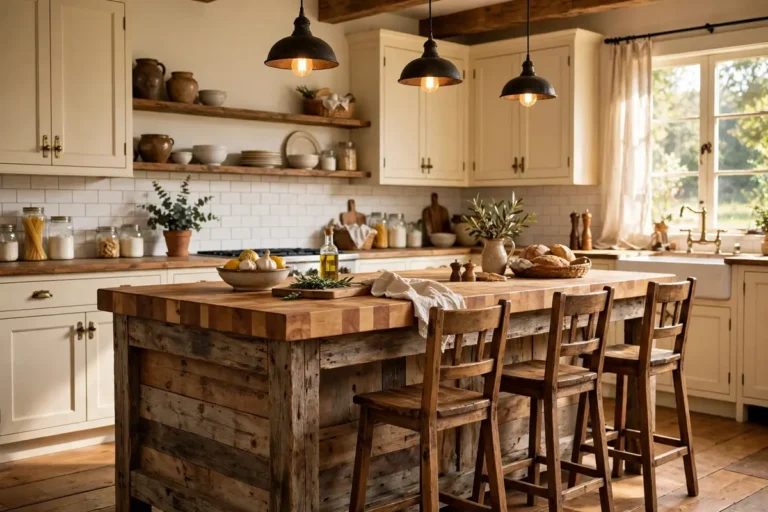
A boho kitchen feels relaxed, warm, and a little bit eclectic. Open shelving often replaces some closed cabinets, wood and woven materials appear everywhere, and no two chairs or art pieces need to match. The style grew out of the bohemian way of living, where travel, art, nature, and handmade objects mattered more than formal matching sets. In a modern kitchen, that means a room that invites people to linger: a wooden table with mismatched chairs, plants on the windowsill, a patterned rug underfoot, and dishes you like looking at.
The Boho Kitchen Color Palette: Earthy Base, Joyful Pops
Start with an earthy base and add color in controlled pops. Warm whites, soft creams, light wood tones, terracotta, sage green, and warm tan give the room its calm backbone. On top of that base, boho style welcomes rich accents: deep green, ocean blue, mustard yellow, burnt orange, blush pink, and even bold jewel tones on a rug, a backsplash, or a single painted wall. The trick is proportion. If walls and cabinets stay neutral, a colorful rug, bright dish towels, and patterned plates carry the personality without making the room feel chaotic. If you love maximal color, pick one hero area, like a tiled backsplash or a painted island, and let the rest stay quieter.
Boho Kitchen Cabinets: Mixed Styles, Wood, and Painted Finishes
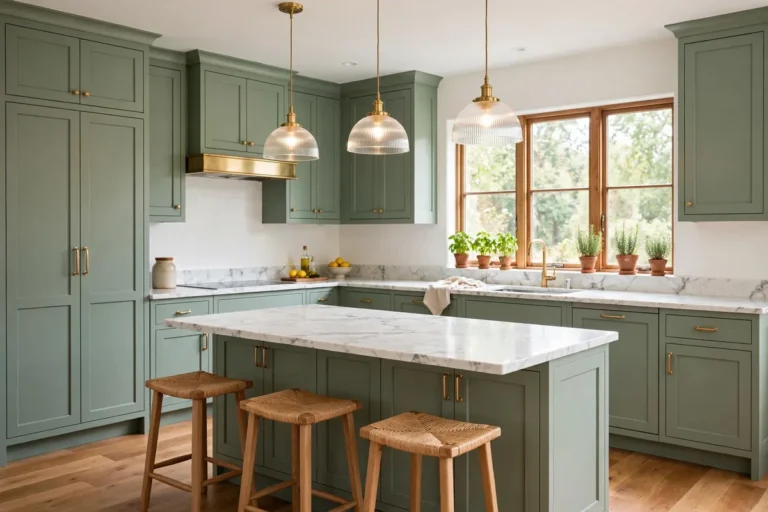
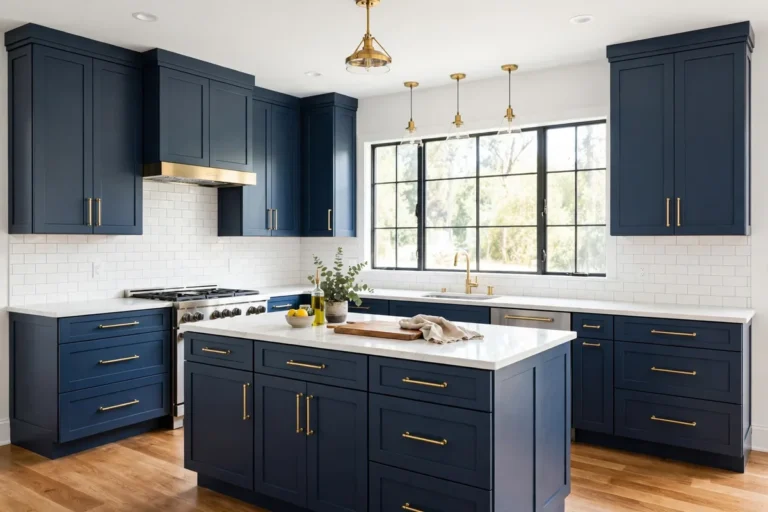
Boho kitchens rarely use one uniform cabinet style from wall to wall. Mixing works beautifully here: flat wood cabinets next to a painted hutch, a freestanding pantry beside fitted units, or an old dresser reused as extra storage. Natural wood finishes with visible grain suit the style best, especially warm oak, walnut, and reclaimed boards. Painted cabinets also belong, in soft white, sage green, warm mushroom, or deep blue. Door style matters as much as color: shiplap-style V-groove doors suit a cottage-leaning boho kitchen, a modern shallow shaker keeps the look current, glass-front or mullion doors let you display pretty dishes, and louvered or reeded inserts add texture. If a full replacement is out of reach, painting existing doors or swapping handles for wooden or brass pulls gives you most of the look for a fraction of the cost. For painted-cabinet inspiration, see our guide to blue kitchen cabinets, which covers navy and shaker styles that pair well with boho warmth.
Open Shelving vs Cabinets: Display Without the Clutter
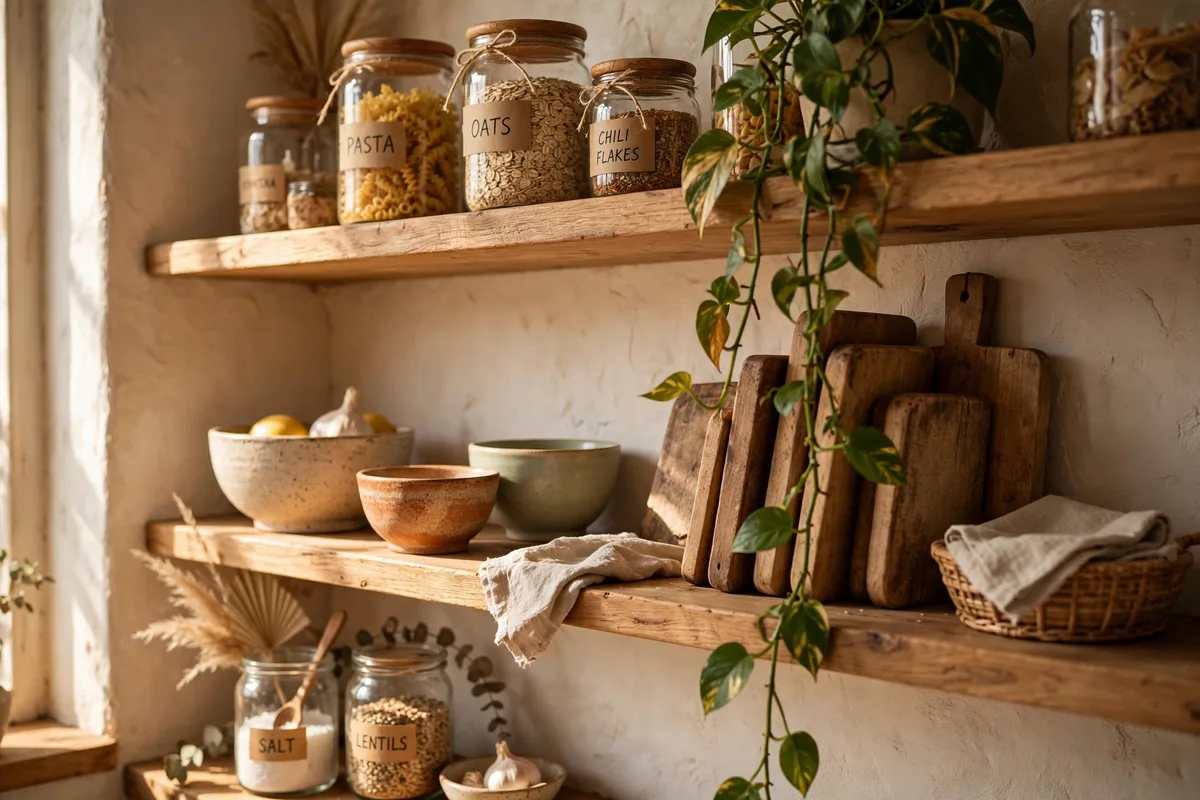
Open shelving is the signature boho move, but it only works when it stays organized. Floating wood shelves let you show off ceramic bowls, wooden boards, glass jars, plants, and a few favorite cookbooks, which makes the kitchen feel personal and lived in. The rule that keeps it from turning into clutter is simple: display what you use and love, and keep the rest behind closed doors. Group items in odd numbers, leave breathing space between groups, and repeat one material, like wood or cream ceramic, across the shelves so the display feels tied together. Try it on one wall first, or remove the doors from a single upper cabinet as a test. Keep everyday plates and glasses low and reachable, and reserve the highest shelf for light items you rarely need.
Backsplash and Tile That Carry the Whole Room
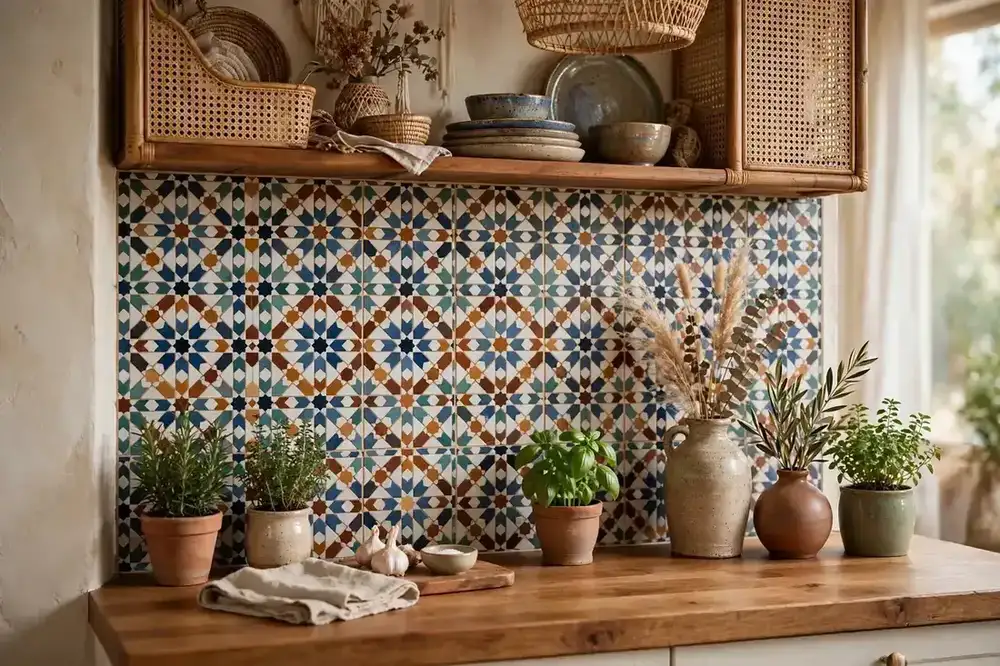
In a boho kitchen, the backsplash often does more visual work than any other surface. Patterned tiles in Moroccan, Spanish, geometric, or floral designs add instant character, even when cabinets and counters stay plain. A full wall of bold tile makes a strong statement, while a simple band of patterned tile behind the stove gives the same feeling at lower cost and effort. If you prefer calm walls, handmade-look tiles in cream or sage with uneven edges add texture without pattern. For renters or anyone avoiding grout work, peel-and-stick tiles in a boho pattern are a genuine option, as long as the wall behind them is smooth, clean, and dry. Seal natural stone tiles, and check that the pattern repeats cleanly around outlets and corners before you commit.
Countertops in a Boho Kitchen: Wood, Marble, and Warm Finishes
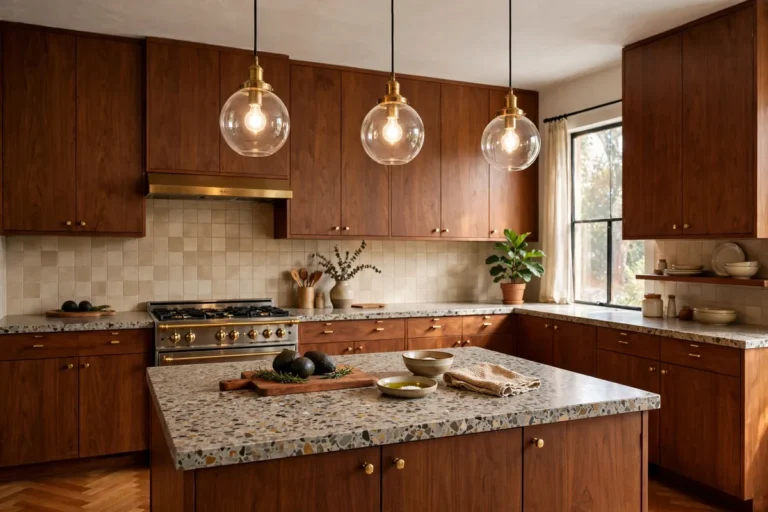
Wood countertops are the natural partner for boho style. Butcher block and warm oak boards soften the room, age gracefully, and suit the handmade feeling of the style. They do need care: regular oiling with food-grade mineral oil, about once a month for oiled tops, prompt wipe-ups around the sink, and trivets under hot pans. Marble and light stone counters offer a cooler contrast and pair well with wood cabinets, though they stain more easily and need sealing. Sealing slows staining but does not stop acid etching, so wipe lemon, vinegar, tomato, and other acidic spills at once. If your budget is tight, keep your existing counters and change everything around them: a large wooden cutting board left out permanently, a wooden island or butcher-block cart, and warm textiles can shift the whole room toward boho without replacing a single slab.
| Countertop | Care it needs | Watch out for |
|---|---|---|
| Wood (butcher block, oak) | Food-grade mineral oil about once a month; wipe spills promptly | Standing water, harsh detergents, unprotected heat |
| Marble and light stone | Seal and reseal about every 6 to 18 months; wipe spills at once | Stains if unsealed; acid etching even when sealed |
| Existing counters you keep | No replacement needed; change the pieces around them | A full replacement is rarely the best first spend |
Boho Kitchen Lighting: Rattan Pendants and Beaded Chandeliers
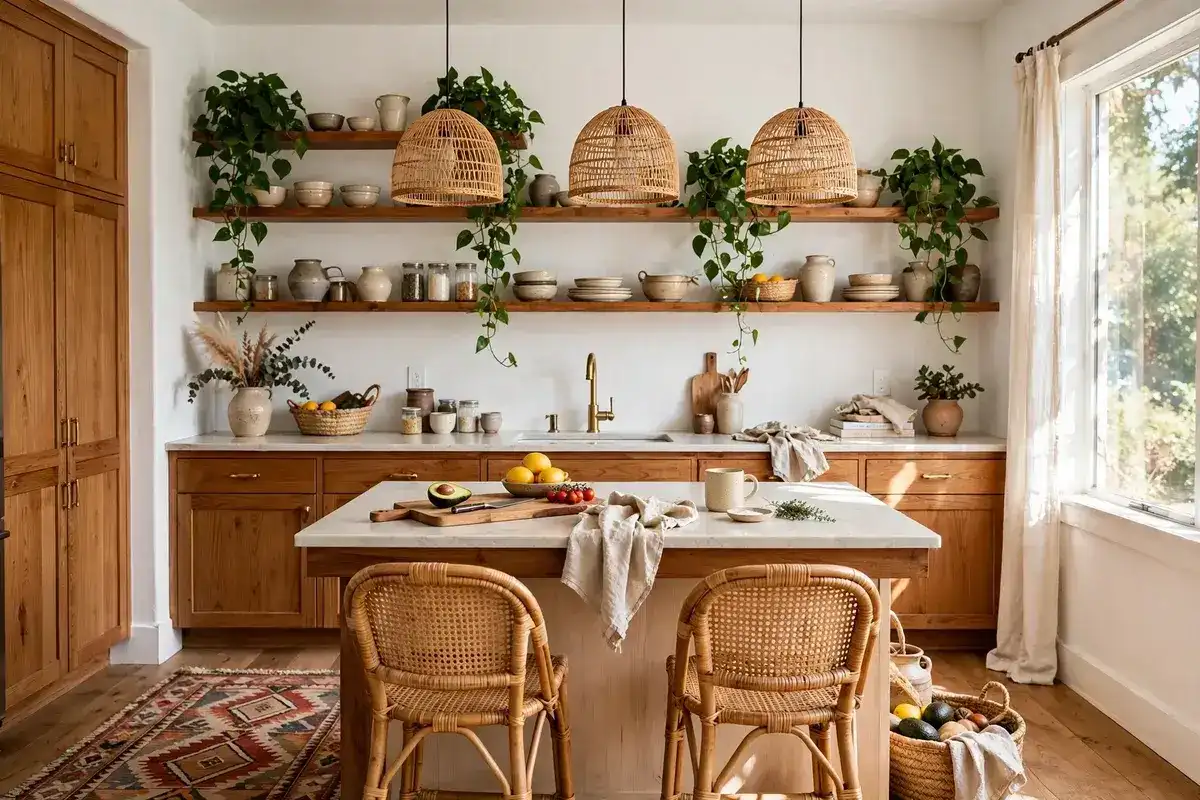
Lighting sets the boho mood faster than almost anything else. Rattan, bamboo, wicker, and rope pendant shades cast a warm, textured glow and read as boho instantly, especially over an island or a dining table. A wood beaded chandelier over the table adds a softer, more crafted feeling, while a cluster of small pendants at different heights suits a long counter. Mix your light sources instead of relying on one ceiling fixture: pendants for atmosphere, under-shelf strips for cooking tasks, and a small lamp in a dining corner for evenings. Warm white bulbs matter more than the fixture itself, because cool white light flattens wood tones and woven textures. Choose shades you can dust quickly, since kitchens collect cooking grease.
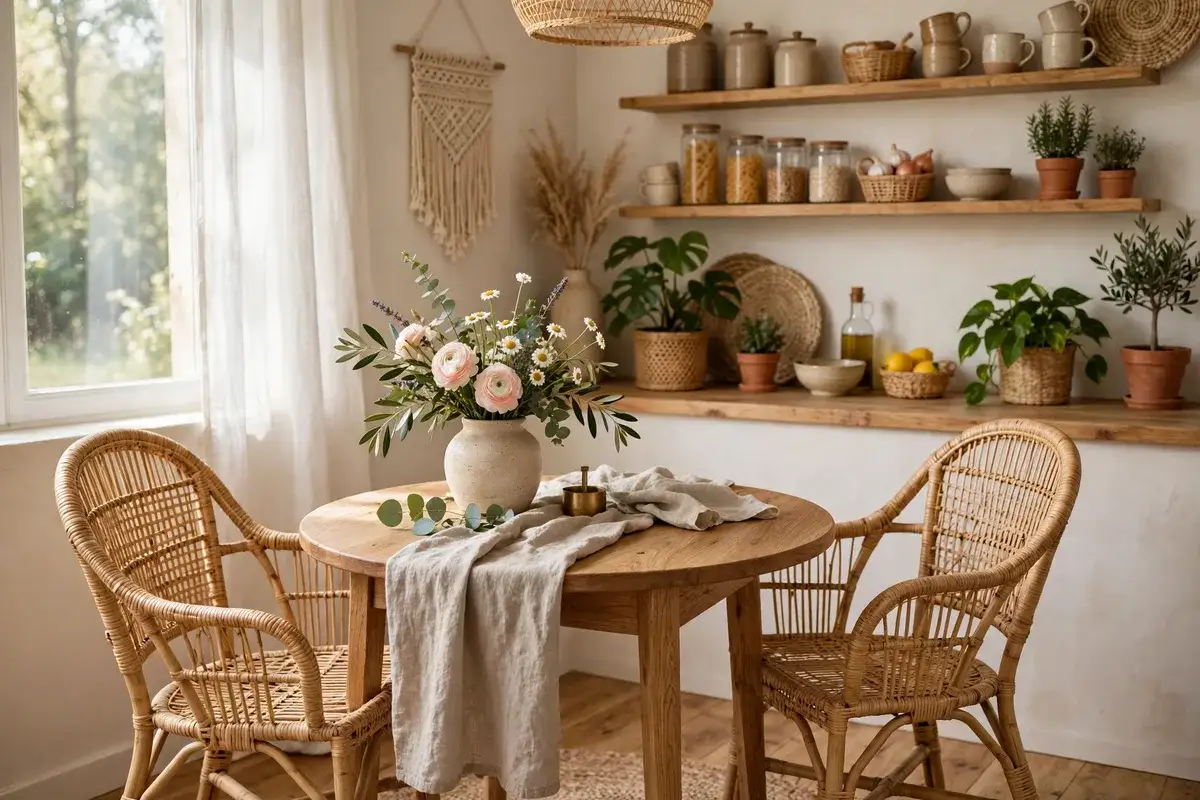
The Boho Dining Corner: Round Wood Tables and Woven Chairs
A boho kitchen almost always has a place to sit and stay a while. A small round wood table is the classic choice, because it fits tight corners, softens a boxy room, and invites conversation from every side. Surround it with rattan, wicker, or bentwood chairs, and do not worry if they are not an identical set: mixed seating is part of the style, as long as chair heights match the table. Add a washable cushion in a patterned fabric, a simple linen runner, and a low centerpiece like a ceramic vase with fresh stems or a wooden bowl of fruit. If space is very tight, a wall-mounted fold-down table with two stools gives you the same gathering feeling without blocking walkways.
Rugs, Linens, and Textiles: Layering Without Overdoing It
Textiles are where boho kitchens get their softness. A patterned rug by the sink or under the dining table warms up hard floors, and washable rugs are the practical choice for a room where spills happen. Layering works when the pieces share something: one repeated color, one natural fiber, or one pattern family. Cotton dish towels in wildflower or striped prints, linen napkins in a warm solid, and a woven runner on the table can all coexist if one calm color repeats across them. Jute and sisal add texture underfoot but feel rough barefoot, so use them in walkways and save softer cotton or wool blends for the dining area.
Plants Everywhere: Greenery, Plant Stands, and Kitchen Gardens
No boho kitchen is complete without plants. Trailing pothos on top of cabinets, herbs on the windowsill, a tall olive or fiddle leaf in an empty corner, and small succulents on open shelves all add life and soften hard surfaces. A kitchen garden is the most useful version of this idea: basil, mint, parsley, and chives in matching terracotta pots give you fresh flavor within arm's reach. Plant stands solve the awkward spots: a tall stand fills a bare corner, a hanging planter uses ceiling space, and even the top of the refrigerator can hold a trailing plant in a rental. Match the plant to your light honestly. Snake plants and ZZ plants suit low light best, including fluorescent light, and both prefer soil that dries out between waterings. Pothos does well in medium indirect light, and its darker Jade variety handles lower light better than variegated types. Sunny windowsills suit herbs and succulents.
Vintage, Antique, and Global Pieces With a Story
Boho style is built on pieces with a past. A vintage brass tray, an antique wooden bowl, a handwoven basket from a trip, a Moroccan lantern, or a flea-market chair each add a layer that new matching sets cannot fake. Retro-style appliances also fit the style: a cream or pastel stove, or a vintage-style refrigerator, adds character without a full remodel. Give each piece a clear job: a vintage pitcher becomes a utensil holder, an old crate becomes open storage, a global textile becomes a table runner. Mix periods and origins freely, but keep the color story calm so the room reads as collected rather than random. Midcentury pieces also blend well here: a teak sideboard or tapered-leg chairs add warmth without fighting the boho layers. Shop secondhand first, because vintage pieces cost less and already carry the worn finish that boho style celebrates.
Gallery Walls, Wall Art, and Decor Objects
Empty walls are wasted opportunity in a boho kitchen. A gallery wall of vintage paintings, framed prints, woven hangings, and small mirrors adds personality without taking counter space. Start with one larger anchor piece at eye level, then build outward with smaller frames, leaving consistent gaps of a few inches between them. Mix frame finishes, but repeat one element, like warm wood or brass, so the wall feels intentional. Beyond frames, think in three dimensions: macrame hangings, woven baskets mounted as art, ceramic plates on a rail, and small wooden shelves holding a plant and a candle. Decor objects on counters should earn their place: a beautiful bowl that holds fruit, a ceramic crock for utensils, a stone mortar that you actually use.
Aesthetic Kitchen Styling: The Pretty, Photo-Ready Boho Look
An aesthetic kitchen is a boho kitchen edited for the camera and for calm mornings. The look relies on a limited palette, usually cream, soft white, light wood, and one green accent from plants, plus clean surfaces with only a few beautiful objects left out. To get it, clear the counters to the essentials, group the remaining items by material, and let one feature do the talking: a rattan pendant, a tiled backsplash, or a wooden shelf styled with three ceramics and a trailing plant. Keep windows uncluttered and use sheer linen instead of heavy curtains, so natural light does most of the work. The photo-ready look still needs to function, so keep daily tools within reach but contained: a single ceramic crock for utensils, one wooden board, and one tray that corrals oils and spices.
Cottage Core Kitchen Meets Boho: Soft, Storybook Warmth
Cottage core and boho share a love of nature, softness, and handmade things, so they blend easily. The cottage core side brings storybook warmth: gingham or floral prints, open shelving with pretty dishes, fresh flowers in a jam jar, wooden spoons in a crock, and a generally softer, more romantic feeling. The boho side adds global patterns, woven textures, and a freer mix of colors. To combine them, keep the base soft and pale, then add one or two boho notes: a Moroccan tile behind the stove, a rattan pendant, or a kilim rug under the table. Avoid pushing both styles to full strength at once, because a room full of florals plus a room full of bold global patterns turns busy fast. One style leads, the other accents.
Cute Kitchen Touches: Small Treasures That Change the Mood
Cute kitchen style works through small, cheerful details rather than big renovations. A wildflower dish towel on the oven handle, a colorful napkin set on the table, a personal-sized dip bowl for solo snacking, a sunny mug on an open hook, or a small vase of fresh flowers by the sink can change how the whole room feels in an afternoon. The trick is choosing treasures that fit real routines: a baker needs sturdy linens that survive the wash, a snacker needs a bowl that fits one hand, a coffee lover needs a favorite mug at eye level. Small and specific beats big and generic every time, and it also makes the easiest housewarming gift.
Small Boho Kitchens: Neutrals, Light, and Smart Storage
Small kitchens suit boho style surprisingly well, because the style rewards coziness. Keep the base neutral in a small room: pale walls, light wood, and one calm counter material make the space feel larger, while color arrives through textiles and plants instead of painted walls. Use vertical space ruthlessly: shelves up to the ceiling, hooks on the side of cabinets, a magnetic strip for knives, and a hanging rail for pans free up every inch of counter. A light, small-scale rug adds pattern without shrinking the floor, and a round table or a fold-down counter gives you seating without blocking the walkway. Choose small plants, like herbs and trailing pothos, over one large floor plant, and keep open shelves shallow so they display without crowding the room.
Rental-Friendly Boho Kitchen Ideas (no renovation needed)
Renters can get a full boho kitchen without touching a wall or a cabinet. Peel-and-stick tiles change a backsplash, removable wallpaper adds pattern to one wall, and both come off cleanly when you move. Swap cabinet handles for wooden or brass pulls and store the originals in a bag for move-out day. Freestanding pieces do the heavy lifting: a wooden cart for extra counter space, a rattan chair at the table, a tall plant stand in a corner, and open leaning shelves that need no drilling. Plants are the renter's best friend, because a trailing pothos, a few herbs, and a basket of supplies travel to the next home with you. Keep every change reversible, and check your lease for the few things that usually need permission, like painting or adhesive tiles on delicate surfaces.
Boho Farmhouse Mix and Coastal Colors
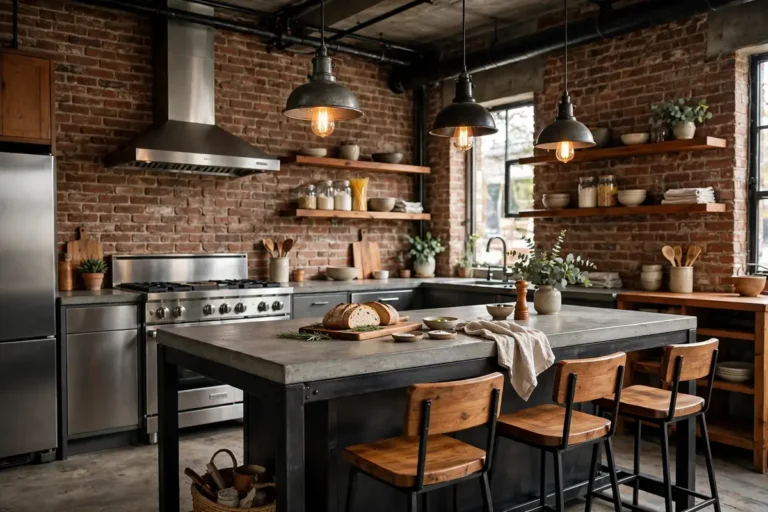
Two popular directions blend with boho without a fight: farmhouse and coastal. The farmhouse mix keeps weathered wood, a farmhouse sink, woven pendants, and a mix of old and new storage, then softens it with boho plants, patterned textiles, and global accents. The coastal direction keeps the same natural materials but shifts the palette toward white, sand, pale blue, and sea glass, with shiplap walls, open shelves, and ocean-inspired art. Both work because they share boho's love of wood, woven texture, and lived-in comfort. Choose one direction as the lead: farmhouse if you love warm rustic wood, coastal if you love bright airy whites. An industrial mix works the same way: brick walls or black metal softened with butcher block, plants, and a patterned rug.
| Direction | Base palette | Key materials | Signature pieces |
|---|---|---|---|
| Boho (lead) | Earthy neutrals plus joyful pops | Wood, rattan, woven textiles, plants | Patterned rug, rattan pendant, gallery wall |
| Farmhouse mix | Warm whites and weathered wood | Rustic wood, linen, iron | Farmhouse sink, woven pendant, vintage storage |
| Coastal direction | White, sand, pale blue | Shiplap, light wood, sea glass tones | Open shelves, ocean-inspired art, linen |
The result feels personal instead of themed, which is exactly where boho style wants to land.
Starting a Boho Kitchen Without Redoing Everything
You do not need a renovation to get a boho kitchen. Start small and let the room grow into the style. Swap everyday towels for a wildflower or striped print, set out colorful napkins, and hang a woven runner where you see it daily. Those little pops change the feel of the room overnight. Next, add one plant on the windowsill and one wooden board left out on the counter. From there, layer in a rug, a rattan pendant, or a piece of wall art whenever the mood strikes. Work in this order on purpose: textiles first, then plants, then lighting, then larger pieces like shelving or a table. Each step is cheap and reversible, so you can test what you love before committing.
Boho Kitchen Mistakes to Avoid
The most common boho mistake is confusing collected with cluttered. Open shelves packed edge to edge, counters covered in objects, and five competing patterns in one sightline make a room feel messy, not boho. Keep breathing space on every surface and limit bold patterns to one or two per view. The second mistake is ignoring the kitchen's practical needs: moisture-sensitive wallpaper behind a steamy stove, unsealed wood right next to the sink, or a rug that cannot be washed in a room where spills are guaranteed. Choose materials that survive real cooking. The third mistake is buying everything at once from one store, which produces a showroom instead of a collected room. Buy slowly, mix old and new, and let the room gather character over months.
Boho Kitchen on a Budget: Where to Spend and Where to Save
Boho style is one of the most budget-friendly directions, because secondhand and handmade pieces are the point. Spend on the few things you touch daily and that must last: a good rug that washes well, solid lighting that gives warm light, and seating that stays comfortable through long dinners. Save everywhere else: thrift stores and flea markets for vintage dishes, baskets, and wooden boards; paint instead of replacement cabinets; peel-and-stick tile instead of a full re-tile; plants propagated from cuttings instead of mature specimens. A single statement piece, like a rattan pendant or a patterned rug, lifts the whole room, so put your money there and let small thrifted treasures fill the rest.
FAQs
How do I keep an open-shelf boho kitchen organized?
Show only your favorites and keep the rest behind closed doors. Group what you display by color or by use, leave breathing space between groups, and rotate pieces with the seasons so the shelves never fill edge to edge.
What is a boho-style kitchen?
A boho-style kitchen is a free-spirited, eclectic room built from natural materials, layered patterns, plants, and pieces that look collected over time. It can be colorful and bold or calm and neutral, but it always feels personal and relaxed rather than formal and matched.
How can I make my kitchen boho style?
Start with small, reversible layers: patterned textiles, plants, a woven light, and a few vintage or global pieces. Then move to bigger changes only where they help, like open shelving on one wall or a patterned backsplash. Work textiles first, plants second, lighting third, and furniture last.
Can you mix farmhouse and boho?
Yes, the two styles share weathered wood, woven textures, and a lived-in feeling. Keep farmhouse elements like rustic wood furniture as the base, then add boho layers like plants, patterned rugs, and global accents. Let one style lead so the room feels personal instead of themed.
What colors are considered boho?
Boho palettes start from earthy neutrals like warm white, cream, light wood, terracotta, and sage green, then add joyful accents like deep green, ocean blue, mustard, burnt orange, or blush pink. Modern boho rooms often stay mostly neutral and let one or two bold accents carry the color.
What is the opposite of boho style?
Traditional style is the closest opposite. Traditional rooms follow formal rules, matched sets, and classic European design, while boho rooms break those rules on purpose with eclectic mixes, personal objects, and a relaxed, rule-free feeling.
How do I keep boho kitchen linens looking bright?
Machine wash cotton towels and napkins on a gentle cycle and tumble dry on low, following the care label on each piece. Skip harsh bleach so prints stay vivid, and wash colorful linens separately the first few times so loose dye does not transfer to lighter pieces.
Can I mix different prints in one kitchen?
Yes, mixing is the whole idea in boho style. Let one or two shades repeat across the room, like terracotta or sage, and the different prints will feel tied together instead of random. If the mix starts to feel busy, remove one pattern and let the rest breathe.
How do I start decorating my kitchen boho style without redoing everything?
Swap towels for a cheerful print, set out colorful napkins, add one plant to the windowsill, and leave a wooden board on the counter. Those four small changes shift the mood overnight. Add a rug, a pendant, or wall art next, one piece at a time.
Are boho kitchen rugs and textiles hard to maintain?
Not if you choose washable pieces. Cotton and flat-weave rugs go into the wash easily, jute rugs need shaking out and spot cleaning, and linen napkins soften with every wash. Keep a washable rug by the sink and stove, where spills happen most, and save delicate weaves for the dining area.
Are boho plates and bowls microwave and dishwasher safe?
It depends on the piece, so check the maker's guidance before microwaving or loading the dishwasher. Plain stoneware and glass usually handle both, while hand-painted finishes, metallic trims, and delicate glazes do best with a gentle hand wash. When in doubt, hand washing is always the safe choice.
What makes a good boho housewarming gift?
A bundle that gets used at once: a wildflower dish towel with a napkin set, or a personal-sized dip bowl paired with the recipient's favorite snack. Match the gift to a real routine: a baker gets sturdy washable linens, a hostess gets the prettiest table pieces, and a frequent snacker gets a bowl made for one.
What should I avoid in a boho kitchen?
Avoid cluttered open shelves, too many competing patterns in one view, and materials that cannot survive cooking moisture and heat. Avoid buying a full matching set at once, because a collected room needs time, old pieces, and personal objects to feel genuinely boho.
Get home ideas in your inbox
Practical home improvement ideas and DIY guides, once in a while. No spam.