
Luxury Bathroom Ideas, Materials and Costs: How to Get the Hotel Feel at Home
Everyone has walked into a hotel bathroom and thought, why does mine not feel like this? The marble is calm, the light is kind, the towels are thick, and there is not a single plastic bottle in sight. Then you go home, look at your own bathroom, and assume the difference is a five star budget. Usually, it is not. The difference is a short list of decisions about materials, light, water and clutter, and most of them are available at ordinary remodel prices.
This guide walks through those decisions in the order they actually matter. It compares the materials honestly, including the maintenance contract that comes with a real marble bathroom. It goes fixture by fixture, lays out luxury master bathroom ideas and small room tactics, and puts real numbers on the whole project using current Angi cost data. It also covers the upgrades owners regret, because a luxury bathroom that stains, squeaks or sits unused is just an expensive bathroom.
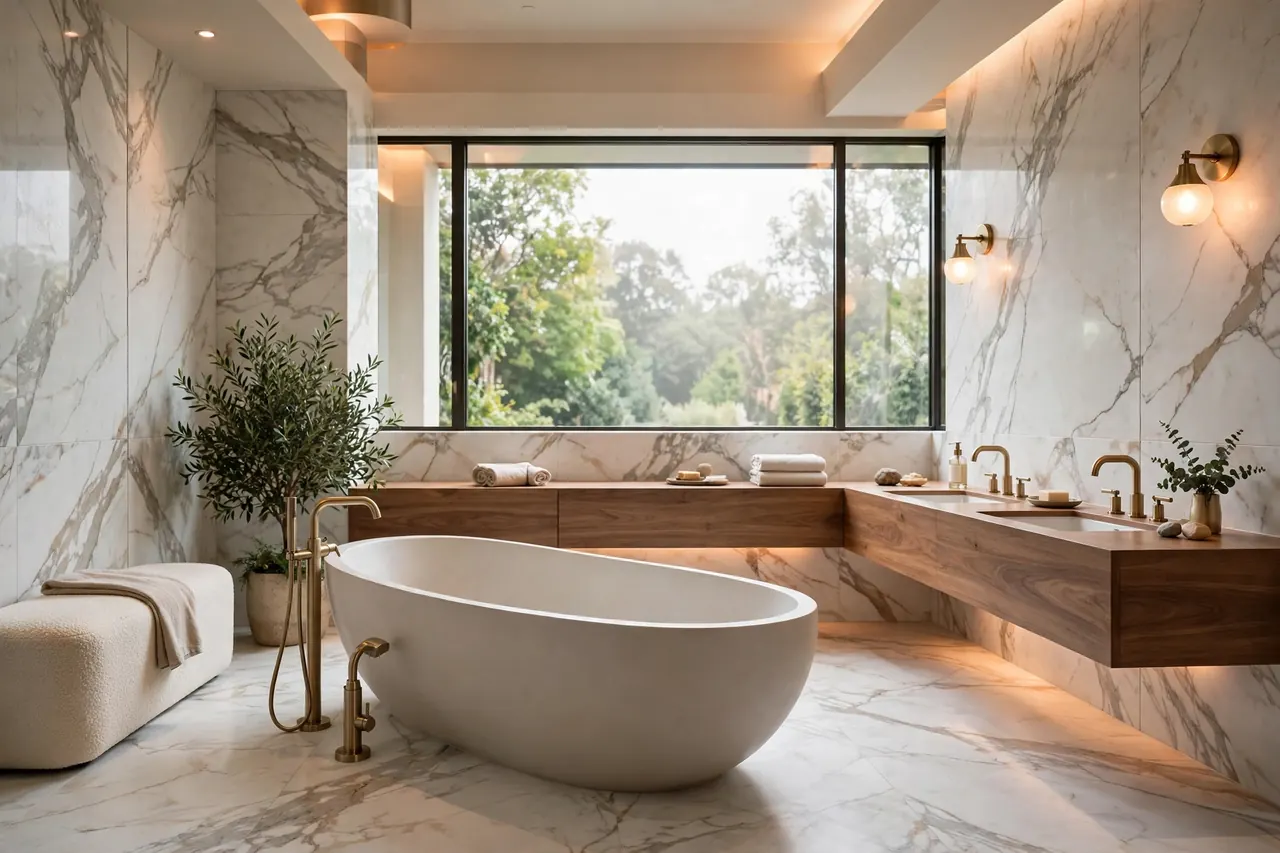
The Short Version
- Luxury is a feeling, not a price tag. Calm colors, quality surfaces, layered light and zero visible clutter do more than any single expensive fixture.
- Marble is the signature material and the neediest. It needs sealing once or twice a year and etches on contact with acids. Marble look porcelain gives the same veining with almost no upkeep.
- The freestanding tub is the centerpiece in most luxury bathrooms, but a deep built in tub wins for families, small rooms and anyone who actually bathes daily.
- Doubles need width. Two sinks want about 36 inches between their centerlines. Below a 72 inch vanity, one wide sink and real counter space feel more luxurious.
- Budget with real anchors. Angi puts the average bathroom remodel at about $10,800, upscale remodels at up to about $65,000, and true luxury primary baths above $80,000.
- Choose the style and palette before the tile. A clear direction, traditional, modern, natural, farmhouse, coastal or Japandi, stops expensive materials from fighting each other.
- Treat daylight as a material. Windows, skylights and borrowed light can change the room more than a pricier faucet, if privacy is solved properly.
- Spend on what touches you daily: the shower, the vanity top, the lighting and warm floors. Save on anything that only photographs well.
What Makes a Bathroom Feel Luxurious (It Is Not the Price Tag)
Ask designers what makes a bathroom luxurious and most give the same answer: the materials and how calm the room feels. A bathroom reads as luxury when your eye lands on a few good surfaces instead of twenty competing ones, when the light flatters instead of glaring, and when nothing you use every day is sitting out in the open.
Four ingredients create that feeling. The first is a quiet palette. White, warm gray, beige, stone and wood tones repeat across the top design sources for a reason: they let texture do the talking. One strong accent, black fixtures or a deep green wall, is enough.
The second is material honesty. Real stone, solid wood, heavy faucets that feel cold and dense in the hand. You touch a bathroom more than you look at it, and your hand can tell the difference between a solid brass handle and a plated plastic one in half a second.
The third is layered light, covered in its own section below. Flat overhead light is the single biggest reason home bathrooms feel like offices and hotel bathrooms do not.
The fourth is emptiness on purpose. Hotel bathrooms hide everything. Shampoo lives in a niche, towels are rolled or stacked, and the counter holds a tray, a plant and nothing else. Fitted storage is unglamorous and absolutely decisive, and it is why the vanity section below treats drawers as a luxury feature.
Notice what is not on the list: size, gold everything, and a famous brand name on the toilet. A 40 square foot bathroom with the four ingredients above feels richer than a 150 square foot room without them, and the small bathroom section shows how.
Choose a Style and a Color Palette Before You Buy Anything
Most disappointing luxury bathrooms were not underfunded. They were undecided. A marble slab chosen in January, a farmhouse vanity chosen in March and matte black fixtures chosen in May can each be beautiful and still argue with each other forever. Pick the style first, then let every later decision audition against it.
| Style | Signature palette | Materials and fixtures that fit | Best for |
|---|---|---|---|
| Modern minimalist | White, gray, black | Large format porcelain, floating vanity, wall hung toilet, matte or brushed fixtures | Clean lines, easy upkeep, smaller rooms |
| Elegant traditional | White, cream, polished nickel or brass | Marble, paneling, a clawfoot or pedestal silhouette, framed mirrors | Timeless primary bathrooms and period homes |
| Rustic and natural | Warm beige, stone gray, wood browns | Real or wood look surfaces, stone, bronze, open timber accents | Spa calm and homes that lean organic |
| Farmhouse | Warm white, natural wood, matte black | A freestanding tub as the bold fixture, simple tile, black hardware as the frame | Approachable luxury that forgives a modest budget |
| Coastal and maritime | Navy, white, brushed brass | Beadboard or vertical paneling, a clawfoot tub, brass that warms the blue | Light filled rooms and classic East Coast character |
| Japandi and modern boho | Warm white, sand, clay, soft black | Wood vanities, plaster tones, one woven or rattan accent, plants | Calm rooms with personality kept on a short leash |
Two of these deserve a warning label. Farmhouse and boho fail through clutter, not color: the look survives on restraint, and every extra accessory pushes it toward messy. Traditional fails through fussiness: keep the silhouettes classic and the surfaces simple, and it reads elegant instead of dated. For a room by room styling walkthrough, our guide to bathroom decor ideas shows how spa, minimalist, boho, farmhouse and vintage looks are built from accessories up.
The palettes that rarely miss
Soft neutrals (warm white, beige, greige, light oak, brushed brass) are the spa palette: calm, light reflecting and almost
impossible to regret. If the palette you keep returning to is green rather than white, our sage green bathroom guide to shades, drenching and costs compares sage and dark green side by side, with named shades and real makeover price tags.
Black and white is the contrast palette: it never dates, it suits marble perfectly, and it needs strong lighting so the dark half reads as drama, not gloom. Earthy organics (clay, olive, sand, walnut, bronze) bring warmth that pure gray rooms lack, and they pair beautifully with natural stone. Muted blue and green borrow from water and planting, and work as the one colored note in an otherwise quiet room. Full drama (charcoal or black walls, white fixtures, metallic accents) can be superb in a large, well lit bathroom and suffocating in a small dark one, so it is the only palette on this list with a size requirement. White does more work in these palettes than any other color, and it is the easiest one to get subtly wrong, so before you commit, work through our white bathroom guide to undertones, LRV and grey pairings and pick the exact white your light needs.
One rule protects every palette: put bold color in the layers you can change, paint, towels, art and accessories, and keep the permanent layers, tile, stone and fixtures, in tones you can live with for fifteen years. Personality stays. Regret leaves with a paint roller.
If the palette you keep returning to is blue rather than white, our blue bathroom guide to navy and light blue shades compares navy and light side by side, with named shades and real makeover price tags.
If the palette you keep returning to is pink rather than white, our pink bathroom guide to blush, mauve and dark rose depths compares pink depths side by side, with named shades and real makeover price tags.
Natural Light, Windows and Privacy
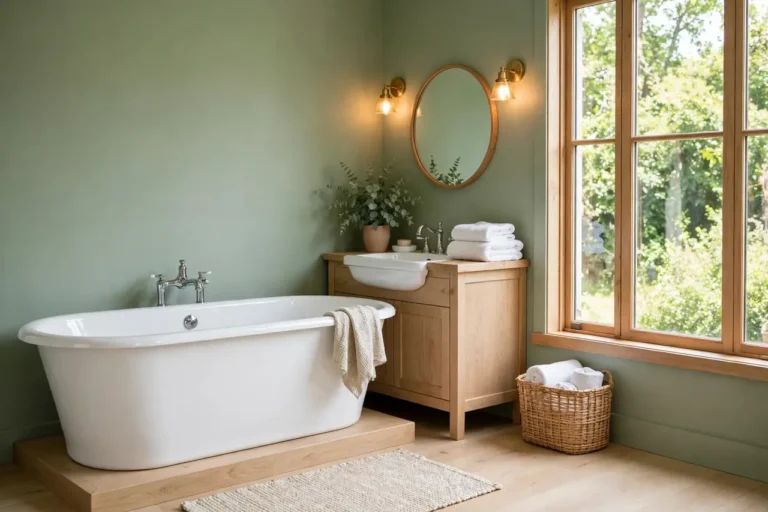
Ask renovators what changed their bathroom most and daylight beats fixtures again and again, because light alters every surface in the room for free, all day. If your bathroom has a window, design around it instead of covering it: place the tub where it borrows the view, keep treatments minimal, and let the window set the room’s mood.
The privacy problem has better answers than a curtain. Frosted or textured glass on the lower pane with clear glass above keeps light and loses the audience. Clerestory windows and skylights bring light from above sightlines entirely. Switchable privacy glass works where budgets allow. Outside, a planted screen or a fence panel can block a neighbor’s angle while keeping your view of the sky.
Check sightlines like a skeptic before committing to big glass: stand in the shower and the tub positions, look out, then walk outside and look back, including from any upper floor windows next door. Five minutes of embarrassment prevention beats a decade of blinds kept shut, and a shut blind deletes the entire point of the window.
No window is not a life sentence. Borrow light where the structure allows, through a frosted transom above a door or a sun tunnel, and spend the savings on the layered artificial lighting covered below, plus a mirror large enough to multiply it. A bright, well lit windowless bathroom beats a dim one with a window nobody opens.
Start With Materials: Marble, Porcelain, Quartz and Stone, Compared
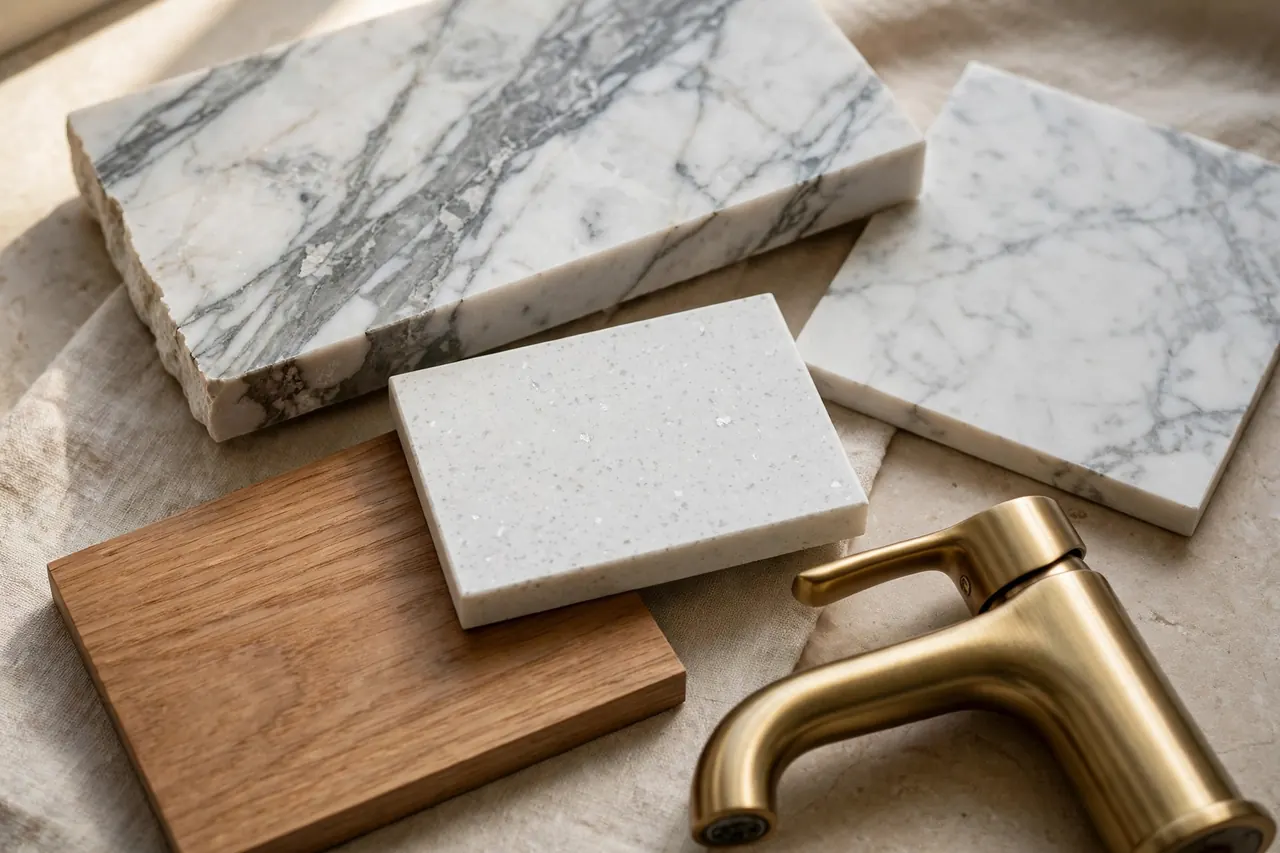
Materials are where luxury bathrooms are won and lost, because they decide how the room looks on day one and how much work it demands on day one thousand. Here is the honest comparison for the surfaces that matter most.
| Material | Look and feel | Typical material cost | Water and stain behavior | Upkeep | Best use |
|---|---|---|---|---|---|
| Real marble tile and slab | One of a kind veining, cool to the touch | About $25 to $50+ per sq ft | Porous, absorbs 0.5 to 2 percent water, etches from acids | Seal 1 to 2 times a year, gentle cleaners only | Walls, floors in low splash zones, vanity tops with eyes open |
| Marble look porcelain tile | Printed veining, very convincing, patterns can repeat | About $10 to $25 per sq ft | Under 0.5 percent absorption, no etching | Wipe clean, no sealing | Shower walls and floors, busy family bathrooms |
| Quartz (vanity tops) | Engineered stone, even color, subtle veining options | About $50 to $200 per sq ft (Angi) | Non porous, resists stains and watermarks | No sealing, soap and water cleaning | Vanity tops that take daily abuse |
| Large format porcelain slabs | Seamless stone look, book matched pairs available | Porcelain family pricing, plus specialist fitting | Same near zero absorption as porcelain tile | Minimal grout, easy cleaning | Shower walls, feature walls, floors |
| Wood and wood look surfaces | Warmth that stone cannot give | Real wood varies widely; wood look porcelain sits in the porcelain range | Real wood needs sealing and care; porcelain version is waterproof | Wood: moderate. Porcelain: almost none | Vanity fronts, accents, floors in porcelain form |
Costs are US national material figures gathered from tile industry comparisons and Angi; installed totals vary a lot by region, product grade and installer, and premium marble installations run far above the tile price alone.
Three patterns matter more than any single row. First, hardness: marble rates about 3 to 4 on the Mohs scale, porcelain about 7 to 8, which is why porcelain shrugs off the grit that scratches marble floors. Second, absorption: porcelain at under 0.5 percent is classed impervious, while marble drinks enough water to stain from below in a wet shower. Third, the pattern question: real marble never repeats, printed porcelain can, so buy porcelain with many different faces or in large formats where repetition is hard to spot.
The professional shortcut used in most high end hotels is a mix: real marble where hands and eyes meet it, marble look porcelain where water lives. You get the signature look, and the shower stops being a maintenance job.
Luxury Bathroom Tiles: Format Matters as Much as Material
Because tiles cover more area than any other decision, format deserves its own comparison. The Tile Council of North America defines true porcelain by a water absorption of 0.5 percent or less, which is the first line to check on any box that claims the name.
| Tile choice | Best job | Why it works | Watch out for |
|---|---|---|---|
| Large format porcelain, 24 by 24 inches and up | Floors, shower walls, feature walls | Few grout lines, a calm and seamless read, less grout to clean | Needs a very flat surface beneath, or edges will lip; heavy pieces want experienced fitting |
| Mosaic tile | Shower floors, niches, one accent area | Small pieces follow the shower slope and give bare feet grip; unmatched pattern detail | The most grout and the slowest fitting, so use it where it earns its keep, not on every wall |
| Ceramic wall tile | Walls outside the shower spray zone | Wide color and glaze range, easier to cut and fit | Not every ceramic is rated for floors; check the maker’s use rating before it goes underfoot |
| Natural stone tile | Feature walls, dry zone floors | Veining and variation no print fully matches | Sealing, etching and slipperiness when polished and wet; see the marble section below |
| Wood look porcelain | Floors and warm accents | Wood warmth with porcelain water resistance | Printed planks repeat; buy varied faces and stagger joints like real boards |
For any floor that will be walked on wet, ask for the wet traction rating, not just a glossy sample. ANSI A326.3 uses a wet DCOF of 0.42 or higher as the reference for level interior floors in wet use, and barefoot shower floors deserve a product the manufacturer rates for that job specifically. Grout is the quiet half of the design: match its color to the tile for a seamless, expensive read, or contrast it deliberately when pattern is the point. Accidental contrast just looks like dirt with ambition.
The Marble Bathroom, Honestly: Beauty, Sealing and Etching
No material says luxury bathroom like marble, and no material generates more regret letters. Both facts come from the same geology, so here is the full picture before you fall for a slab.
Marble is metamorphosed limestone, mostly calcite. Calcite is soft enough to polish beautifully and chemically reactive with acids. That is why lemon juice, vinegar based cleaners, many toilet bowl cleaners and even some shampoos leave etch marks, dull spots where the acid has eaten the polish. A critical fact most showrooms skip: sealer slows down staining, but it does not stop etching. Etching is not a stain sitting on the surface, it is the surface itself dissolving a little.
The second issue is water itself. Marble absorbs moisture, and in a shower that moisture can carry minerals and soap residue into the stone, showing up over time as dark patches, especially on shower floors and benches. Renovation specialists flag marble inside showers as the placement owners regret most, with porcelain recommended instead for exactly this reason.
None of this means avoid marble. It means place it like a professional:
- Walls outside the direct spray zone and vanity splashbacks: marble at its best, seen up close, rarely soaked.
- Vanity tops: fine if you accept a lived in patina, or choose honed marble, whose matte finish hides etch marks far better than polished.
- Floors: honed or tumbled small format marble gives grip and hides marks; polished marble floors are slippery when wet and show every etch.
- Inside the shower: the risky seat. If your heart is set on it, seal meticulously, squeegee after use, and clean only with pH neutral stone cleaners. Or take the marble look porcelain and skip the ritual.
Sealing itself is simple: a penetrating stone sealer, applied once or twice a year on bathroom marble, an hour of work. What owners underestimate is the forever part. Quartz and porcelain ask for nothing, marble asks every year, for decades. If that trade sounds fair for the real thing, buy the marble with confidence. If it sounds like a chore you will abandon by year three, the porcelain will still look perfect in year ten, and nobody visiting your bathroom will know.
Luxury Bathroom Ideas, Fixture by Fixture
With materials settled, here is where the money should go, in the order you use the room every day.
The Freestanding Tub, and When a Built In Tub Wins
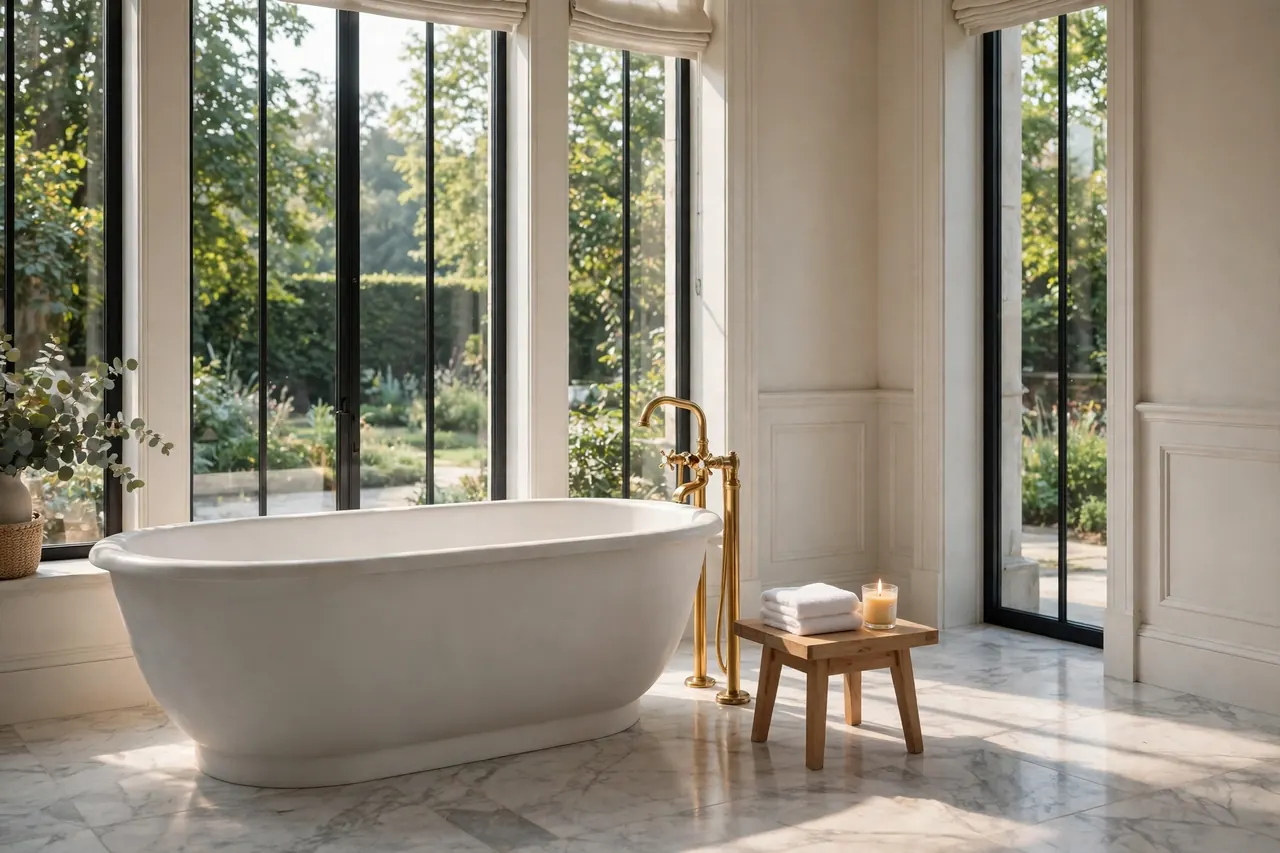
The freestanding tub is the hero of nearly every luxury bathroom photo ever taken, and it earns the spot: it turns a fixture into furniture and gives the room a center. If you are a committed soaker with the floor space, it is the right splurge. Choose a deep model, look for a thick rim you can rest an arm on, and budget honestly, because the floor mounted filler tap often costs as much as a modest tub and needs its own rough in plumbing.
The honest counterpoints, gathered from owners rather than showrooms: many freestanding tubs get used a handful of times a year. The narrow gap between tub and wall collects dust and hair where no mop fits. There is no deck for shampoo, a candle or a glass, unless you add a bath caddy or side stool.
A built in or drop in tub on a tiled deck solves all three: storage ledge included, easy cleaning, usually cheaper to buy and plumb, and a deep soaking model feels identical once you are in the water. Families bathing children and anyone short on floor space should take the built in without a flicker of doubt. Luxury is how it feels at 7 in the evening, not how it photographs at noon.
| Tub type | Choose it when | Strengths | Trade offs to plan for |
|---|---|---|---|
| Freestanding | The room can give it air on all sides and soaking is a ritual | Sculptural centerpiece, flexible placement, deep models | Filler and plumbing cost, no storage ledge, cleaning clearance on every side |
| Built in or drop in | Space is tight, children bathe here, or a shower over the tub is needed | Deck ledge for bottles and candles, concealed plumbing, efficient footprint | Fixed position, deck and sealant joints to maintain, less visual drama |
| Walk in | Stepping over a high rim is difficult now or may be later | Low step in, built in seat, grab friendly walls, door seals the water in | You enter before filling and stay until it drains, so check fill and drain times and your water heater’s capacity before buying |
The Shower: Rain, Steam and Room to Sit
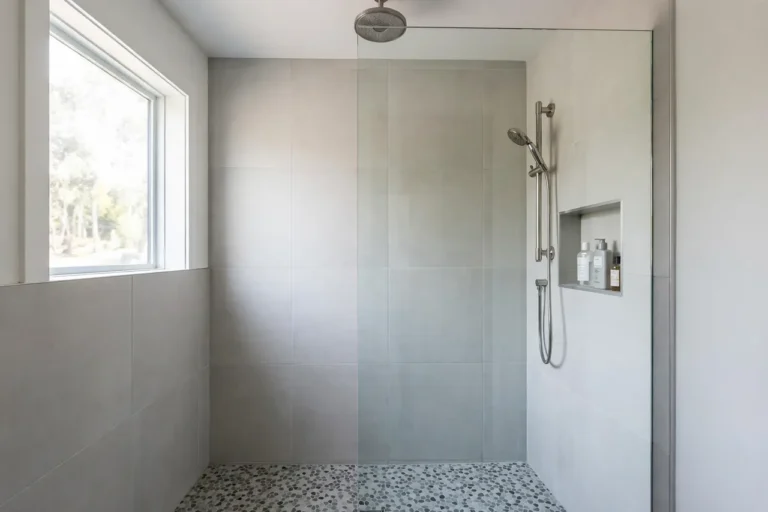
The shower is where luxury gets used daily, so it deserves the largest share of most budgets. The formula that works: a generous rain head overhead, a handheld on a slide bar for rinsing and cleaning, a built in bench, and a niche sized for real bottles. Thermostatic valves that hold temperature when someone flushes are a quiet upgrade you will appreciate every single morning.
Two practical notes. WaterSense labeled shower heads use 2.0 gallons per minute or less against the 2.5 standard, and the better luxury models keep the drenching feel through smarter nozzle design rather than raw flow, according to the EPA WaterSense program. And if steam is on your list, treat it as construction, not an accessory: manufacturer guidance from MrSteam calls for a fully enclosed shower with waterproofing and vapor management behind the surfaces, steam rated and vapor sealed light fixtures, and the bathroom’s exhaust fan placed outside the steam enclosure, in the main room, so it clears moisture after a session without pulling steam out during one.
Sizes, slopes, doorless layouts and full cost tiers for the shower itself live in our dedicated guide to shower ideas, which pairs with this article.
The Vanity: Double, Floating and Furniture Style
The vanity is the hardest working piece of furniture in the house, and luxury here means storage and counter discipline. Drawers beat doors: deep drawers with cutouts around the plumbing hold what two door cabinets cannot, and keep the counter clear.
On the double sink question, planning guidance from the NKBA calls for about 36 inches between the centerlines of two basins. That math means a double vanity wants roughly 72 inches or more. Squeeze two sinks into a 60 inch vanity and you get two small basins, two sets of plumbing eating the drawers, and about 10 inches of usable counter on each side, a regret that shows up again and again in owner accounts. Below 72 inches, one wide sink, a long run of empty counter and a big mirror feel genuinely richer.
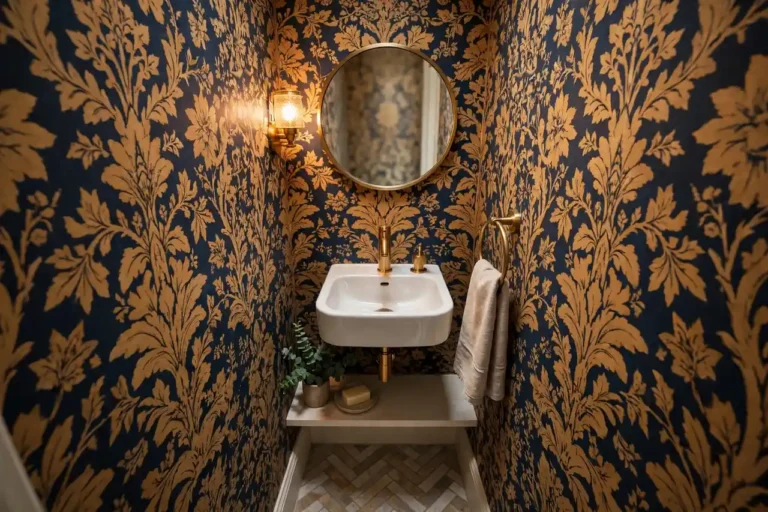
Style notes: floating vanities make cleaning easy and small rooms feel bigger, and they pair naturally with the modern look below. Our small powder room ideas with high-end finishes use the same floating look. Furniture style vanities, with legs and a framed front, suit traditional and transitional rooms. Either way, top it with quartz if the budget allows one premium surface, because the vanity top takes more daily abuse than any other stone in the room.
The Toilet Area: Wall Hung Toilets and Bidet Seats
The least glamorous corner gets the most practical luxury. A wall hung toilet hides its tank in the wall, floats above a floor you can mop in one pass, and saves inches in small rooms. Our powder room ideas for small luxury baths use the same trick. It needs a proper in wall carrier and a wall you can open, so it is a remodel decision, not a weekend swap.
The bidet seat is the upgrade owners describe with suspicious enthusiasm. Heated seat, warm water wash, self cleaning nozzle, fitted to many existing toilets with an electrical outlet nearby. It is the cheapest item in this entire article relative to how it changes daily life, and in Japan and much of Europe it stopped being called luxury a generation ago. It is just better plumbing.
Build the Spa Feeling Without the Clichés
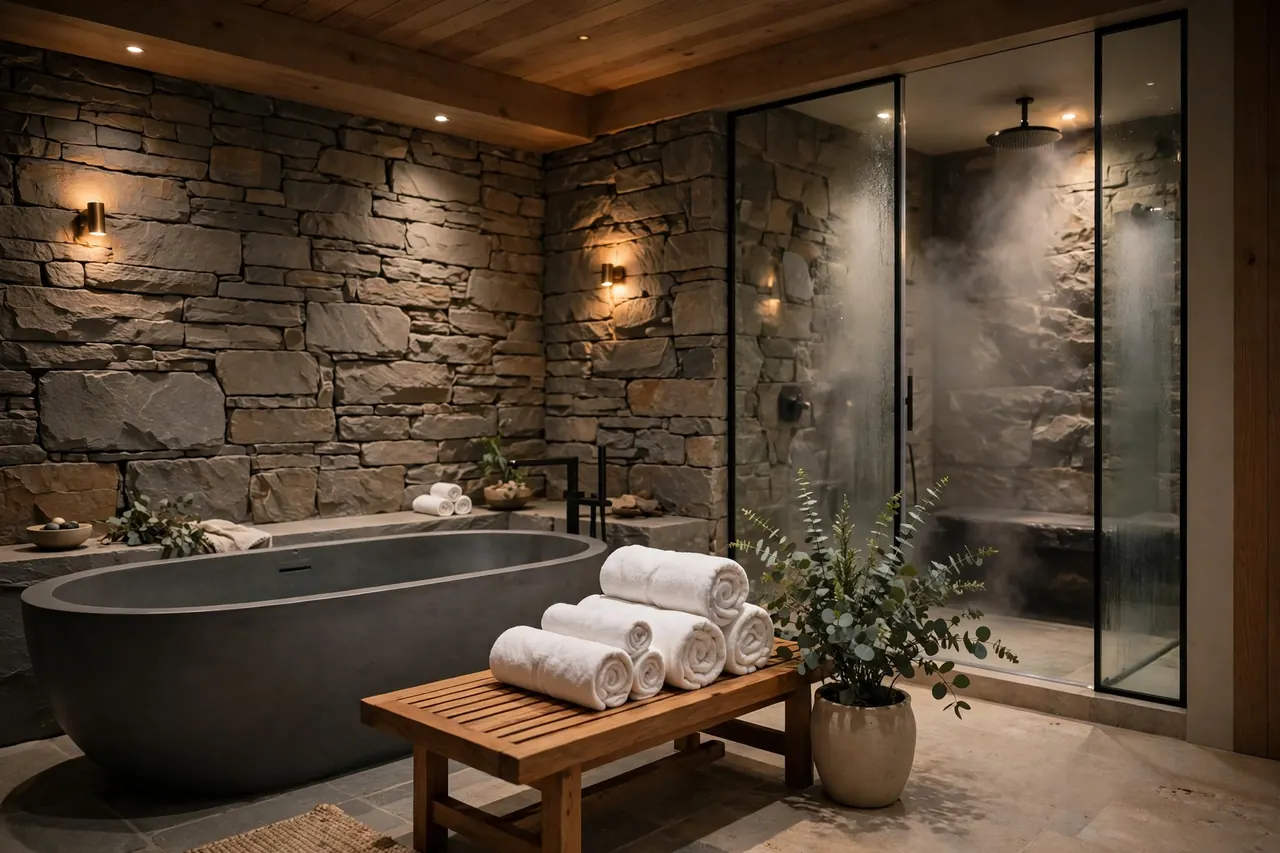
Every second bathroom now claims to be spa like, usually by adding a bamboo tray and a plant. Real spas feel different for structural reasons, and the contrast is worth stating plainly:
| Design focus | Routine bathroom | Spa style luxury bathroom |
|---|---|---|
| Purpose | Get clean, get out | Slow down, recover, linger |
| Light | One bright overhead source | Layered, warm and dimmable |
| Storage | Bottles and tools on show | Everything hidden, surfaces empty |
| Surfaces | Whatever was on offer | Few materials, natural textures, repeated calmly |
| Senses | Ignored | Warmth, scent, soft textiles and quiet are designed in |
The working checklist is short. Warm, dimmable light and no glare. One natural texture done properly, stone, wood or linen, instead of five spa props. A soaking option or a genuinely good shower, detailed in our guide to spa shower layouts, rain heads, steam and benches. Hidden storage so the room holds nothing that shouts. Thick towels, ideally warmed. One scent you chose on purpose. Houzz’s 2025 U.S. Bathroom Trends Study found more than a third of renovated bathrooms now include wellness oriented features, led by upgraded lighting and soaking or spa baths, which matches what designers keep saying: the spa feeling is mostly light, water and emptiness, arranged well.
Luxury Master Bathroom Ideas: Layouts That Feel Like a Suite
A luxury master bathroom is not a bigger bathroom, it is a zoned one. The layouts that feel like a private suite share the same skeleton: a wet zone, a dry zone and a private zone, arranged so two people can use the room at once without negotiation.
Separate the tub and shower. The combined tub shower is the first thing to go. A soaking tub placed where it can be seen from the door, often near a window, and a separate walk in shower is the layout every designer tour starts with.
Give the toilet its own room. In the NKBA’s 2025 Bath Trends research, 72 percent of designers agreed that separate water closets are highly desired by clients, and it remains the least photogenic feature on this list, which tells you it is about living, not showing. It is also what makes a shared morning routine civilized.
Consider a wet room. Tub inside the shower enclosure, one waterproofed space, one sheet of glass. It suits modern designs, makes small masters feel bigger, and simplifies cleaning, at the cost of careful waterproofing and a floor slope done by someone who has done it before.
Borrow space and light. Masters that open toward the bedroom or a dressing area, with the vanity sometimes outside the wet room entirely, feel like hotel suites because hotels build exactly this way. Keep the toilet and shower enclosed, let the vanity and tub breathe.
Plan the two person morning. Two sinks at proper spacing or one long trough sink, mirror lighting at face height on both sides, a drawer each, and outlets inside a drawer for the hair dryer and toothbrush chargers. The suite feeling is really the absence of small daily frictions.
Give grooming a seat. A short run of counter with a stool, good face light and one shallow drawer turns a corner of the vanity into a makeup and grooming station, and keeps one person seated and out of the sink traffic entirely. Hotels and older, grander houses both do this; it costs a stool and a few square feet, and it makes the room feel furnished rather than fitted.
Small Luxury Bathrooms: Grand in a Small Room
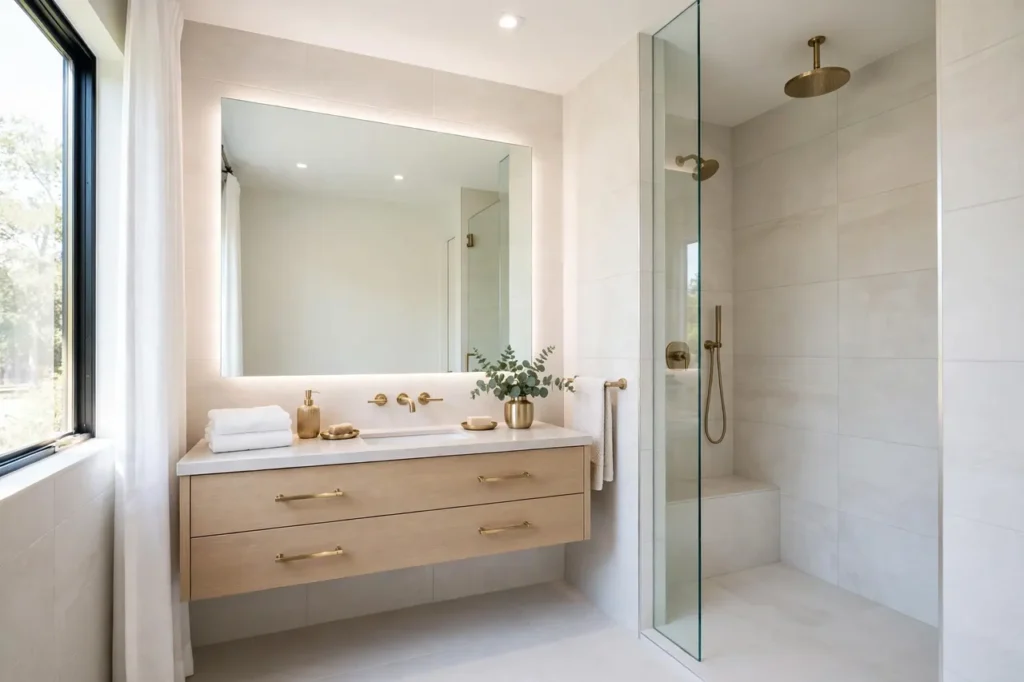
Every manufacturer guide and most designers repeat the same truth: small bathrooms can absolutely be luxurious, and in some ways they are easier, because one strong decision fills the whole room. The recipe is focus.
Choose one statement. A marble look feature wall, a striking floor tile, a sculptural tub if it fits, or a beautiful vanity. One hero, everything else quiet. Small rooms fail when five ideas fight in 40 square feet.
Float everything you can. A wall hung vanity and toilet reveal more floor, and visible floor is what your brain reads as space. Vertical storage columns and niches use the height that small rooms waste.
Use big tile, not small. Large format tiles mean fewer grout lines, and fewer lines mean a calmer, larger feeling room. The exception is the shower floor, where small tiles grip and follow the slope.
Let the mirror work. One mirror spanning the vanity width reflects light and doubles the sense of depth. Backlit models add the glow that small rooms, often windowless, badly need.
Go vertical, and use the awkward corner. Floor to ceiling tile, a tall mirror and pendant lights pull the eye upward, which is free spaciousness. The odd corner that fits nothing standard is exactly where a recessed niche, a narrow linen tower or a corner bench belongs; in a small room, an awkward space used well reads as custom design, while an awkward space ignored reads as a mistake.
Keep the palette tight. Two materials and one metal finish, repeated. In a small luxury bathroom, restraint is the luxury. For the full method behind a tight white palette in a small room, from large format tile to matched grout and layered light, see our small white bathroom ideas that make a tight room breathe.
For a small room in green instead of white, see our small sage green bathroom ideas for tight rooms, from pale sage rules to the tiny loo formula.
For a small room in blue instead of white, see our small blue bathroom ideas with two schools for navy, from restricting navy to one element to drenching the whole room.
For a small room in pink instead of white, see our small pink bathroom ideas that stay girly without looking childish, from one pink plus one tile to renter-friendly layers.
The Luxury Modern Bathroom: Clean Lines and Quiet Technology
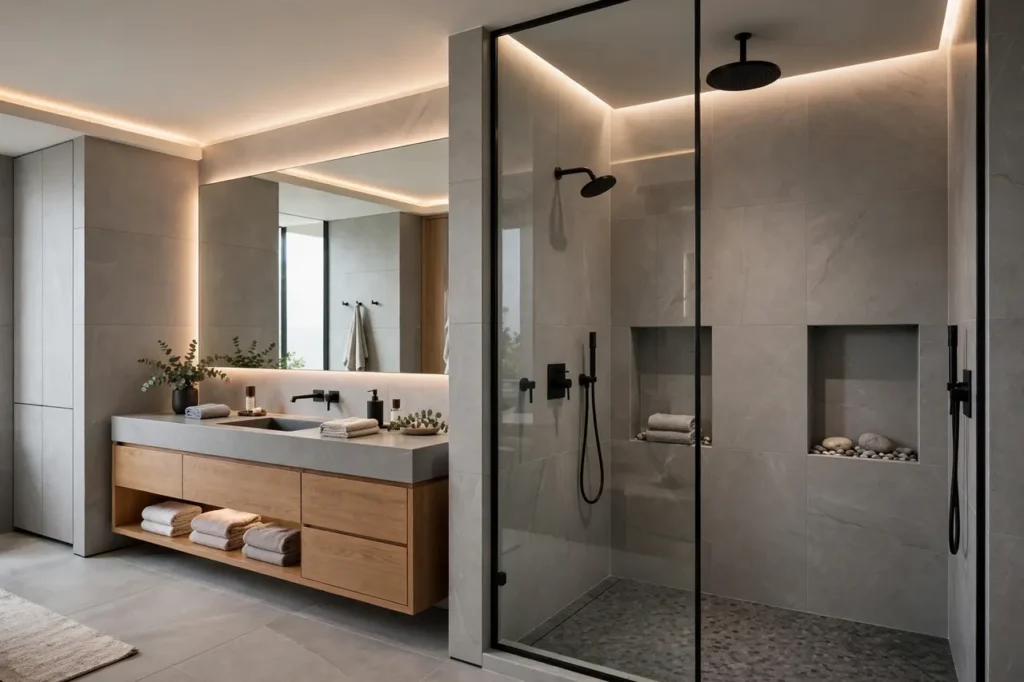
The modern luxury bathroom swaps ornament for precision: flat fronts, hidden hardware, matte black or brushed metal fixtures, large unbroken surfaces. What separates a good one from a cold one is technology that serves you silently and a dose of warmth, usually wood tones or soft light, against the clean lines.
Current trend research backs the direction. In the NKBA 2026 Bath Trends Report, drawn from nearly 700 industry experts, 80 percent expected large format flooring to lead over the next three years, wood faced vanities at 62 percent had overtaken painted ones, matte and brushed faucet finishes all polled ahead of polished, and 55 percent said a larger shower now matters more than a bathtub. Translation: warmth, big calm surfaces and a serious shower are where modern luxury is actually heading.
The tech worth paying for, ranked by daily impact:
- Heated floors. Electric mats under tile run about $8 to $15 per square foot of heated area installed, and a typical primary bathroom lands around $800 to $2,500 all in, thermostat and electrician included. Warm tile at 6 in the morning is the single most mentioned luxury in owner follow ups, and a programmable floor sensing thermostat keeps running costs to a modest monthly sum by heating on schedule instead of all night.
- Digital shower controls. Set your temperature and flow once, press, walk in. Presets for two people, and no reaching through cold water to adjust.
- Smart mirrors. Even, shadow free light, a demister pad that keeps the glass clear, sometimes a discreet display. The demister alone justifies it.
- Bidet seats and shower toilets, covered above, standard equipment in a modern build.
- Sensor and scene lighting. Motion activated low level light for night visits, and one button scenes for morning and evening, covered next.
The gimmick test: if a feature needs an app update, a subscription or a tutorial for guests, it is not luxury, it is homework. Technology in a luxury modern bathroom should be invisible until the moment it helps.
Lighting in Layers: The Recipe Every Great Bathroom Follows
Lighting is the cheapest luxury in this article and the most commonly botched. The recipe has three layers, and designers are blunt that you need all three.
Ambient light fills the room: ceiling fixtures, recessed lights, or a cove of hidden LED. This is the base, never the whole plan.
Task light works at the mirror, where faces live. Sconces at eye level on both sides of the mirror, or a backlit mirror, light your face evenly. A single overhead fixture above the mirror casts the shadow pattern of a horror film, and it is why so many home bathrooms feel harsh.
Accent light creates the mood: a small chandelier over the tub, LED strips under a floating vanity or inside a niche, a picture light over art. This layer is what guests remember.
Two rules bind it together. Put everything on dimmers, because a bathroom needs laboratory brightness at 7 am and candlelight at 9 pm. And respect the safety side: fixtures near tubs and showers must be rated for damp or wet locations and installed to code, which is a job for a licensed electrician, not a design decision.
Luxury Bathroom Accessories and Finishing Touches
Accessories are where a good bathroom becomes a finished one, and where the smallest money does visible work. The principle is coordination: choose one metal finish and carry it through faucets, towel bars, hooks, the mirror frame and even the tray on the counter. Mixed metals can work in expert hands, but one finish done completely is the reliable route to a composed room.
| Hardware finish | The look | Pairs well with | Care reality |
|---|---|---|---|
| Polished chrome | Bright, classic, reflective | Marble, white tile, traditional and modern rooms | Shows water spots and fingerprints first; a quick wipe keeps it mirrorlike |
| Brushed nickel or satin | Soft, warm gray, understated | Transitional rooms, gray and beige palettes | The most forgiving finish for everyday marks |
| Matte black | Graphic and architectural | Black and white palettes, wood vanities, modern styles | Light soap film and mineral marks can show pale against the black |
| Brushed brass or bronze | Warm, aged, quietly expensive | Stone, wood, navy and earthy palettes | Living finishes deepen and change with time; that patina is the point, not a defect |
Whatever you choose, clean it the way manufacturers such as Moen direct: a damp cloth and mild soap, rinse, then dry with a soft cloth, and keep harsh lime scale removers and abrasive pads away from coated finishes. The finish you baby for ten seconds after a shower is the finish that still looks new in five years.
- Textiles carry surprising weight. Thick towels in the 600 to 900 GSM range read as hotel luxury in the hand; even everyday towels at 400 to 600 GSM feel right when they are white, matching and neatly folded or rolled. A waffle robe on a hook completes the signal.
- Decant and tray. Move shampoo and soap into matching dispensers, group the counter items on one tray, and the room instantly looks managed. Our guide to small styling upgrades that make a bathroom look expensive covers trays, textiles and finishing touches in depth.
- Greenery that tolerates humidity. Pothos, ferns and peace lilies thrive in bathroom moisture and soften all that stone and glass.
- One piece of art or one beautiful object. A framed print that can handle humidity, a stone stool, a wooden bath caddy. Personal beats generic, and a single piece beats a shelf of small ones.
- Scent, quietly. A candle or reed diffuser in a woody or citrus scent. Every luxury hotel bathroom smells deliberate; yours can too for the price of a pizza.
Luxury That Uses Less Water and Energy
Sustainability in a luxury bathroom is not a compromise section. It is the same discipline as the rest of the room: buy durable things once, and make them efficient while they serve you.
Water is the easy win. The EPA WaterSense program independently certifies fixtures for efficiency and performance: labeled toilets use 20 percent less water than standard models, labeled faucet aerators can improve a faucet’s efficiency by about 30 percent, and labeled shower heads, covered earlier, run at 2.0 gallons per minute or less. None of these asks you to accept a weaker shower or a feebler flush; the label exists precisely to separate efficient from merely restricted.
Energy follows the same pattern. LED lighting on dimmers uses a fraction of the power of the halogen rows it replaced and lasts for years. A heated floor on a programmable thermostat warms the two hours you are barefoot instead of the whole day. And the least glamorous item in this article, a properly sized exhaust fan that actually gets used, protects every expensive surface in the room from the moisture damage that sends materials to landfill early. The greenest bathroom is the one that does not need redoing in eight years.
Plan the Renovation in the Right Order
Good luxury bathrooms are sequenced, not improvised. This is the order that keeps money and nerves intact:
- Measure and map your routines. Room dimensions, door swings, window positions, and honest notes on who uses the room, when and for what. Door swings deserve their own measurement pass, since a hinged door can eat the clearance a vanity or toilet needs, and this bathroom door measuring guide covers swing clearance, widths and rough openings. Layout follows life, not the other way round.
- Fix the layout and the anchor piece. Tub, shower or vanity: choose the centerpiece and lock plumbing positions before falling for finishes.
- Choose style, palette and materials together, and view samples in the room’s own light, wet and dry, before ordering.
- Set the budget with its contingency using the cost section below, and decide where your home sits honestly before the quotes arrive.
- Decide on professional help. Houzz’s 2025 study found 84 percent of renovating homeowners hire a professional. A designer earns their fee fastest on layout changes and custom work: Angi puts basic design help from around $500, with many full professional design projects between $3,000 and $12,000. A same layout refresh with confident taste may not need one.
- Inspect before you demolish, especially in older homes. A plumber’s look at supply and drain lines, an electrician’s look at wiring, and a plan for permits and inspections cost little against a mid project surprise.
- Order long lead items before demolition, and hand fixture specification sheets to anyone cutting stone or drilling holes. The faucet is chosen before the countertop is drilled, never after.
- Compare two or three quotes on the same written scope. Angi’s general build sequence runs design and planning, demolition, framing, plumbing and electrical rough in, drywall, the major installations, paint, then final fixtures, and your quotes should describe that same journey so they can be compared honestly.
Comfort and Accessibility That Look Invisible
The best luxury bathrooms quietly work for every body that will ever use them, including yours in thirty years. Houzz’s 2025 study found 68 percent of renovating homeowners consider special needs in their bathroom projects, and the features involved have become so well designed that guests never notice them.
A low threshold or curbless shower with a bench and a handheld head is already the spa layout from earlier sections. Grab bars read as towel rails when they are chosen in the room’s finish and installed on proper wall blocking, which is far cheaper to add during a remodel than after. A comfort height toilet, lever style handles instead of knobs, a clear route from door to shower, and lighting that does not glare all serve a tired twenty five year old exactly as well as an eighty year old. For the door on that route, these accessible bathroom door ideas cover clear widths, lever latches and pocket and barn trade-offs for aging in place. Plan them while the walls are open and future proofing costs almost nothing; retrofit them later and every one becomes a project.
What a Luxury Bathroom Costs
Here are the honest anchors. Angi’s current national data puts a standard bathroom remodel at about $10,800 on average, with most projects between $6,200 and $15,250. Upscale remodels reach about $65,000, and luxury primary bathrooms with custom stone, steam and smart fixtures can exceed $80,000. What tier are you actually planning?
| Tier | What it includes | Typical US cost |
|---|---|---|
| Cosmetic luxury refresh | New fixtures and faucets, lighting, mirror, paint, textiles, accessories. No layout change, no tile replacement | About $3,000 to $9,000 |
| Mid range full remodel | New tile, vanity, tub or shower, fixtures, same layout | Averages about $10,800 (Angi), commonly $10,000 to $30,000 with better finishes |
| Upscale primary bathroom | Layout changes, custom tile shower, double vanity, quality stone and fixtures | About $30,000 to $65,000 |
| True luxury suite | Wet room or steam shower, real marble, heated floors, smart toilet, custom cabinetry | $65,000 to $80,000 and beyond |
Figures are national ranges that swing widely with city, room size and product grade; treat them as planning anchors, not quotes.
Match the plan to your situation
A small bathroom and a limited budget. Do not gut a sound room. Spend on the vanity, layered lighting and one large, light tile, and skip the tub if it only fits by stealing clearance from everything else. Two or three strong changes beat eight timid ones.
An older bathroom, 1970s to 1990s. Your risk is behind the walls: aging pipes, tired wiring, floors that have met water before. Get the plumbing inspected before choosing fixtures, and hold the larger contingency described below. These projects often end with the most character, precisely because they were planned for surprises.
A high end primary bathroom. Your risk is not the budget, it is overdesign. Pick one hero material or one hero fixture, let everything else recede, invest in the sensory details you touch daily, and leave genuine empty space in the plan. Restraint is what separates a retreat from a showroom.
Renovating to sell. Design for the widest taste, not your own: neutral palette, one modern element, quality shower and vanity ahead of a statement tub, and a spend matched to what comparable homes nearby offer. Over improving past your street is the fastest way to donate money to the next owner.
Where the money goes at the top end surprises people: labor and tile work usually outrun the fixtures, and moving plumbing is the fastest way to add thousands. Keeping the layout is the single biggest saving available. At resale, mid range bathroom remodels recoup about 67 percent of their cost according to Angi’s summary of the data, while very high end projects return a smaller share, which is why the standard advice is to build luxury for your own daily life first and resale second.
One budget line is non negotiable: the contingency. Hold 10 to 15 percent on a straightforward project, and closer to 20 percent on an older bathroom. A This Old House survey of renovations found roughly one in four projects uncovers hidden water damage once walls open, and in a bathroom the odds are worse than anywhere else in the house. The luxury is finishing without panic.
Luxury Bathroom Mistakes Owners Regret Within a Year
Collected from owner accounts and renovation specialists, these are the expensive lessons. Every one of them is avoidable at the planning stage, which is where you are right now.
Marble in the shower, sealed once and forgotten. The stone darkens, stains around bottles and demands gentle cleaners forever. If you will not squeegee and reseal, choose marble look porcelain for the shower and keep real marble for the dry zones.
The jetted spa tub. Installation averages $5,000 or more, the jets and pumps need regular cleaning, and many owners report using it a few times before it becomes a very large laundry basket. A deep soaking tub with no plumbing inside delivers the same bath with none of the machinery.
Two sinks in a 60 inch vanity. Covered above, and worth repeating: cramped basins, no counter, drawers lost to plumbing. One sink and real counter space wins below 72 inches.
The polished marble floor. Beautiful, slippery when wet, and etched by a single splash of the wrong cleaner. Honed finishes and smaller formats are the grown up choice for floors.
The freestanding tub placed for the photo. Jammed against a wall with an unmoppable gap, no ledge for a thing, filler priced like a fixture. If the room cannot give it air on all sides, a decked tub is the better luxury.
Vessel sinks and mosaic walls. The vessel leaves a dirt trap ring where bowl meets counter. Wall to wall mosaic means hundreds of grout lines to scrub. Mosaic belongs on the shower floor, where its grip earns its keep.
Luxury Bathroom FAQs
What makes a bathroom feel luxurious?
Calm materials, layered lighting, warm touches like heated floors or thick towels, and surfaces with nothing cluttering them. Designers consistently point to material quality and light over square footage or brand names. A small, quiet, well lit bathroom feels more luxurious than a large, harsh, cluttered one.
How can I make my bathroom feel like a spa?
Remove before you add. Clear every surface, hide storage, warm and dim the lighting, and repeat a few calm materials instead of many busy ones. Then layer the senses: a good rain shower or a deep soak, thick towels, one natural texture such as wood or stone, and a single deliberate scent. The spa feeling is emptiness plus warmth, not a pile of bamboo accessories.
What colors work best in a luxury bathroom?
Warm whites, beige and greige with wood and brushed brass for the spa look; black and white for timeless contrast; muted blues and greens for a calm, watery note; and earthy clay or olive when a room needs warmth. Keep permanent surfaces in the quiet tones and put stronger color in paint and textiles, and reserve near black walls for larger rooms with strong light.
Is marble a good choice for a bathroom?
Yes, with conditions. Marble is porous, so it needs sealing once or twice a year, and acids etch it permanently, which sealer cannot prevent. It performs best on walls outside direct spray, splashbacks and vanity tops in a honed finish. Inside showers and on busy floors, marble look porcelain gives the same appearance without the maintenance.
How much does a luxury bathroom remodel cost?
Using Angi national data as the anchor, upscale bathroom remodels reach about $65,000 and fully luxury primary bathrooms can exceed $80,000. A mid range full remodel averages about $10,800, and a cosmetic refresh with luxury fixtures and lighting can start around $3,000. Layout changes and custom stone are the biggest cost drivers.
Can a small bathroom look luxurious?
Absolutely. Choose one statement feature, float the vanity and toilet to reveal floor, use large format tile with a tight palette, and invest in mirror lighting. Small rooms concentrate every good decision, which is why well designed small luxury bathrooms photograph so well.
What is the best lighting for a luxury bathroom?
Three layers on dimmers: ambient ceiling light, task light at the mirror from sconces or a backlit mirror so faces have no harsh shadows, and accent light such as a chandelier over the tub or LED strips in niches. Fixtures near water must be rated for damp or wet locations.
Are heated floors worth it in a bathroom?
For most owners, yes, and they are among the most praised upgrades in follow up reviews. Electric systems run about $8 to $15 per square foot of heated area installed, roughly $800 to $2,500 for a typical primary bathroom, and a programmable thermostat keeps running costs modest by warming the floor on your schedule.
What is the most important element in a luxury bathroom?
Designers usually answer materials and the shower, because you touch both daily. If the budget forces choices, put the money into the shower experience, the vanity top and lighting, and simplify elsewhere. A superb shower in a simple room beats a mediocre everything.
How can I make my bathroom feel luxurious on a budget?
Upgrade the lighting and mirror first, then the faucets and hardware in one matching finish, then textiles: thick matching towels and a robe. Decant bottles into dispensers, clear the counter to a single tray, and add one plant. That sequence delivers most of the hotel feeling for a few hundred dollars.
Do I need a special fan for a steam shower?
You need a moisture plan more than a special fan. Manufacturer guidance is clear that a steam shower must be a fully enclosed space with waterproofing and vapor management behind its surfaces, because steam travels where liquid water never reaches. The exhaust fan belongs outside the steam enclosure, in the main bathroom, ideally on a timer or humidity sensor, so it clears the room after a session. Steam is a specialist build, not a standard shower with a generator added.
What hardware finish is best for a luxury bathroom?
The one you repeat everywhere. Brushed nickel and satin finishes hide everyday marks best and suit most palettes. Polished chrome is the bright classic and shows water spots soonest. Matte black gives modern rooms their graphic edge. Brushed brass and bronze add warmth against stone and wood, and living finishes will deepen in color over time. Solid construction matters more than the label: a heavy, smooth operating handle reads as luxury every time you touch it.
Do I need a designer for a luxury bathroom remodel?
Not for a same layout refresh with fixtures and finishes swapped in place. Strongly consider one when the layout changes, plumbing moves, or custom tile and cabinetry enter the plan, because those are the decisions that are expensive to undo. Angi puts basic design help from around $500 and many full design projects between $3,000 and $12,000; on a complex primary bathroom, avoiding one layout mistake can repay that.
Do luxury bathrooms add value to a home?
They help a home sell and support its price, but they rarely return their full cost. Angi’s data summary puts mid range bathroom remodels at about 67 percent of cost recouped at resale, with upscale projects returning less. Build the luxury for the mornings you will live with, and treat resale as a bonus.
The Bottom Line
A luxury bathroom is not bought in one purchase. It is assembled from a calm palette, honest materials placed where they can succeed, layered light, a shower built for daily pleasure, storage that hides real life, and a budget built on real numbers with room for surprises. Marble is welcome, so long as it comes with open eyes. Do those things and the hotel feeling stops being a holiday memory and becomes the room you start every day in.
Get home ideas in your inbox
Practical home improvement ideas and DIY guides, once in a while. No spam.


2 Comments
Comments are closed.