
LED Lights for Bedroom: Pick the Right Glow for Sleep, Style, and Small Rooms
A room with led lights feels different the moment you walk in, but only when the light has a job. The rooms that look good share a pattern: one main idea, the light source hidden, and brightness matched to the hour. This guide follows that pattern, so your led room ends up calm instead of chaotic.
Whether you want a single strip behind the headboard or LED lights in the bedroom from wall to wall, the same rules apply: hide the source, match the brightness to the hour, and give the light a job.
Start With the Job: Sleep, Style, Study, or All Three
Before comparing products, name the job. A bedroom usually asks light to help you wind down, make the room look good, light a desk for study or work, or cover all three at different times. Govee’s bedroom collection frames this as scenes, like Morning Glow and Wind Down.
Strip Lights First: The Bedroom Default
Strip lights are the bedroom default. Nearly every product on the Walmart bedroom listing and the Govee bedroom collection is a strip, a lamp that carries a strip, or an accessory for one. A strip is a flexible tape of small LEDs with an adhesive back, a controller, and a power supply, and it bends around headboards, shelves, and ceiling edges where a fixed lamp cannot go. Most bedroom strips are USB powered or low voltage plug in models, and listings show lengths from 10 feet to 200 feet.
| Strip type | What it does | Best bedroom job | Watch out |
|---|---|---|---|
| RGB | One colour across the whole strip at a time | Mood colour and parties | Cannot show two colours at once |
| RGBIC | Different colours on different segments at the same time | Aesthetic rooms and feature walls | Cutting rules depend on the model |
| Tunable white | Shifts from warm white to cool white, with no colour | Reading, study, and morning light | No party colours |
| Dim to warm | Warms in colour as it dims, toward candlelight tones | Wind down light and bedside glow | Brightness drops as it warms |

How Many Feet Do You Actually Need
Walmart’s own FAQ asks how many feet of LED strip you need, and no competitor answers it with a method, so here is one. Measure each run separately: the ceiling edge, the headboard width, the length under the bed, the back of the desk, and any shelf run. Add those runs together, plus a little slack for corners and for reaching the plug, then buy the next length up from that total, not the longest roll on the page.
Where to Put the Strip: Ceiling, Headboard, Under Bed, Desk, and Shelves
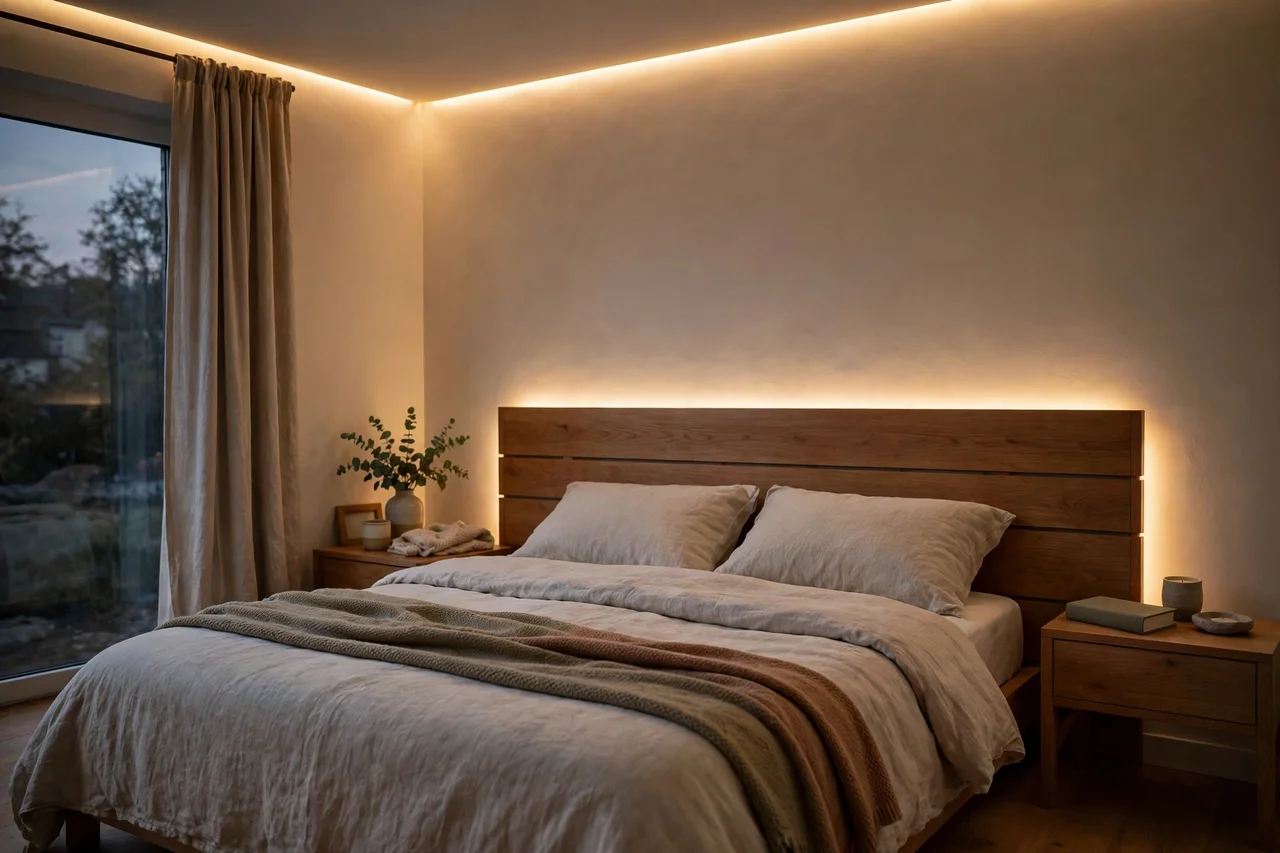
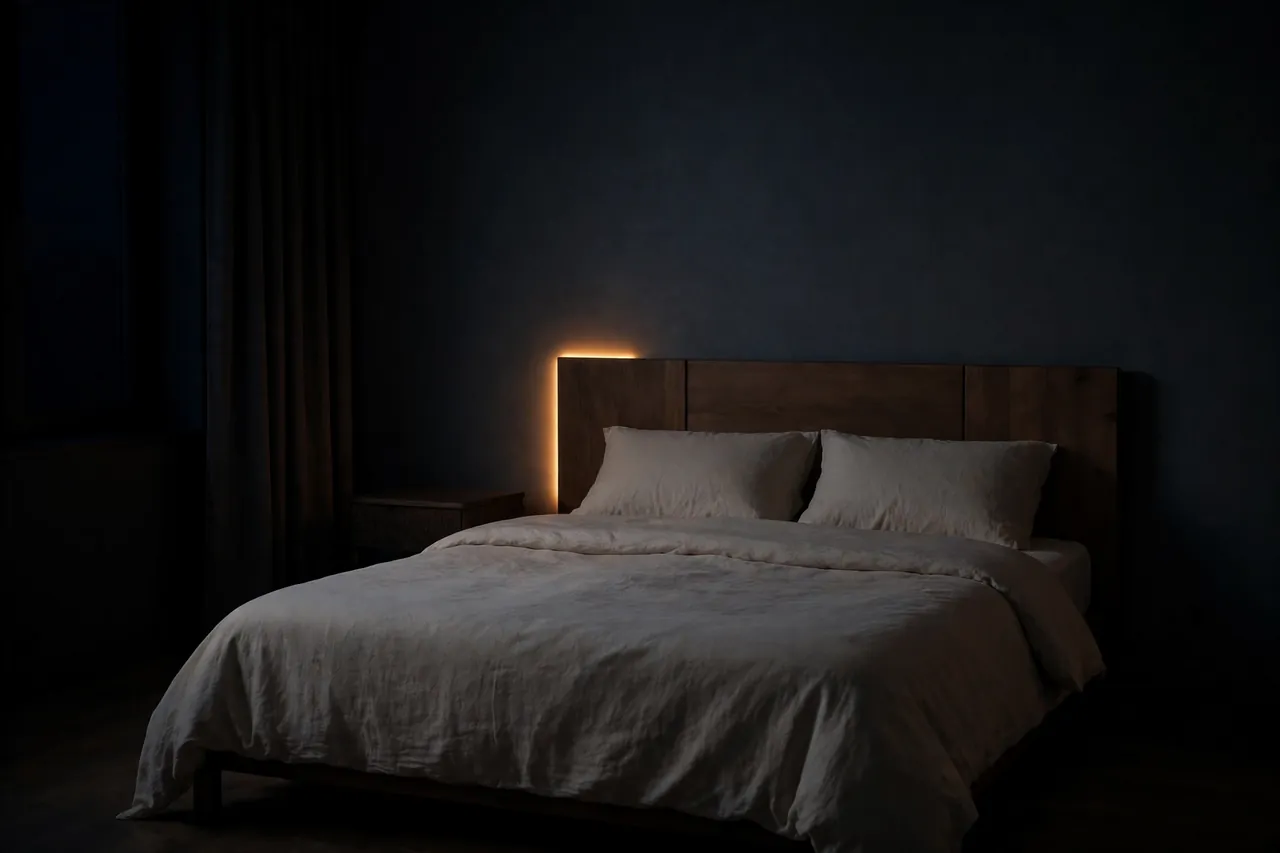
Placement decides whether a strip looks expensive or cheap, and the rule from aesthetic room roundups is simple: hide the source and show the glow. When the strip sits slightly inset behind a headboard, under a bed frame, or along a ceiling edge, the wall itself seems to glow.
| Placement | Effect | Watch out |
|---|---|---|
| Ceiling edge | Classic all over glow, the room feels taller | Keep the line continuous, plan corners in advance |
| Behind the headboard | Soft halo that frames the bed | Keep the strip inset so dots do not show |
| Under the bed | Floating bed effect and a low night light | Keep brightness low or it glares across the floor |
| Behind a desk or monitor | Less harsh contrast at night for study and screens | Measure the desk width, not the wall width |
| Inside shelves | Books and decor look curated instead of cluttered | One shelf lit beats five shelves competing |
| Inside a closet | Clothes are visible without a ceiling light | Keep the strip clear of fabric and hinges |
Beyond Strips: Lamps, Panels, Neon Rope, and Ceiling Lights
A strip is the default, but it is not the whole room. Floor and table lamps carry light to face height, which matters for reading and getting dressed, and Govee’s collection leads with lamps alongside strips for exactly that reason. Hexagonal light panels turn a blank wall into a feature, while neon rope gives a continuous line of colour that bends into shapes a rigid lamp cannot. Ceiling lights with adjustable colour temperature cover the general light a strip cannot.
Curtain, Fairy, and Vine Lights: The Soft Sparkle Layer
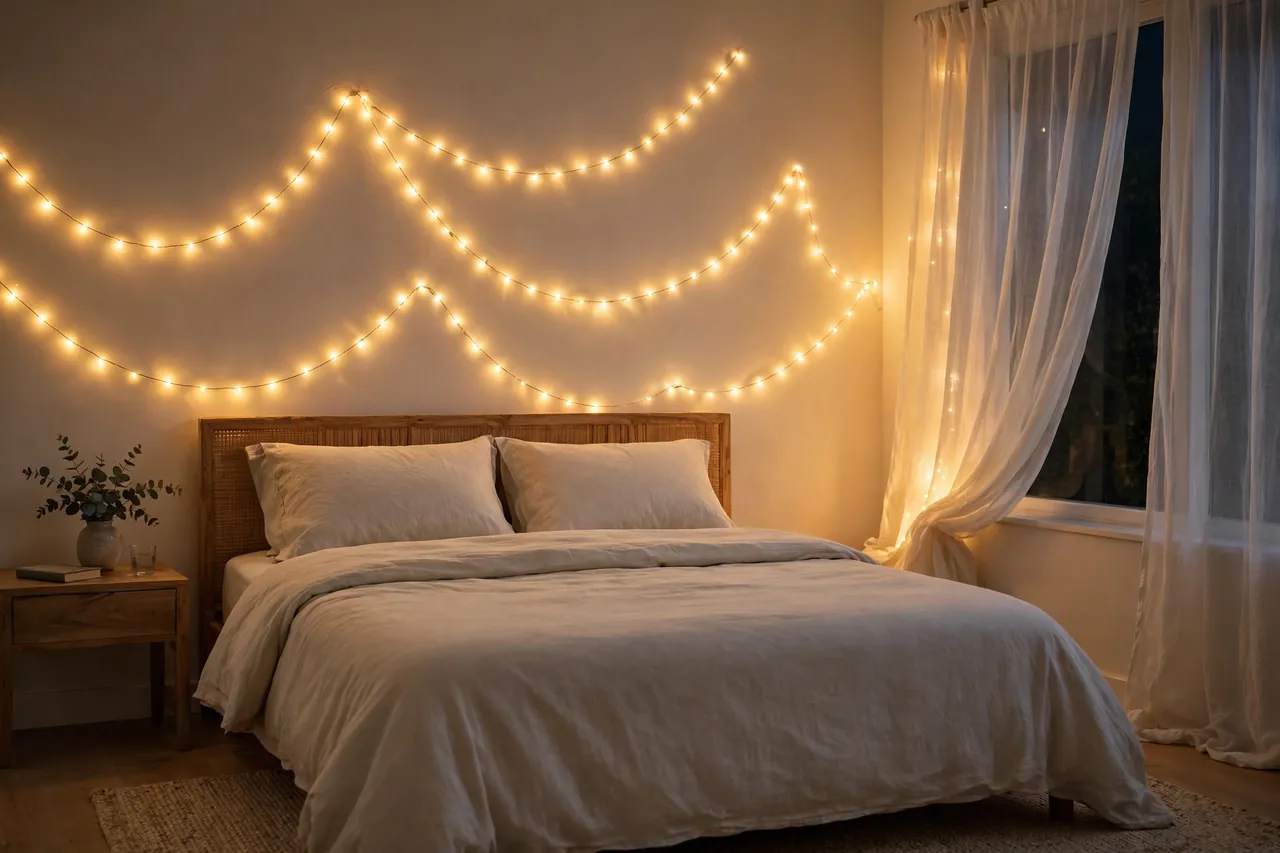
Curtain, fairy, and vine lights are the soft layer that strips cannot imitate. Where a strip gives a line of colour, these give sparkle: many small points spread across a curtain, a wall, or a frame. Tapestry Girls builds a whole small space collection around them, with curtain lights, vine lights, sunflower string lights, and fairy lights leading the listing. Drape them in gentle curves rather than pulling them tight like a ruler, because a tight line looks like wiring and a soft drape looks like decor.
Neon Signs and Wall Art: One Statement, Not Five
Neon style LED signs are the loudest item in this guide, and the rule for them is one statement, not five. Tapestry Girls lists neon bolts, lips, hearts, and lightning bolts among its best sellers, and aesthetic room roundups add moon and star shapes, short quotes, and gamer symbols. One sign above a desk or bed reads as a deliberate focal point. Three signs plus a colour strip plus curtain lights reads as a shop window. Pick the sign that matches the room’s one colour or one theme, hang it where the eye lands first, and keep everything around it calm: plain bedding, simple art, and one main colour elsewhere.
Teenage Girl Bedroom Ideas With LED Lights: Pastel, Fairy, and Vanity Glow
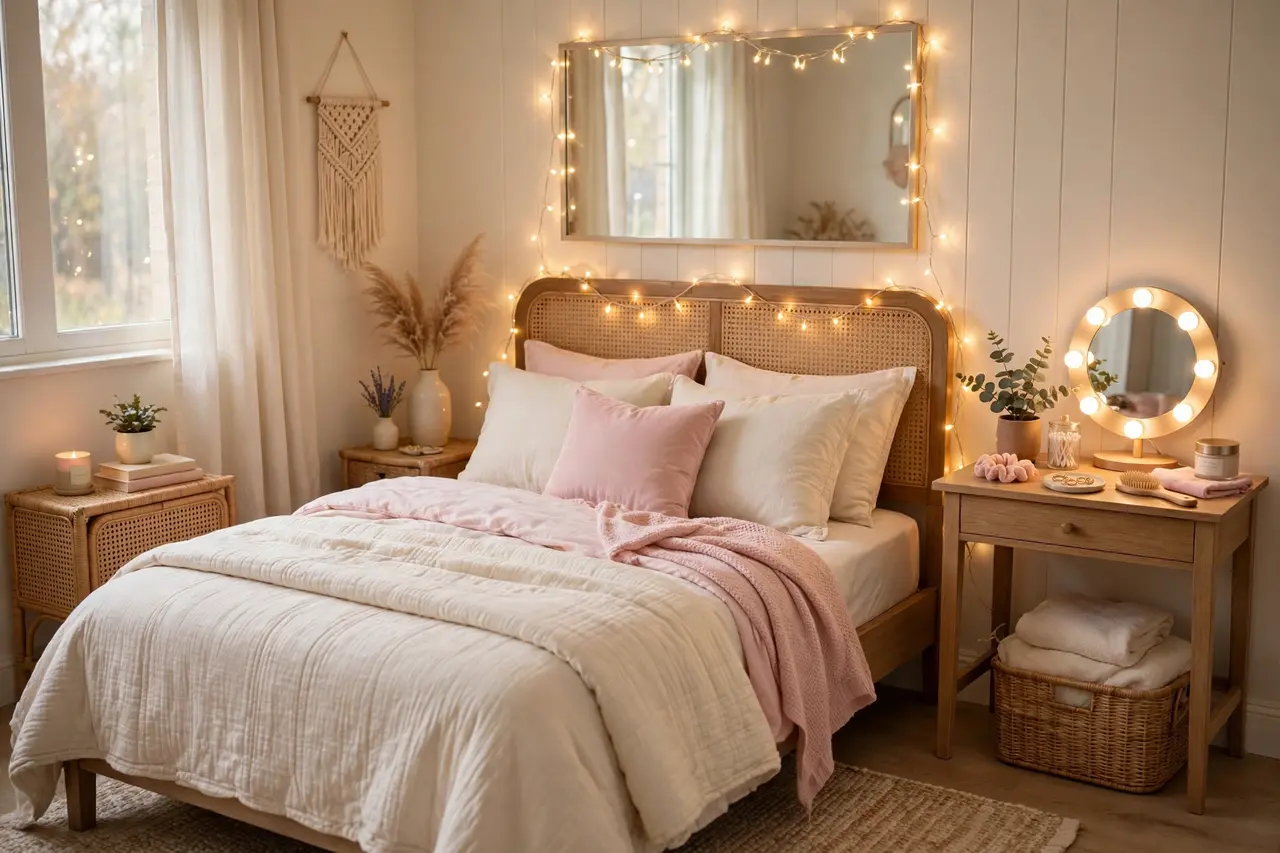
Teenage girl bedroom ideas with led lights work best as a small system, not a pile of products: pastel, fairy, and vanity glow. Start with a neutral base, bedding and walls in white, cream, or pale grey, then add one trending colour, blush pink, lavender, or sage, rather than every colour at once. Run a warm white or soft pink strip along the ceiling edge or the bed frame, wrap fairy lights around the mirror or the shelves for a cozy nighttime glow, and add an LED lit mirror or vanity for getting ready. Keep study light separate, a plain white desk lamp for homework, so the mood lighting never has to do a job it is bad at.
Aesthetic Rooms With LED Lights: The One Colour Rule
Aesthetic rooms with led lights follow one rule that shows up across room roundups: one colour, done well, beats a rainbow done loudly. Pick a neutral base colour for the large surfaces, then one trending colour for the light, sage, blush, lavender, or a deep blue, and let texture do the rest, throws, pillows, curtains, and a rug. The strip goes where the eye already travels, ceiling edge, headboard, or shelves, and the source stays hidden so the glow looks intentional. If the room starts to feel busy, remove a layer before adding one: turn off the curtain lights, or switch the strip to warm white, and see whether the room calms down.
Dark Rooms and Moody Glow: Black Strips and One Dark Wall
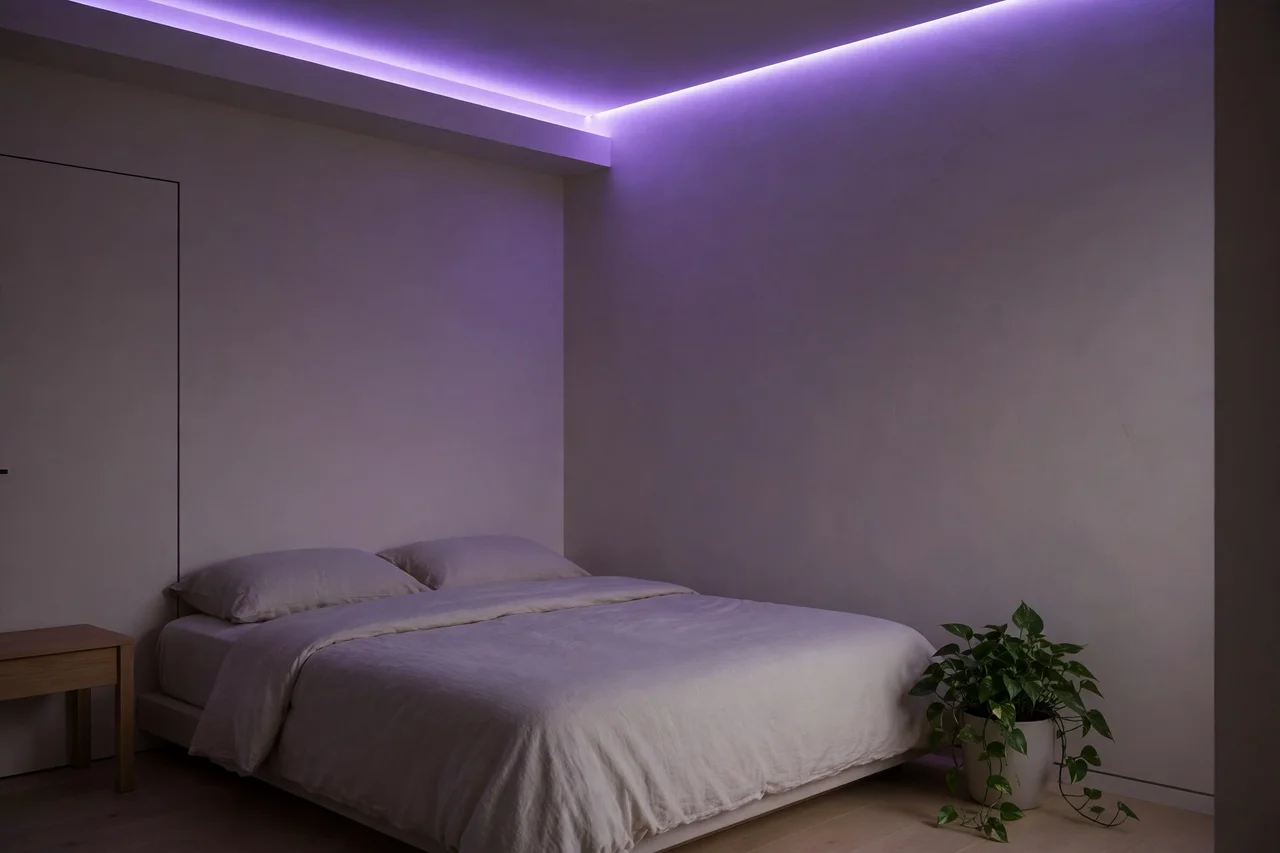
Dark rooms suit LED light better than most people expect, because a dark wall makes a strip glow harder while the rest of the room stays quiet. The method is one dark wall, not four: a deep charcoal, navy, or black accent wall behind the bed, with the strip hidden along its top edge or behind the headboard so the colour spills across the dark paint. Black or dark finished strips and channels disappear against the wall in daylight. Keep the ceiling and trim light so the room does not close in, and add one warm light source at face height. For the dark wall colour itself, see our dark room colour guide, since LED colour and wall colour change each other.
Small Rooms and Dorms: Light Without Eating Space
Small rooms and dorms are where LED lights earn their keep, because every good option here uses wall, ceiling, or bed space instead of floor space. A strip along the ceiling edge, a strip under the bed, and lights around the mirror give a small led room three layers without a single floor lamp. Go vertical: shelves with a strip underneath, a mirror wrapped in warm string lights, and a headboard glow. Measure first, as small room ideas that start with measuring always advise, because a strip bought for a wall you do not have is money on a shelf.
Colour and Brightness: Warm White, RGB, and the Wind Down Rule
Colour temperature decides whether a bedroom feels restful or restless. Bedroom guides consistently put warm white at 2700K to 3000K for evenings, a candlelight to sunrise tone that feels soft rather than alert. Neutral white around 3500K to 4000K suits daytime tasks and dressing, and one bedroom thread notes 3500K to 4500K for makeup and dressing light. RGB colour is for mood, not for seeing: red, pink, or blue at low brightness can look wonderful, but do not try to read under them. The wind down rule pulls this together: as bedtime approaches, dim the lights, warm the colour, and switch the strip to a single warm tone or off. Wall colour interacts with all of this, and our guide to how light changes wall colour is worth checking before you commit to a bold paint and a bold light at the same time.
LED Lights and Sleep: What Helps and What Hurts
Editorial summaries on LED lights and sleep agree on the broad pattern: blue and cool white light in the evening is reported to suppress melatonin, the hormone tied to the sleep cycle, while dim warm light in red or amber tones is reported to interfere least. That is reported guidance from secondary summaries, not a medical finding this guide can certify, and individual responses vary. Practically: keep bright cool light out of the last hour before bed, dim the strip and warm its colour in the evening, and use a schedule so the shift happens without thinking.
App, Remote, or Voice: Control Without the Headache
Control is where many buyers regret a purchase, so choose it before you buy, not after. A handheld remote is the simplest route: basic colours, brightness, and a few modes, with no phone and no network needed, and it suits a child’s room or a guest room. An app adds scenes, schedules, music sync, and colour picking from a photo, and it is how most aesthetic room looks are actually run. Check whether the app needs Bluetooth or Wi-Fi: Bluetooth needs your phone nearby, roughly within the same room, while Wi-Fi works from anywhere in the house and usually connects to voice assistants.
Install Without Damaging Walls: The Renter Playbook
Damage free install is the question Walmart’s FAQ asks outright, and the honest answer is that it depends on the wall, the adhesive, and how you remove the strip. Start clean and dry: wipe the surface, let it dry, and stick only to smooth surfaces, since dust and grease weaken the hold. Test a small hidden area first, and wait out the paint curing time on newly painted walls. Aluminium channels are the safest professional route: the strip sits inside the channel, the channel carries the adhesive or the screws, and the wall never meets the strip’s glue. Clips, tension clamps on shelf edges, and hiding strips behind headboards or floating shelves are the no adhesive routes that cost nothing in wall damage. On removal, go slow and use gentle heat to soften the adhesive, because yanking is what peels paint. One reported case is worth knowing: a parent removing a daughter’s strip found the ceiling paint came with it, and while brands and paint jobs vary, the case proves the risk is real rather than theoretical. Renter friendly updates without damage follow the same playbook across rooms.
Corners, Cuts, and Cables: The Fiddly Bits Done Right
Corners, cuts, and cables are where a good strip job becomes a great one, and where most first attempts go wrong. Bend a strip in gentle curves, never a sharp crease. For a clean 90 degree corner, cut only at the printed cut marks and join the pieces with a compatible L shaped connector. Check the cutting rules for your model before you cut anything: standard RGB strips usually allow cutting at marked points, while some RGBIC models lose their segmented effects or stop working as intended when cut, so the model manual decides, not a general rule.
Power and Safety: Low Voltage, Overload, and Cheap Strip Risks
Most bedroom LED strips run on low voltage, commonly 12V or 24V, which is why they feel safe to touch and give off little heat compared with old incandescent bulbs. Do not overload one power supply with many strips joined end to end, since overheating and power failures are the problems that show up when a supply is pushed past its rating, and keep strips away from flammable materials and damp spots. Cheap strips are the main risk: poor quality products can run hotter and fail sooner, so a known brand with a proper power supply is worth more than the cheapest roll. Flicker is another reported issue, usually traced to an incompatible dimmer rather than the strip itself, so match the dimmer to the strip or use the strip’s own controller.
Costs: From One Strip to a Full Smart Room
This guide gives no prices, because strip prices change constantly and vary by length, brand, and features, and any number printed here would be out of date quickly. What matters is the route, since each route buys a different room.
| Route | What it covers | Best for |
|---|---|---|
| One strip | A single run, usually headboard or ceiling edge, with a remote | Testing the look in one room |
| One room layered | Strip plus a sparkle layer plus one reading lamp, with app control | A bedroom that needs evenings and study light |
| Full smart room | Multiple strips, panels or lamps, scenes, schedules, and voice control | A room used for sleep, study, gaming, and relaxing |
Mistakes That Make LED Rooms Look Cheap
- Visible dots: the strip shows instead of the glow, because it sits proud of the surface instead of inset behind it.
- Rainbow everything: every colour at full brightness at once, with strips, curtain lights, and neon all competing.
- One harsh overhead only: a single ceiling light doing every job, with no warm layer for evenings.
- Buying length before measuring: a roll far longer or shorter than the runs it must cover, leaving joins or waste.
- Cutting without checking: slicing a strip at the wrong point, or cutting a model that loses its effects when cut.
- Sticking to fresh paint: adhesive on paint that has not cured, which peels on removal.
- Visible wiring: a controller, power brick, and cable on show, undoing an otherwise clean install.
- Mismatched colour temperatures: warm strips, cool ceiling light, and blue desk lamp in one room, so nothing matches.
- Forgetting the controller: a setup that needs furniture moved every time the light changes.
- Lighting the room you photograph, not the room you live in: a look that works for one photo, not for daily life.
LED Lights for Bedroom FAQs
What are the best LED lights for bedrooms?
Strip lights are the best starting point: they fit headboards, ceiling edges, shelves, and desks. Choose warm white or tunable white for the main strip and add colour only as a second layer.
How many feet of LED strip do I need?
Measure each run separately, ceiling edge, headboard, under bed, desk, and shelves, add them together with a little slack, and buy the next length up.
Are LED strip lights safe for bedrooms?
Most bedroom strips run on low voltage, commonly 12V or 24V, and give off little heat. Keep them away from flammable materials and do not overload one power supply.
Do LED bedroom lights help with sleep?
Summaries report that dim warm light interferes least with the sleep cycle, while bright blue and cool white light in the evening is reported to suppress melatonin. That is reported guidance, not medical advice.
Can I leave LED strip lights on all night?
Quality strips are low heat and low voltage, so leaving them on is not the fire risk some people fear. For sleep, a dim warm or amber glow is least disruptive.
Will LED strips damage my walls?
They can, and one reported case of ceiling paint peeling on removal proves the risk is real, though brands and paint jobs vary. Test a hidden area first, avoid fresh paint, use channels or clips, and remove slowly with gentle heat.
How do I install LED strips without damaging walls?
Use the renter playbook: clean dry smooth surfaces, test first, and prefer channels, clips, or hiding the strip behind furniture over direct adhesive on paint. Never stick a strip to paint that has not finished curing.
Which LED light colour works best in bedrooms?
Warm white at 2700K to 3000K is the safest evening choice, with neutral white for daytime tasks and dressing. Colour is for mood in short bursts, not for reading or winding down.
What is the difference between RGB and RGBIC?
An RGB strip shows one colour across its whole length at a time. An RGBIC strip shows different colours on different segments at the same time, so gradients and flowing patterns are possible. RGBIC models often have stricter cutting rules, so check the model before cutting.
Do I need Wi-Fi or will Bluetooth work?
Bluetooth works fine if your phone is nearby, since it controls the strip from within the same room. Wi-Fi adds control from anywhere in the house and usually connects to voice assistants.
Can I cut LED strip lights?
Many standard strips can be cut, but only at the printed cut marks, and only with a compatible connector for corners and joins. Some RGBIC models lose their segmented effects when cut, so the rule is model dependent: read the manual for your exact strip before cutting anything.
What LED lights suit a teenage girl bedroom?
A pastel system works best: a warm white or soft pink strip along the ceiling or bed frame, fairy lights around the mirror or shelves, an LED lit mirror or vanity for getting ready, and one small neon sign as the personal statement. Keep the base neutral and the colour to one trending shade.
What is the cheapest way to start with LED bedroom lights?
Start with one strip on one run, usually the headboard or the ceiling edge, with a remote control, and live with it for a few weeks before adding layers.
How much do LED lights for bedroom cost?
Cost depends on scope, not on one number. A single strip with a remote is the smallest route, a layered room is the middle route, and a full smart room is the largest route. This guide gives no prices, since they change constantly.
Where can I buy LED lights for bedroom?
General channels cover the whole range: online marketplaces, home stores, and lighting brands that sell direct. Whichever channel you use, check the same three things before buying: the length you measured, the control type you want, and whether the strip can be cut.
What are the color options for LED lights for bedroom?
The main options are warm white, tunable white, single colour RGB, multi colour RGBIC, and dim to warm. Warm white suits evenings, tunable white shifts from warm to cool for daytime tasks, RGB gives one colour at a time, RGBIC gives several at once, and dim to warm turns warmer as it dims.
How to install LED lights for bedroom?
Install in this order: measure each run, clean and dry the surface, test the strip in place before sticking anything, fix it with its adhesive, clips, or a channel, join corners only at printed cut marks with compatible connectors, and hide the controller near the outlet. Never stick a strip to paint that has not finished curing.
What are the benefits of using LED lights for bedroom?
The benefits are flexibility, low heat, and low power use. One strip changes a room’s mood without new furniture or paint, layers of light replace a single harsh overhead, and most bedroom strips run on low voltage with little heat. Add scheduling and dimming, and the same room serves study, style, and winding down.
Final Thoughts
A good led light room is not the room with the most lights, it is the room where each light has a job and the source stays out of sight. Measure first, pick one colour system, hide the strip, warm and dim the room as bedtime approaches, and install it in a way your walls will forgive. Start with one strip, add the sparkle layer only if the room still wants it, and let the room prove each addition before the next one arrives.
Get home ideas in your inbox
Practical home improvement ideas and DIY guides, once in a while. No spam.





2 Comments
Comments are closed.