
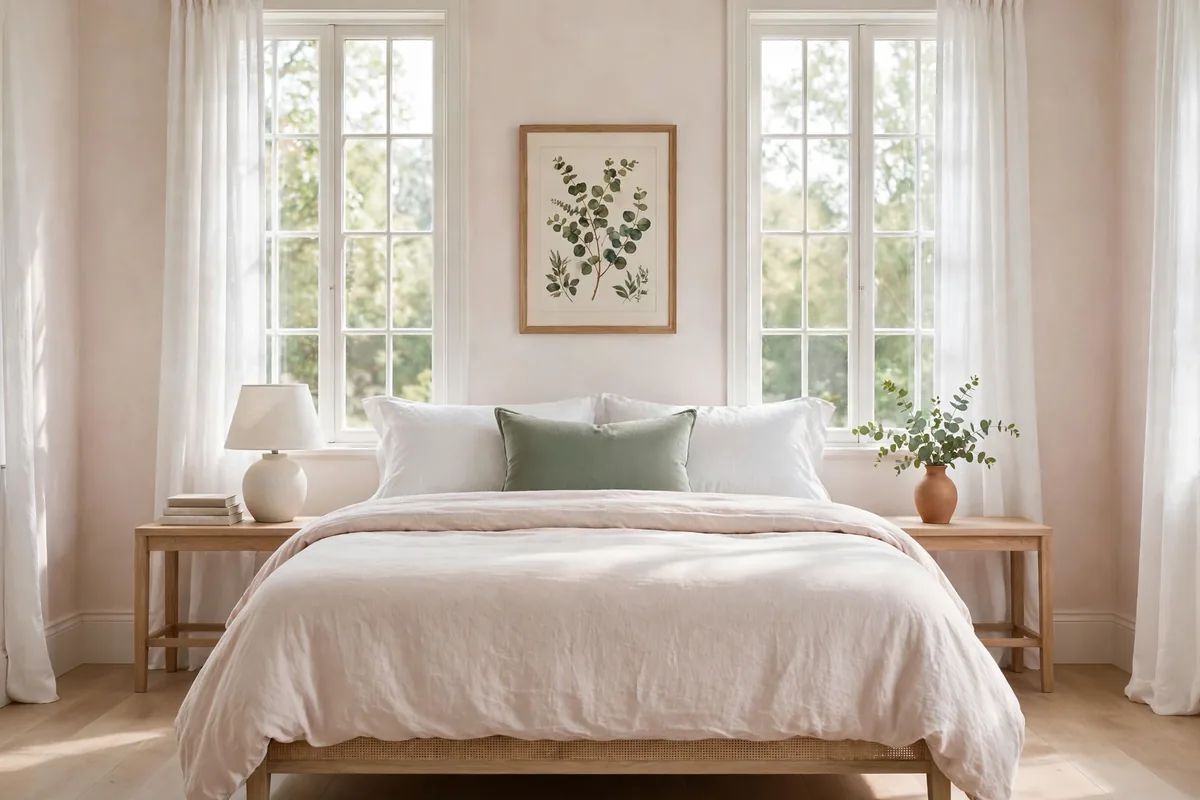
Girls Bedroom Ideas: Colors, Themes, and Rooms That Grow With Her
A girls bedroom has to do more jobs than almost any other room in the house. It is a place to sleep, play, study, get ready, and spend time with friends, and the person using it changes fast. The little girl who wants a room full of stuffed animals becomes a tween who wants her own style, and then a teen who wants a room that feels like hers alone. The best girls room ideas plan for all three stages at once, so the room can change without starting over every few years.
What Makes a Girls Bedroom Work at Every Age?
A room works at every age when its fixed parts are calm and its changeable parts do the talking. Walls, bed, dresser, and lighting stay fairly neutral and well made, while bedding, art, pillows, and small decor carry the current taste. That split is the whole secret. When the fixed parts are loud, every change of taste means repainting and refurnishing. When the fixed parts are calm, a new duvet cover, a new gallery wall, and a few new accessories can move the room from little girl to tween to teen in a weekend.
Think in zones, not just in furniture. Every girls bedroom, at every age, needs a sleep zone, a storage zone, and a place to sit that is not the bed. From school age onward it also needs a study zone with real light and a flat surface. Rooms fail when one zone eats the others, usually storage piled on the bed or homework done on the floor because the desk became a dumping ground. Give each zone its own corner, even a small one, and the room stays usable.
Start With Color, Not Pink by Default
Pink is a fine choice, but it should be a choice, not a default. Many girls love pink, and many do not, and even girls who love it often want it as an accent rather than on every wall. Start by asking what colors she actually likes, then build a palette of two or three colors and repeat them around the room in bedding, curtains, and rug. Repeating a small palette is what makes a room look designed instead of collected at random.
Good palettes beyond all pink are easy to find. Sage green with cream and terracotta feels calm and grown up. Lavender with soft gray and white feels gentle without feeling babyish. Dusty blue with blush and natural wood feels fresh and works from childhood into teen years. For a bolder girl, mustard with coral and teal makes a lively room that still holds together, as long as one of the three stays in the minority. The rule behind all of them is the same: one main color, one neutral, one accent, repeated.
Choose a Neutral Foundation, Then Layer Color On Top
A neutral foundation is what lets a room grow. Walls in warm white, cream, soft gray, or light beige, a bed frame in wood, white, or a soft painted finish, and a rug that does not shout will suit any theme added later. Color then arrives in layers that are easy to change: bedding first, then curtains, then pillows, art, and small accessories. When tastes change, only the layers change, and the room never needs a full redo.
| Palette | Feel | Best for |
|---|---|---|
| Sage green, cream, terracotta | Calm, natural, grown up | A room that should last into teen years |
| Lavender, soft gray, white | Gentle, dreamy, soft | Little girls and tweens who love pastels |
| Dusty blue, blush, natural wood | Fresh, bright, flexible | Shared rooms and rooms with wood furniture |
| Mustard, coral, teal | Bold, lively, confident | Older girls who want a strong look |
| Blush, white, gold accents | Soft, pretty, a little glamorous | Teens who still love pink, done maturely |
Neutral does not mean boring. Texture does the work that color used to do: a woven basket, a linen duvet, a velvet pillow, a rattan chair, and a wool rug can make a cream room feel rich. And a neutral room photographs well, which matters to tweens and teens who care about how their room looks in pictures.
Patterns That Play Well Together
Patterns make a girls room feel alive, but too many patterns make it feel noisy. A workable rule is one large pattern, one small pattern, and one solid. The large pattern might be floral bedding or a bold rug. The small pattern might be a striped pillow or a dotted curtain. The solid is the calm surface that lets the eye rest, usually the wall color or a plain throw.
A recurring pattern is a quieter trick that designers use a lot: repeat one small motif in several places, such as stars on the bedding, stars on a wall decal, and a star shaped lamp. The repetition ties the room together without needing matching sets. Stripes are the safest recurring pattern, because they suit almost any theme and they can stretch a small room visually, especially a striped accent wall behind the bed.
Walls That Do the Work: Murals, Accent Walls, and Art
Walls are the biggest surface in the room, so they do the most work. One statement wall beats four busy walls. A mural, painted or as a large wall decal, can turn a plain room into a woodland, a sky, or a city in an afternoon, and popular mural subjects for little girls include trees, jungle animals, butterflies, unicorns, and horses. For older girls, a painted arch behind the bed, removable wallpaper on one wall only, or a soft color on the ceiling gives personality without committing the whole room.
Art should be hers, not just bought to match. A gallery wall of her own photos, drawings, awards, and favorite quotes tells visitors who she is, and it costs little: matching frames and pictures hung by eye can transform a boring wall for very little money, and marketplace finds keep it budget friendly. Let her choose what goes up and what comes down. A wall she controls is a wall she cares about, and posters and art are her main form of expression as she gets older.
The Bed as the Centerpiece: Canopy, Daybed, and Statement Beds
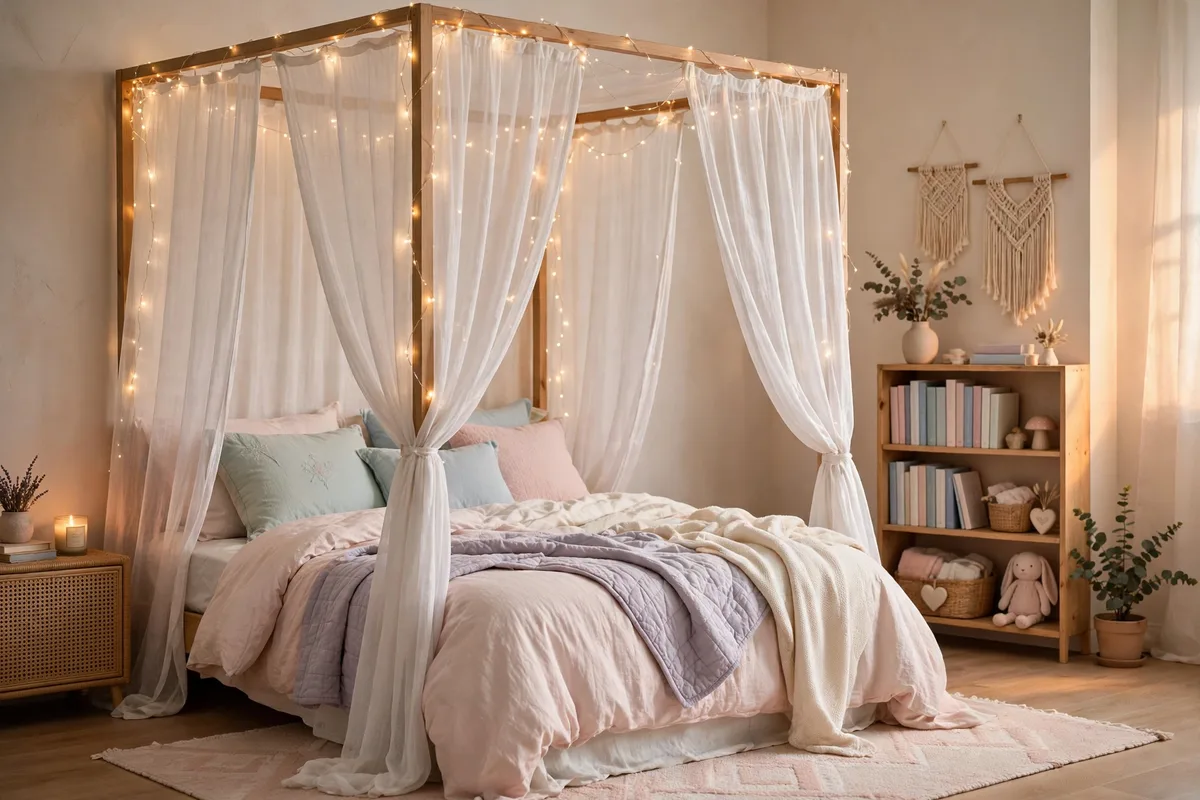
The bed is the largest piece of furniture in the room, so it sets the tone whether you plan it or not. A canopy bed gives instant drama and a sense of privacy, and it suits both little girls who want a hideaway and teens who want a reading spot with curtains drawn and lights inside. A daybed is the practical star for a little girls room: it works as a bed, a reading couch, and a seat for friends, and a trundle underneath adds a sleepover bed without needing a second bed in the room.
A statement bed does not have to be expensive. A simple frame becomes a centerpiece with a tall headboard, a painted finish, or bedding in the room’s accent color. One useful rule when choosing: a twin bed, a daybed, or a double bed lasts far longer than a toddler bed, so buying the bigger bed early saves a replacement later. Whatever the bed, keep decorative pillows to a number she will actually put back each morning, or the bed will never get made.
Little Girls Bedroom Ideas: Playful, Safe, and Easy to Tidy
A little girls bedroom should be a room she can use by herself. Beds low to the ground, so she can climb in alone. Bins and baskets she can reach, so tidying is something she can do rather than something done to her. A small desk or table and a bookshelf at her height, so reading and drawing happen in the room instead of only on the floor. A comfy adult chair beside a nightstand with a soft lamp gives parents a seat for stories and snuggles, and blackout curtains help naps and early bedtimes, especially in summer when days are long.
Decor for little girls works best when it is touchable and changeable. Stuffed animals need a visible home, such as a hanging corner net or a low basket, or they will colonize every surface. Her name on the wall in paint, decals, or wooden letters is a classic first personal touch, because recognizing her name is a milestone she notices. Dress up clothes deserve their own little wardrobe or hooks, since imaginative play is daily work at this age. Keep the palette soft and the surfaces washable, and leave floor space empty on purpose: floor space is play space.
Storage That Works, Inside and Outside the Closet
Closets are never enough on their own, and the best storage in a girls room is storage she can actually use. Baskets and bins at her height, with labels she can read or pictures she recognizes, let a child take part in keeping her room tidy. Wall hooks at child height hold bags, jackets, and hats without adding furniture. Floating shelves display favorite toys and books while keeping them off the floor, and under bed bins swallow seasonal clothes and extra bedding out of sight.
Outside the closet, think in homes: everything in the room should have a home, even if real life is messier than the rule. Rolling carts suit craft supplies and beauty products and tuck away when not needed. Storage ottomans and benches give seating while hiding blankets and games. A dresser with drawers she can open herself beats a tall wardrobe she cannot reach. And one habit helps more than any furniture: only this season’s clothes and toys live in the room, and the rest lives elsewhere, so the room never fills past what it can hold.
A Study Corner That Grows With Her
A study corner earns its place from the first school years, and it should grow rather than be rebuilt. Start with a small desk and a chair that fit her now, placed where daylight falls on the work, plus a bookshelf for books and school supplies. As she grows, the same corner gets a better chair, a pinboard for photos and reminders, and task lighting that is separate from the room’s mood lighting. A floating desk is a good answer when floor space is short, because it gives a work surface without legs eating the room.
Keep the study zone honest: if it becomes storage, homework moves to the bed and sleep suffers. A desk with a drawer or a small set of shelves beside it keeps supplies in reach and off the floor. Good lighting matters as much as the desk itself, a plain white desk lamp for homework, so mood lighting never has to do a job it is bad at. A room that gives schoolwork a real corner tells a child that her work matters, and it pays off for years.
Tween Girls Bedroom Ideas: Her Style, Her Say
The tween years, roughly ages eight to twelve, are when a bedroom stops being only a playroom and starts becoming a sanctuary. This is the age to hand her real choices: wall color from a shortlist, bedding she picked, art she loves, and a say in furniture. Rooms designed without the tween often miss, even when they cost more, because the room has to reflect her evolving identity, not only adult taste. Let her debate the frames, reject the art she dislikes, and choose the pieces that feel like hers.
Tween style is personal and changeable, so keep the big pieces neutral and let personality live in accessories. A gallery wall, fairy lights, a reading nook with a chair and a small shelf, and a vanity corner or a desk that doubles as a getting ready spot all suit this age. Popular tween looks include soft pastels, bold prints, boho textures, and clean modern rooms, and the same room can hold more than one: pastel walls with a bold print throw, or a modern room with a boho rug. The test is simple: can she change the look herself next year without repainting?

Teen Girls Bedroom Ideas: Function Meets Sophistication
Teen rooms need function first and sophistication second, and the best ones give a teen zones rather than one big look. A study zone with a compact desk, good light, and a bulletin board. A hangout area with a comfy chair or bean bag for friends. A vanity corner with a mirror and good light for getting ready. A sleep zone that stays calm, with bedding she can manage and pillows few enough to make the bed without a chore. When each zone has its place, the room works on school nights and weekends alike.
Teen color goes beyond pastels. Many teens prefer moodier looks: charcoal gray with jewel tone accents, navy blue with brass fixtures, forest green with natural wood, or one dark accent wall with colorful art. One dark wall creates instant sophistication without overwhelming the room. Texture matters as much as color: layered fabrics, chunky knits with smooth surfaces, velvet, cotton, and faux fur add depth. And the teen herself should lead: a room she helped design feels like hers, while a room designed entirely for her can feel like a hotel she does not recognize.
Shared Girls Rooms: Two Girls, One Room, Two Personalities
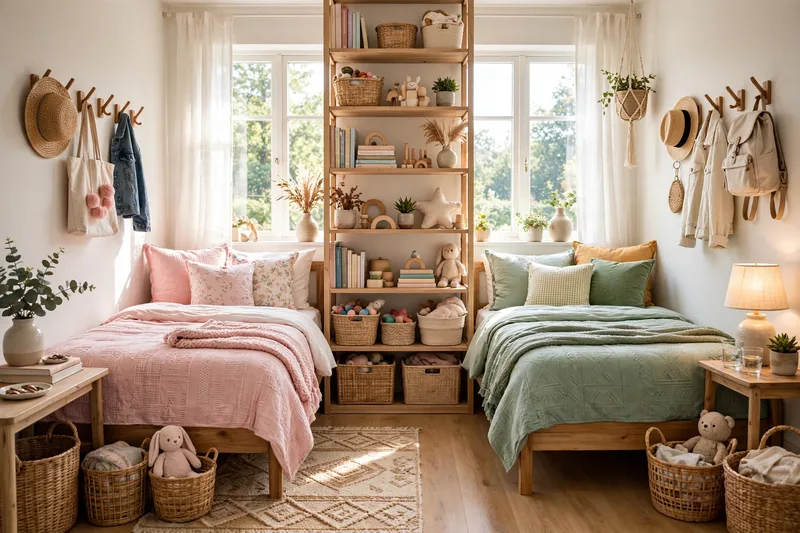
Shared rooms are the hardest girls rooms to get right, and the most rewarding when they work. Start with one cohesive palette both girls like, then give each girl her own bedding, her own display spot, and her own light. Bunk beds are the classic space saver, and a loft bed frees floor space underneath for a desk or a reading nook. For narrow rooms, two twin beds in an L shaped corner layout open the middle of the room for play, and a tall bookshelf between two headboards makes a privacy barrier that still looks like furniture.
Privacy in a shared room is mostly about small separations, not walls. Ceiling mounted curtains, a bookshelf divider, canopy beds that close into private retreats, and individual reading lights inside each bunk niche all give each girl a sense of her own place. Storage must be doubled in planning even when it is shared in furniture: under bed bins per girl, labeled baskets per girl, and a rule that each girl’s things have their own home. A shared room works when both girls can point to parts that are unmistakably theirs.
Small Girls Rooms: Big Ideas for Tight Spaces
Small girls rooms reward the same moves again and again: light colors, mirrors, and furniture that does more than one job. Light palettes reflect more light and make a room feel larger, and a large mirror opposite a window doubles the daylight. Curtains hung close to the ceiling make windows look taller and the room feel higher. Beds with drawers underneath, desks that fold away, and storage ottomans keep the floor clear, and wall mounted shelves hold books and decor without using floor space at all.
Decluttering is the real space maker in a small room. Keep only what she uses and loves in the room, and move the rest out. A small room that holds a bed, a dresser, a bookshelf, and a desk can still feel generous when those pieces are the right size and the floor stays visible. One real example: a small ten by ten tween room works with a twin bed, a small three drawer dresser, and a low bookshelf she can reach, kept white and bright, with a few new details added to pieces already owned. Small does not mean cramped, it means every piece must earn its floor space.
Themes She Will Love: Ballerinas, Mermaids, and Outer Space
Themes give a girls room its story, and the best themes live in accessories rather than in paint. Ballerinas suit soft colors, tulle textures, and graceful wall art. Mermaids suit blues and greens, shell and scale patterns, and shimmering fabrics. Outer space suits dark blue walls or bedding, star lights, and planet art. Other themes that stay popular include unicorns, rainbows, woodland animals, and, for older girls, anime, pastel goth, and modern minimalist looks. The theme should match her, not the store display.
The safety rule for themes is that tastes change. A princess theme that delights a four year old may bore an eight year old, and a pop star theme may last only a few years before the star changes. So put the theme in bedding, wall decals, art, and pillows, and keep paint, furniture, and flooring neutral enough to suit the next theme. That way a room can move from mermaids to outer space with a weekend of shopping instead of a month of redecorating, and the girl herself can lead the change.
Boho, Industrial, and Modern Pink: Three Looks, One Room
Three looks cover most of what girls ask for, and understanding them helps a room borrow from each. Boho is relaxed and collected: global inspired prints, woven baskets, macrame hangings, rattan or cane furniture, linen bedding, and plants. A boho girls room might start with mint green paint, global print bedding and rugs, vintage style pendant lighting, and one oversized palm leaf for a well traveled feel. Industrial is the opposite energy: sleek black metal furniture, deep teal bedding, distressed white walls, and bare wood floors, giving a traditional pink palette an edge when paired with it.
Modern pink is the grown up version of the classic: a sleek white bed against a textured dark gray wall, art and nightstands in gray or white, and accents of mauve, rose, and blush in velvety textures. A fourth look, for a fashion forward girl, starts with a wallpaper print, adds a decorative ladder draped in string lights and pastel framed art, and finishes with black and white bedding. A room can mix these looks if one of them leads: a boho room with one industrial metal lamp, or a modern pink room with one woven basket. Mixing works when the palette stays small and the textures stay intentional, and it fails when every look shouts at once. Subtle and over-the-top are both valid: a quiet room with one bold piece, or a maximal room where pattern and color go all in.
Lighting That Changes the Mood
Lighting is the cheapest way to change how a girls room feels, and it needs layers. Overhead light for cleaning and homework, task light for the desk, and soft light for evenings. Soft warm light suits winding down, and a dimmer lets one room serve both homework and bedtime. For younger girls, soft lighting with a dimmer also helps nighttime routines, and blackout curtains keep morning light from ending sleep early.
Decorative lighting is where personality shows. Fairy lights and string lights draped in soft curves around a mirror, a photo wall, or a canopy give sparkle without glare, and curtain lights behind a bed make a dreamy backdrop. For teen rooms, LED lighting for a teenage girl bedroom works best as a small system: a warm strip along a ceiling edge or bed frame, fairy lights around a mirror or shelves, and an LED lit mirror or vanity for getting ready, with study light kept separate as a plain white desk lamp. One statement light, such as a pendant or a small chandelier, elevates a room more than five small novelties, so pick one star and keep the rest calm.
Vintage Pieces in Fresh Colors
Vintage pieces give a girls room character that new furniture often lacks, and fresh color keeps them from looking dated. A painted dresser in a new color, a secondhand mirror in a bright frame, an old chair reupholstered in a modern fabric, and a thrifted lamp with a new shade can anchor a room for far less than buying everything new. The rule is one or two vintage stars, not a room full of them, so the room feels collected rather than cluttered.
Mixing vintage with modern is also how a room grows with a girl. A vintage inspired piece beside one modern statement item, such as a clean lined bed or a simple desk, keeps the room from feeling juvenile or dated, and it survives taste changes better than a matching set. Paint matching is a useful trick: painting a mismatched nightstand to match its partner creates symmetry around a feature wall without buying a pair. Vintage works when the piece is sturdy, the color is deliberate, and the rest of the room stays calm around it.
A Lounge Corner for Reading and Friends
Every girls room benefits from a seat that is not the bed. A lounge corner, even a small one, gives a girl a place to read, talk with a friend, or simply sit without messing up the bed. A comfy chair, a bean bag, or a window seat with pillows, plus a small shelf or basket of books within reach, is enough. Add a soft throw and a light she can control, and the corner becomes the room’s favorite spot.
For teens, the lounge corner doubles as the hangout zone, so it deserves the same care as the desk. A chair that is actually comfortable, a side table for a drink or a phone, and art or photos nearby make friends want to sit there. For little girls, the same corner with a low bookshelf and a basket of stuffed animals becomes a story corner. The lounge corner is a small investment with a large return, because a room with somewhere comfortable to sit gets used far more than a room that is only for sleeping.
Budget Friendly Updates That Look Expensive
A girls room makeover does not need a large budget, because paint and small changes do most of the work. Paint is the most budget friendly power move in any room: one accent wall, a painted arch behind the bed, or a full room in a fresh soft color transforms the space for the price of paint and a weekend. Peel and stick wallpaper on one wall only gives a designer look without papering the room or committing permanently, and it comes off cleanly when tastes change.
Next, change what the eye lands on first: bedding, curtains, and one piece of art. A new duvet cover in the accent color, curtains hung high and wide, and a gallery wall of framed photos or marketplace art can remake a room for very little money. Small DIY projects add personality for almost nothing: painted furniture, a pom pom wreath, rainbow painted shelves, and photo collages all show up in real room makeovers again and again. Spend on the bed and the lighting, save on decor, and let her own creations carry the room’s personality.
Safety First: Anchoring, Sleep, and Tidy Habits
Safety in a girls room is mostly about furniture, light, and habits. Anchor dressers, bookshelves, and other large furniture to the wall to prevent tipping, because children climb and pull drawers open as steps. Keep cords, chargers, and small heavy objects out of walkways, and choose rugs with grip underneath so they do not slide. For toddlers, keep small decor out of reach and choose a bed low enough to climb in and out of safely.
Sleep safety is lighting and quiet. Blackout or light blocking curtains help naps and early bedtimes, soft warm light with a dimmer helps winding down, and a room kept fairly cool and dark sleeps better than a bright one. Tidy habits are safety too: labeled bins, hooks at her height, and a nightly reset of toys and clothes keep floors clear and mornings calmer. A safe room is not a bare room, it is a room where everything heavy is fixed, everything small has a home, and the child can move freely without hazards underfoot.
Let Her Choose: How to Involve Her Without Losing the Room
Involving a girl in her room is not the same as handing her the whole catalog. Give her real choices inside limits you set: two or three paint colors to pick from, bedding options in the palette, art she loves from a shortlist, and a veto over pieces she dislikes. She gets genuine say, and the room keeps a coherent palette and a budget. When she debates frames, rejects art, and picks the pieces that feel like hers, she takes care of the room afterward in a way no imposed design achieves.
The older she gets, the more say she should have. A tween can choose her wall color and her gallery wall. A teen can lead the whole redesign, with parents holding the budget and the big furniture decisions. Compromise is part of it: it is her room, but parents live with seeing it every day, so the middle ground is a room she loves that the household can also live with. And let the walls be her space as she grows: posters and art are how she expresses herself, so a wall she controls is worth more than a wall that matches perfectly.
A Room That Grows: From Little Girl to Teen Without a Full Redo
The grow with her room is built on one idea: invest once in the big pieces, refresh the small ones. A quality bed, a dresser that lasts, paint or wallpaper in a color that suits many themes, a good rug, and good lighting form a foundation that can serve from childhood into teen years. Bedding, wall decor, accent pieces, and small furniture do the personality work and are easy to upgrade over time. Simple weekend updates, new bedding, more grown up artwork, or adding a chair or reading nook, shift a room from little kid to tween without a renovation.
Timing the refreshes helps. A refresh at entering the tween years and another at entering high school covers most of the journey, with small updates in between. Keep the foundation neutral and layered in personality through art and accessories, and the room evolves instead of expiring. The goal is not a room that never changes, it is a room that changes cheaply, because only the layers change while the good bones stay.
Quick Checklist Before You Start
Before buying anything, run through this checklist. One: pick two or three colors with her, and write them down. Two: measure the room and the big furniture, and mark the zones for sleep, storage, study, and sitting. Three: anchor every large piece to the wall on the plan, not as an afterthought. Four: choose the bed first, since it sets the room’s size and tone. Five: plan storage she can reach, inside and outside the closet. Six: layer the lighting, overhead plus task plus soft. Seven: put the theme in accessories, not in paint. Eight: leave some floor empty on purpose. Nine: set the budget for paint and bedding first, decor second. Ten: let her make the final choices inside the plan, so the finished room feels like hers.
FAQs
What colors besides pink work in girls’ bedrooms?
Sage green, lavender, dusty blue, terracotta, and mustard all work well. Pair one main color with a neutral like cream or soft gray, then add a brighter accent through pillows or art. Any favorite color can suit a girls bedroom when it is used in a small palette and repeated around the room, so let her favorite color lead rather than defaulting to pink.
How can you add storage outside of a closet?
Add storage she can reach and use herself: cute baskets and fun bins, wall hooks at child height, floating shelves, under bed bins, rolling carts, and storage ottomans. Built ins and wall shelves also create display space for favorite toys and books. The rule is that everything should have a home, and storage a child can interact with helps her take part in keeping the room tidy.
How can you add visual interest without clutter?
Use built ins, floating shelves, and wall hooks to create focal points that are also storage, so display does not become clutter. Let her select a few special toys or pieces that reflect her personality as the display items on key surfaces, and keep the rest stored. One statement wall, one recurring pattern, and one bold piece give visual interest, while plain surfaces around them keep the room calm.
How can a girls’ bedroom design transition into tween and teen years?
Build on a neutral foundation and change only the layers. Keep walls, bed, and big furniture fairly neutral, then update bedding, wall decor, and accent pieces as she grows. A soft wall color and a classic bed create an age neutral base, while bedding and art do the personality work and are easy to upgrade. Refresh at milestones, entering tween years and entering high school, rather than renovating from scratch.
How can you add function to a girls’ bedroom?
Give every activity its own zone: sleep, storage, study, and sitting, plus a lounge corner for reading and friends. A real desk with good light, storage she can reach, a chair that is not the bed, and layered lighting make the room work for school nights and weekends alike. Function comes from zones and reachable storage, not from more furniture.
How do two girls share one small room without crowding?
Use one cohesive palette, then give each girl her own bedding, display spot, and light. Bunk beds or a loft bed save floor space, an L shaped layout suits narrow rooms, and a bookshelf or curtain between beds gives privacy without a wall. Double the storage planning even when furniture is shared, with under bed bins and labeled baskets per girl, so each girl has parts of the room that are unmistakably hers.
How can a small girls’ bedroom feel bigger?
Use light colors, a large mirror opposite a window, and curtains hung close to the ceiling. Choose furniture that does more than one job, such as a bed with drawers and a desk that folds away, and keep only this season’s clothes and toys in the room. Wall shelves hold books and decor without using floor space, and a visible stretch of empty floor makes the whole room feel larger.
What is the cheapest way to update a girls’ bedroom?
Paint first, then bedding, curtains, and one piece of art. One accent wall or a painted arch behind the bed transforms a room for the price of paint, and peel and stick wallpaper on one wall only adds a designer look without a permanent commitment. Gallery walls from framed photos and marketplace art, painted furniture, and DIY touches like photo collages remake a room for very little money.
When should you refresh a girls’ bedroom?
Refresh at milestones: entering the tween years, around ages eight to twelve, and entering middle or high school. Between milestones, small updates like new bedding or art are enough. Refreshing at big birthdays or school transitions gives the room a reason to change, and it matches the moment her tastes and needs actually change.
How do you decorate so the room survives theme changes?
Keep permanent finishes flexible and put the theme in changeable accessories. Paint, furniture, and flooring should suit many themes, while bedding, wall decals, posters, and pillows carry the current theme. When the theme changes, only the accessories change, so a room can move from one theme to the next in a weekend instead of needing a full redecoration.
At what age should a girl choose her own room decor?
A girl can start choosing small things, like bedding and wall art, from around age four or five, when she recognizes her name and has clear favorites. Real choices over wall color and furniture suit the tween years, ages eight to twelve, when the room becomes her sanctuary. By the teen years she should lead the redesign, with parents holding the budget and the big furniture decisions.
Get home ideas in your inbox
Practical home improvement ideas and DIY guides, once in a while. No spam.
