

Master Bedroom Ideas: Design a Room That Feels Calm, Luxurious, and Lived In
A master bedroom has one job: help you rest at night, start the day calmly, and feel good to walk into. The best master bedroom ideas do not chase a showroom look. They start with how you live in the room, then add comfort in layers: bed, colour, light, and storage.
Start With the Bed: The One Decision That Sets the Whole Room
Every good master bedroom design starts with the bed, the largest piece in the room and the first thing your eye finds. Put it against the widest wall, with room to walk on both sides, not in a corner or under a small window.
Then nightstands, rug, and dresser fall into place around it.
Modern Master Bedroom Ideas That Still Feel Warm
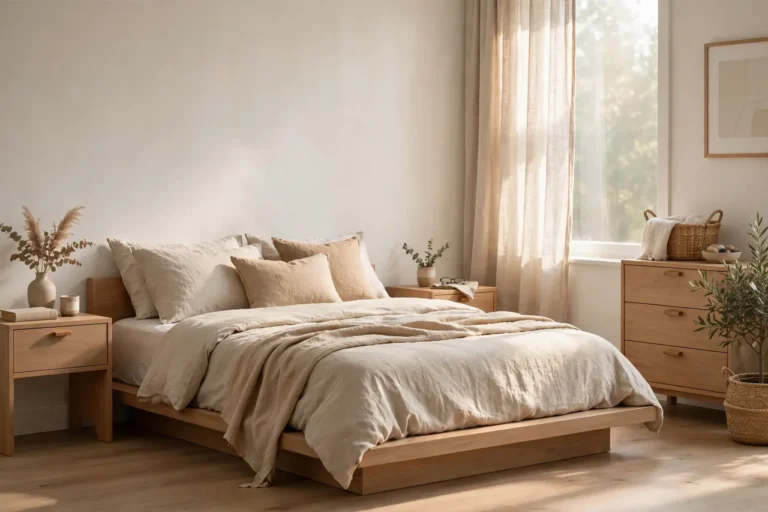
Modern master bedroom ideas often get mistaken for cold minimalism, but the warm version works better for a room you sleep in. Keep lines clean and surfaces simple, then warm them with timber, linen, and one repeated soft texture. A low timber frame, plain bedding in a warm neutral, and a single woven throw can carry a modern room without making it feel bare.
Let one modern idea lead, such as a floating nightstand or a panelled headboard wall, and keep the rest quiet.
Several named styles sit inside this warm modern idea. Japandi pairs Japanese restraint with Scandinavian warmth: low timber, a neutral palette, few objects on show. Modern farmhouse adds warm woods and a shiplap or beadboard accent. Minimalism removes rather than adds, so everything left must be stored out of sight. Coastal leans on pale blue, white, and natural fibre; a traditional room uses symmetry, a classic headboard, and layered bedding.
Painted panelling means shallow timber panels fixed to the wall and painted the same colour, or one tone darker, so the wall gains depth without a new colour. It works best on the headboard wall; keep the profile shallow in a small room.
Luxury Master Bedroom Design Without a Full Renovation
A luxury master bedroom rarely comes from a renovation. It comes from layering: crisp sheets, a duvet with some weight, and pillows arranged for sleeping first, plus one texture such as a wool throw and one warmth such as timber tones or a soft rug.
Lighting does the rest: warm white light with a dimmer, matching bedside lamps, and curtains that close fully make an ordinary bedroom feel like a hotel room, without moving a wall.
Modern Master Bedroom Layouts: Where the Bed, Doors, and Windows Go
A modern master bedroom layout is really a walking plan: a clear path from door to bed, closet, and bathroom. Guides suggest about 30 to 36 inches of walkway around the bed.
Give windows the same thought as doors. A bed between two windows gets light from both sides, while a bed under a single small window blocks light. If the only workable wall has a window, a low headboard keeps the light while anchoring the bed.
Some guides also raise feng shui, a belief based system rather than a measured rule: the bed in a commanding spot where the door is visible without being directly in line with it, matching nightstands and lamps on both sides, mirrors facing away from the bed, and clutter under the bed cleared. Treat these as optional habits, not requirements, and keep them only where they do not fight the walking plan.
Small Master Bedroom Ideas That Make a Tight Room Feel Bigger
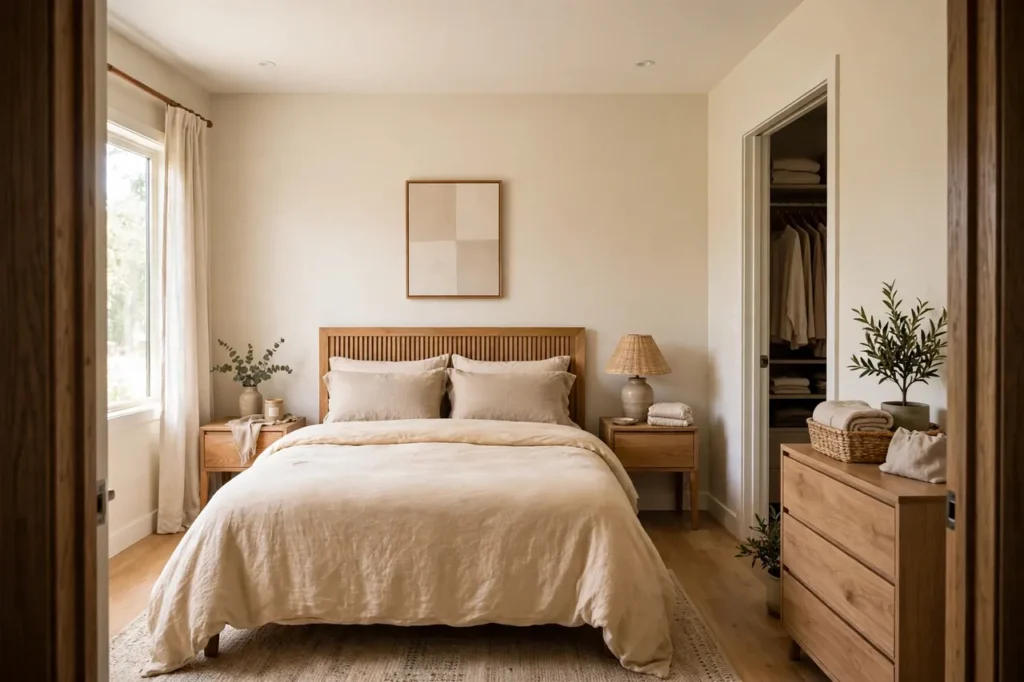
Small master bedrooms reward different moves: move the dresser into the closet with double rods, swap bulky nightstands for wall sconces, and keep the bed cover close to the wall colour.
Height helps more than width: curtains hung high, a tall narrow dresser, and shelves up the wall pull the eye upward. As small room ideas that start with measuring always advise, measure first, and leave one stretch of open floor.
Two People, One Room: A Shared Master Bedroom Layout That Works
A shared master bedroom needs two of almost everything: two sides of the bed, two chargers, and two spots to get dressed without queuing. The biggest layout win is a centred bed with a nightstand on each side, even if they do not match. One partner can have a chest of drawers and the other a floating shelf, as long as colour and material tie them together.
Place the bed closer to the door on the early riser’s side. If sleep schedules clash badly, two beds pushed together with matching bedding and a shared headboard keep the room looking like one room while letting both people sleep well.
The romantic styling layer is softer: dimmable warm light, bedding both partners chose together, and matching lamps so neither side feels like an afterthought. Keep it small, with one shared tray for books and water on each side, rather than objects only one partner likes.
Master Bedroom Design Ideas for Colour: Calm Palettes and One Dark Wall
Colour sets the mood before any furniture does. Calm palettes win because you spend the last and first hours of the day here. Warm white, soft greige, and pale sage are the bases guides return to most, staying gentle under daylight and lamplight.
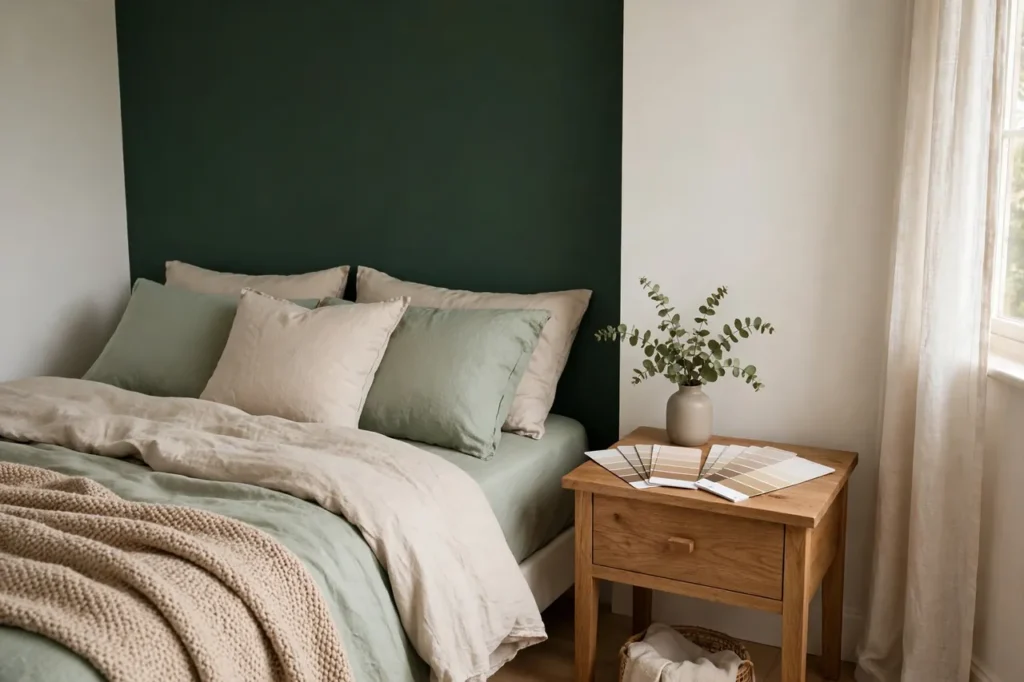
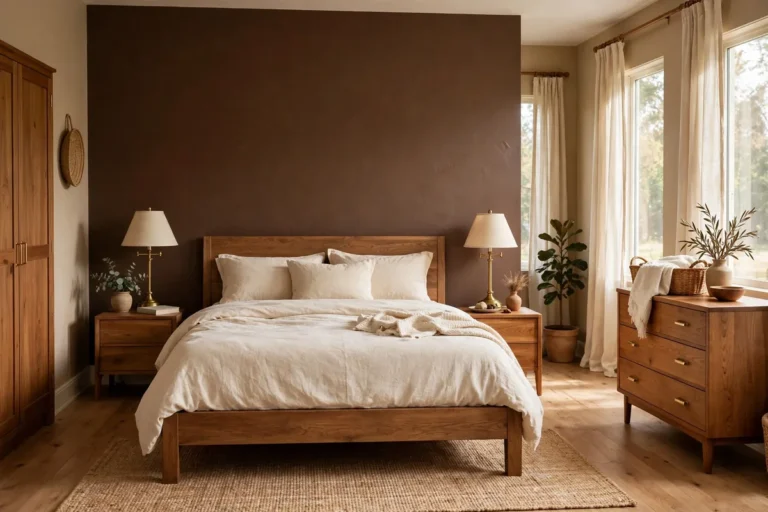
One dark wall is the exception: deep charcoal or forest green behind the headboard adds depth, as long as the other three walls stay light. Generous daylight can carry a darker accent; a dim room should keep the dark tone to one wall only. For how daylight shifts a wall colour through the day, see our guide on how light changes wall colour.
Wallpaper is the other wall finish guides offer where paint feels flat. On the headboard wall only, a subtle pattern adds texture and pattern in one step, while the other walls stay plain. Guides suggest small scale patterns in light tones for small rooms, pasted on a smooth wall so seams stay flat. Where budget or renting rules out paper, a painted panel wall gives a similar framed effect.
Colour Systems, Not Single Colours: Pick a Palette That Holds Together
A colour system beats a single favourite colour: walls, bedding, rug, and timber all need to agree. The simplest system has three parts: a light neutral for walls, a mid tone for bedding and curtains, and one deeper tone for accents.
Test before you commit: paint samples on two walls and watch them across a full day, because a colour calm in morning light can turn cold under evening lamps. One north facing room where crisp white turned clinical was fixed by moving to a warm undertone greige.
| Palette | Where it works | Watch out |
|---|---|---|
| Warm white and greige | Almost any room, any light | Can feel flat without texture |
| Soft sage and stone | Calm rooms, timber furniture | Keep bedding warm, not grey |
| Dusty blue and white | Sleep friendly, bright rooms | Cool light can turn it clinical |
| Charcoal or forest accent | Headboard wall only | Avoid on all four walls in a small room |
Our dark room colour guide covers how one dark wall and a hidden strip of light change each other.
Colour drenching is the bolder version of the one dark wall idea: the same tone runs across walls, trim, and ceiling so the room wraps into one colour. It suits larger rooms with good daylight; in a small or dim room, keep drenching to the headboard wall only.
One more system rule is harmonizing with the rooms around it. Repeating one timber tone and one neutral from the hallway keeps the bedroom from clashing with the rest of the house, even when its accent colour is its own. Match door frames and trim to the neighbouring rooms, then let bedding and art carry the personal colour.
The Bed and the Furniture Around It: Headboard, Nightstands, and a Bench
Furniture around the bed should earn its place by doing a job: a headboard as a finished edge and backrest, nightstands for a lamp, water, a book, and a charger, and a bench at the foot for sitting while dressing and laying out tomorrow’s clothes.
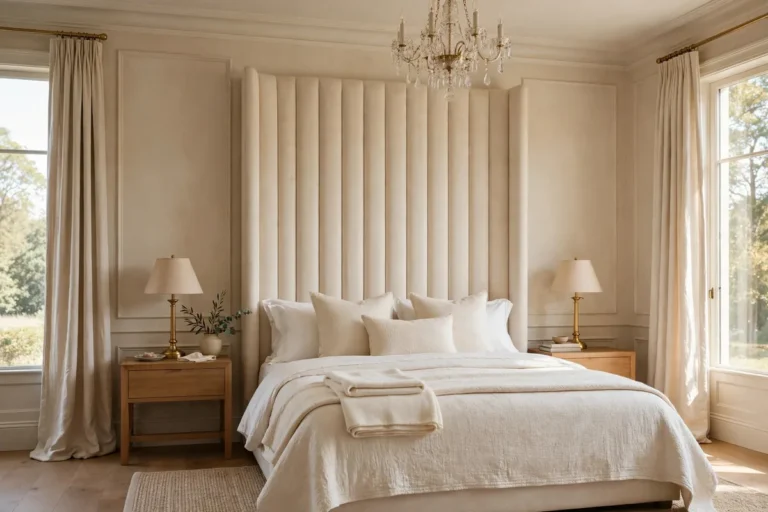
Scale matters more than style: a tall headboard suits a room with height to spare, a low upholstered headboard keeps a small room open, and nightstands should sit close to mattress height. Where floor space is tight, a bench that doubles as storage beats one that only looks good.
Three pieces guides name often: A four poster bed suits rooms with height to spare, and can crowd a small room. Mattress guidance is simple: choose for sleep before style, test firmness in person, and replace a worn mattress before spending on styling. A dressing table fits only where floor allows, ideally near daylight, with a mirror and one drawer, while an armchair earns its place in the sitting corner.
Curved furniture softens all this straight timber: a rounded headboard, a curved bench, or round nightstands can ease a boxy room. Use one or two curves only.
Storage That Does Not Eat Floor Space: Beds, Wardrobes, and Walls
Storage is where small master bedrooms are won or lost. The highest yield piece is a storage bed: an ottoman or gas lift base opening to a full compartment under the mattress, holding spare bedding and out of season clothes. Divan drawers do the same job against a wall.
Walls do the rest: floating shelves above a dresser, hooks behind the door, and a tallboy instead of a wide dresser store the same things in less width. Double duty furniture only works if it opens easily every day, so test the mechanism in the room.
Dressing Zones and Walk-In Closets: Give Clothes a Place Outside the Room
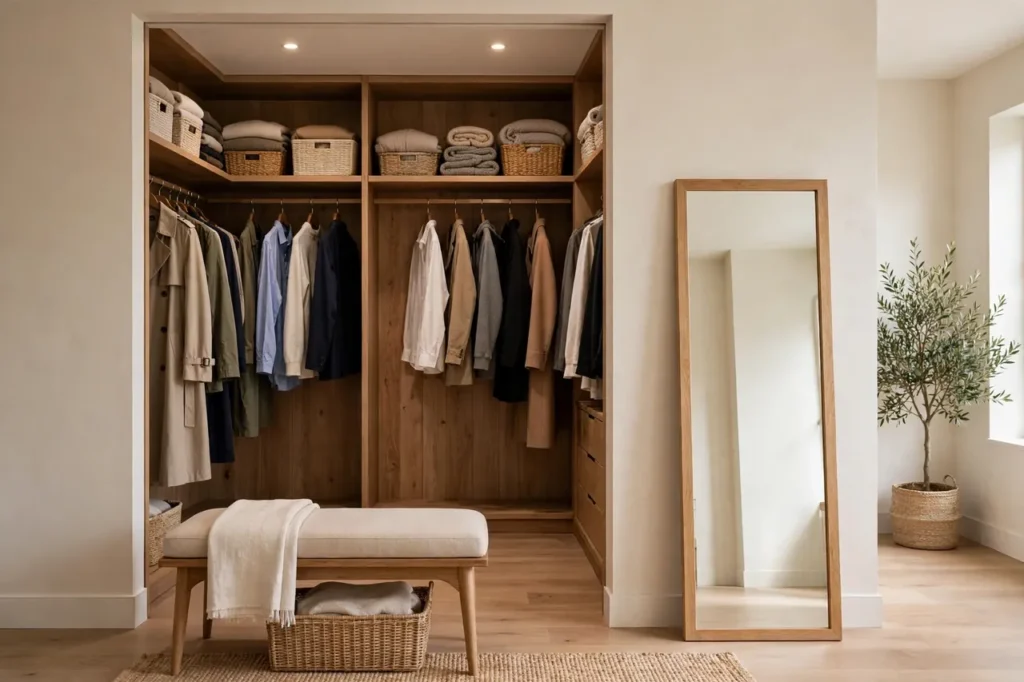
A dressing zone keeps getting dressed out of the sleeping part of the room. It can be a bench, a full length mirror, and a tallboy near the closet, or a walk-in with hanging on both sides.
The walk-in versus reach-in choice has a clear rule: a zoned reach-in beats an undersized walk-in. A walk-in only earns its floor space with hanging on two sides plus a clear walkway; a cramped one wastes more room than it stores. A reach-in with double rods, one long hang section, and everyday items at eye level often stores more.
Layered Lighting for a Master Bedroom: Overhead, Task, and Glow
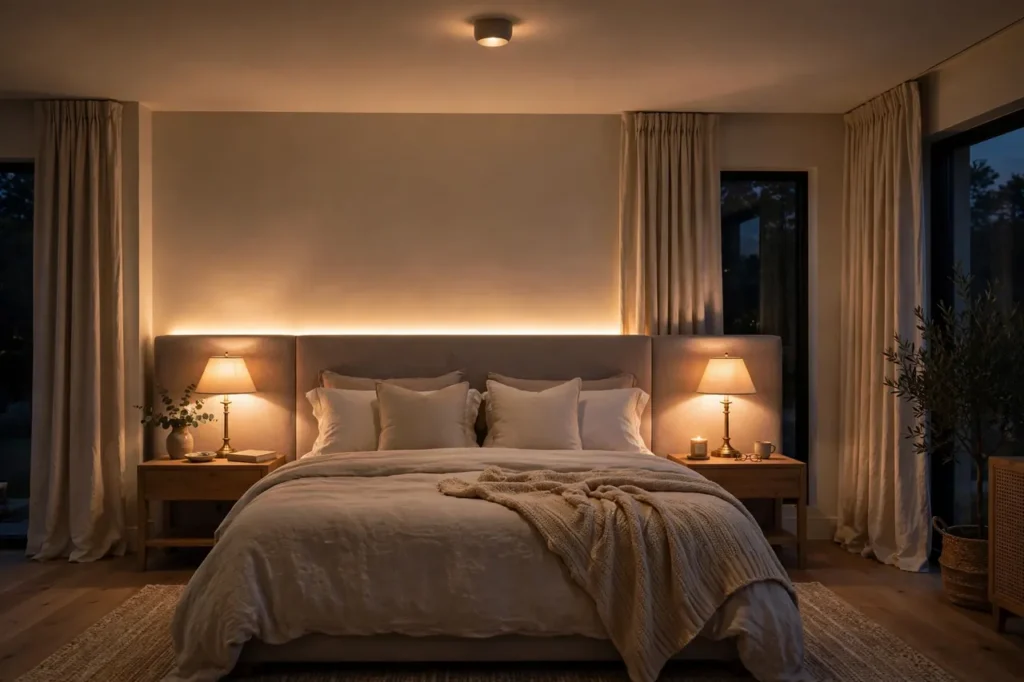
Lighting works best as three layers, not one fixture: overhead for cleaning and dressing, task for reading and getting ready, and glow, the low warm layer for evenings. With dimmers on all three, one room shifts from bright morning to quiet night.
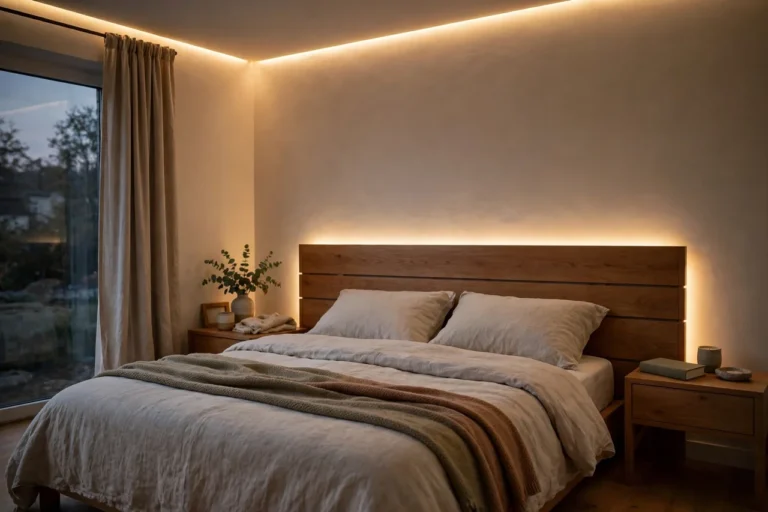
Guides point to warm white light around 2700K for the evening layer, with matching bedside lamps at the same height. Wall sconces suit small nightstands, because they free the whole surface. For strips and glow, see our LED lights for bedroom guide.
| Layer | Job | Placement |
|---|---|---|
| Overhead | General light for dressing and cleaning | Centre of the room, dimmable |
| Task | Reading, grooming, work | Bedside lamps, sconces, desk lamp |
| Glow | Evening calm, winding down | Low lamps, strips, candles on a tray |
Master Bedroom Ceiling Ideas: Tray, Coffered, Beams, and Paint
The ceiling is the surface you see most from bed. Four systems dominate: a tray ceiling recesses the centre and hides a strip of light, a coffered ceiling grids the surface, exposed timber beams add warmth, and a vaulted or shiplap ceiling opens the room upward.
Room size decides: small or low ceiling rooms suit a subtle tray or cove in light colours, since the recess creates an illusion of height, while large rooms can carry coffers or beams. Paint alone can also work: a tray recess a shade darker than the walls gives drama with no construction.
Windows, Curtains, and Drapery: Light in the Day, Privacy at Night
Windows decide how a master bedroom feels at both ends of the day: as much light as the room can take by daylight, closed off completely at night, since even a thin gap of streetlight can break sleep. That double job is why drapery beats blinds: full length linen or cotton curtains soften sound, diffuse light, and add movement a flat blind cannot.
Hang curtains high and wide: a rod close to the ceiling, extending past the frame, makes the window look larger and lets curtains stack clear of the glass by day. Add blackout lining for streetlight or early sun, and sheer panels behind for daytime privacy.
Ensuite and Sitting Corners: Zone the Room for More Than Sleep
The most valuable zone after the bed is often the ensuite, and the open versus closed question has a practical answer. Designers agree an ensuite does not technically need a door, and removing it can make a suite feel larger, but a wide opening only works if the toilet has its own door with a lock.
The real test is schedule mismatch: an open ensuite fails when one partner rises much earlier, because shower noise, fan noise, and light travel into the sleeping area. Where routines overlap or a second bathroom exists as backup, openness works; where they do not, a door lets both people sleep. A sitting corner follows the same logic: one chair and a small table near the window, not the bed.
A Reading or Work Corner Inside the Master Bedroom
A reading or work corner works when it stays small and separate. One comfortable chair, a lamp at reading height, and a surface for a book or cup are enough for reading. For work, add a compact desk against a wall the bed does not face.
Keep the corner’s light and storage apart from the sleep zone, so the room can change roles. If the corner starts spreading, it has grown too big.
Texture Over Bold Colour: Bedding, Rugs, and Timber That Add Warmth
When colour stays quiet, texture carries the room. Linen feels relaxed, boucle feels plush, velvet feels rich, and layered in bedding, throws, and cushions they give depth without a loud colour. Timber does the same on hard surfaces: a timber frame, bench, or nightstands warm a neutral room the way paint cannot.
Accessories follow the same rule: a bronze tray, a ceramic vase, or a tinted glass candleholder each add one small texture rather than one more colour, grouped in threes or fives.
Two nature led styles belong here. Boho layers textiles, rattan, and plants over a warm earthy base, sharing one palette rather than every colour at once. Biophilic design is simpler: two or three plants, timber surfaces, and as much daylight as the curtains allow.
The above-bed art rule is simple: one large piece or a matched pair suits most rooms, hung so its centre sits near eye level above the headboard and its width stays near two thirds of the bed width. Personal touches follow the same restraint: two or three meaningful objects, such as framed photos or one collected piece, rather than souvenirs spread across every surface.
Master Bedroom Rug Size Rules: What Fits Under a King or Queen
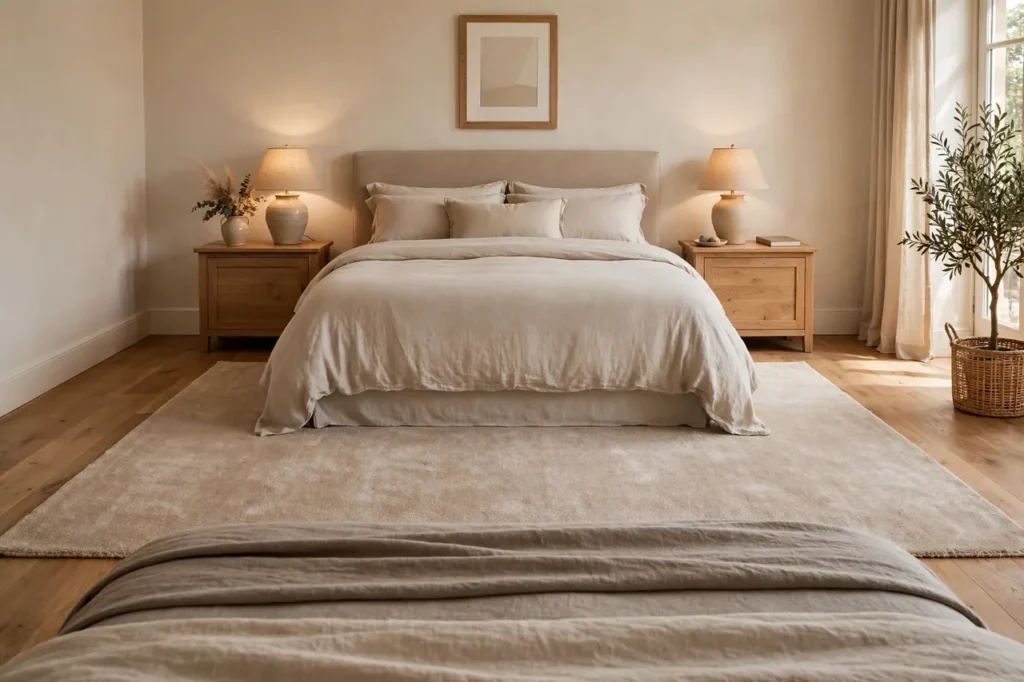
Rug size follows the bed, not the room. For a king bed, a 9 by 12 rug is the most recommended size, with 8 by 10 as the smallest acceptable option. For a queen bed, 8 by 10 is standard, and 9 by 12 only suits a very large room. The aim is about 18 to 24 inches visible on each side where feet land.
Placement matters as much as size: centre the rug on the bed, run about two thirds out toward the foot, and start it just past the nightstands, so no nightstand sits half on and half off. In a small room, two matching runners can replace one large rug.
| Bed size | Recommended rug | Visible margin per side |
|---|---|---|
| King | 9 by 12 most recommended | About 18 to 24 inches |
| King | 8 by 10 smallest acceptable | About 10 to 12 inches |
| Queen | 8 by 10 standard | About 18 to 24 inches |
Master Bedroom Design on a Budget: Paint First, Then Storage, Then Layers
Budget design works best as a sequence, not a shopping list. Paint comes first because it changes the whole room for the least work: one new wall colour, or the whole room in a warm neutral, resets the mood. Storage comes second, because a tidy room reads as designed even with old furniture. Layers come last, one at a time.
Hardware swaps belong in the first phase too: new handles, a lamp shade, or a curtain rod make existing furniture feel chosen rather than inherited.
| Route | What it covers | Best for |
|---|---|---|
| Paint first | One wall or whole room, hardware swaps | The fastest visible change |
| Storage next | Storage bed, tallboy, shelves, closet rods | A tidy room that reads as designed |
| Layers last | Bedding, rug, lamps, curtains | Comfort added one piece at a time |
Rental Friendly Master Bedroom Updates Without Paint or Drilling
Renters can change a master bedroom a great deal without paint or a drill. Bedding leads: a new duvet cover, a heavier throw, and cushions in one calm palette reset the whole room in an afternoon. Lighting follows: matching lamps, a dimmer plug, or a battery strip behind the headboard warm the room with no wiring.
Mirrors, art, and removable hooks do the rest: a large leaning mirror makes a small room feel wider, art above the bed gives a focal point, and a freestanding upholstered panel frames the bed without a single screw. For the same no damage approach, see our renter friendly updates without damage.
Mistakes That Make a Master Bedroom Feel Smaller or Restless
A rug too small for the bed reads like a lost bathmat, a nightstand half on and half off the rug sits unevenly, and dark colours on all four walls close in a small room that one dark accent wall would have flattered.
Other mistakes are about overload: every colour at full brightness, one ceiling light doing every job with no warm evening layer, and furniture bought before measuring. An undersized walk-in wastes more floor than a zoned reach-in stores, and an ensuite without a separate toilet door creates a privacy problem no styling fixes.
Master Bedroom Ideas FAQs
What is the best layout for a master bedroom?
Place the bed on the widest wall with walking room on both sides, and keep a clear path to the closet and bathroom.
Where should a bed be placed in a master bedroom?
Against the widest wall, ideally between two windows. Avoid corners and directly under a small window.
What should every master bedroom have?
A comfortable bed with walking room around it, two bedside surfaces, layered lighting with a dimmer, enough closet storage, and curtains that close fully.
How do I make my master bedroom look luxurious?
Layer bedding with weight and texture, match the bedside lamps, add a dimmer, and keep one calm palette.
What is the best colour for a master bedroom?
Warm white or warm greige suits most rooms, soft sage suits calm rooms, dusty blue suits bright rooms. Deep charcoal or forest green works best on the headboard wall only.
What colour suits a cocooning master bedroom?
A cocooning room wraps you in one tone: warm greige, deep olive, or charcoal across walls and bedding with soft lighting. Keep the ceiling lighter than the walls.
How do I integrate an office space into a master bedroom?
Give work one small zone against a wall the bed does not face, with its own task lamp and a drawer for work things. Keep it to a compact desk and chair.
What furnishings should go in a master bedroom?
A bed, two nightstands or bedside shelves, a dresser or tallboy, a bench or chair, and a rug sized to the bed. Add a mirror and reading chair only if space allows.
What size rug is best for a master bedroom?
For a king bed, 9 by 12 is most recommended and 8 by 10 is the smallest acceptable option. For a queen bed, 8 by 10 is standard.
How do I make a small master bedroom look bigger?
Put the bed on the widest wall, move the dresser into the closet, swap bulky nightstands for sconces, hang curtains high, and keep one stretch of open floor.
Final Thoughts: A Room That Works on Ordinary Days
A good master bedroom is the room where the bed sits right, the colour stays calm, the light shifts with the hour, and everything has a place. Start with the bed, pick one colour system, layer the light, and let storage work.
Then live in it before adding more. A room that works on ordinary days, for sleeping, waking, dressing, and winding down, beats a room that only photographs well.
Get home ideas in your inbox
Practical home improvement ideas and DIY guides, once in a while. No spam.



4 Comments
Comments are closed.