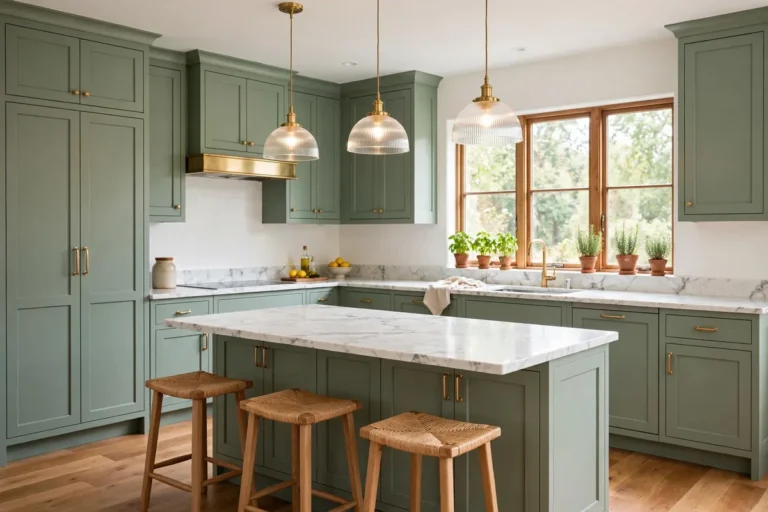
Blue Kitchen Cabinets: Navy, Shaker, and Indigo Shades That Make a Kitchen Feel New
Blue kitchen cabinets have a rare quality. They feel bold when you first see them, and calm once you live with them. A blue kitchen can look classic in a farmhouse, sharp in a modern flat, and warm in a coastal home, all without changing the layout. That range is why blue has moved from a brave choice to a safe favorite, and why so many cabinet sellers now build whole collections around it.
This guide walks through the blue cabinets that work best, navy, indigo, and light blue, plus the counters, hardware, and paint that go with them.
The trick with blue kitchen cabinets is picking the right blue: a shade that looks perfect in a showroom can feel dark in a small kitchen with one window, and a pale blue that looks soft online can wash out next to white walls. This guide walks through shades, styles, materials, countertops, hardware, costs, and the mistakes that make blue kitchens fail, so you can choose with confidence.
Why Blue Kitchen Cabinets Are So Popular
Blue sits between neutral and statement. White kitchens can feel clinical, wood kitchens can feel heavy, and gray kitchens can feel flat. Blue adds color without shouting, and it pairs with almost every countertop, floor, and wall color a kitchen already has. It also ages well: a navy blue kitchen from ten years ago still looks current, while trendier colors date fast.
There is a mood reason too: blue is linked with calm water and open sky, so a blue kitchen feels settled even on busy mornings. Darker blues ground a large kitchen, lighter blues open up a small one, and the same color family does both jobs.
Blue Kitchen Cabinet Shades: Navy, Indigo, Light Blue, and Teal
Not all blues behave the same: navy is deep and formal, indigo leans slightly purple and feels rich, light blue is soft and casual, and teal leans green and feels coastal. Before you fall for a door sample, look at it in your own kitchen light, morning and evening, because blue shifts more than most colors under warm and cool bulbs.
| Shade | Feel | Works best with |
|---|---|---|
| Navy | Deep, classic, bold | White countertops, brass hardware, wood floors |
| Indigo | Rich, slightly dramatic | Marble tops, dark floors, statement lighting |
| Light blue | Soft, airy, casual | White walls, pale wood, small kitchens |
| Teal | Fresh, coastal, relaxed | Butcher block, rattan details, plants |
If your kitchen is dark, lean lighter; if it is large and bright, you can carry navy without the room closing in. And if you cannot decide, two toned designs let you use a dark blue on lower cabinets and a lighter shade or white up top, which is covered later in this guide.
Navy Blue Kitchen Cabinets: Deep, Classic, and Bold
Navy is the flagship of blue kitchen cabinets. It reads as a neutral in the same way black does, but with more warmth and character. A navy blue kitchen suits traditional homes with paneled doors, and it suits modern homes with flat slab doors, because the color itself carries the design.
Navy needs light to work, so pair it with white or pale countertops, a light backsplash, and warm lighting, or the room can feel heavy. Brass and gold handles are the classic partners for navy, since warm metal breaks up the dark surface. With little natural light, keep navy on lower cabinets only and use white or pale blue above.
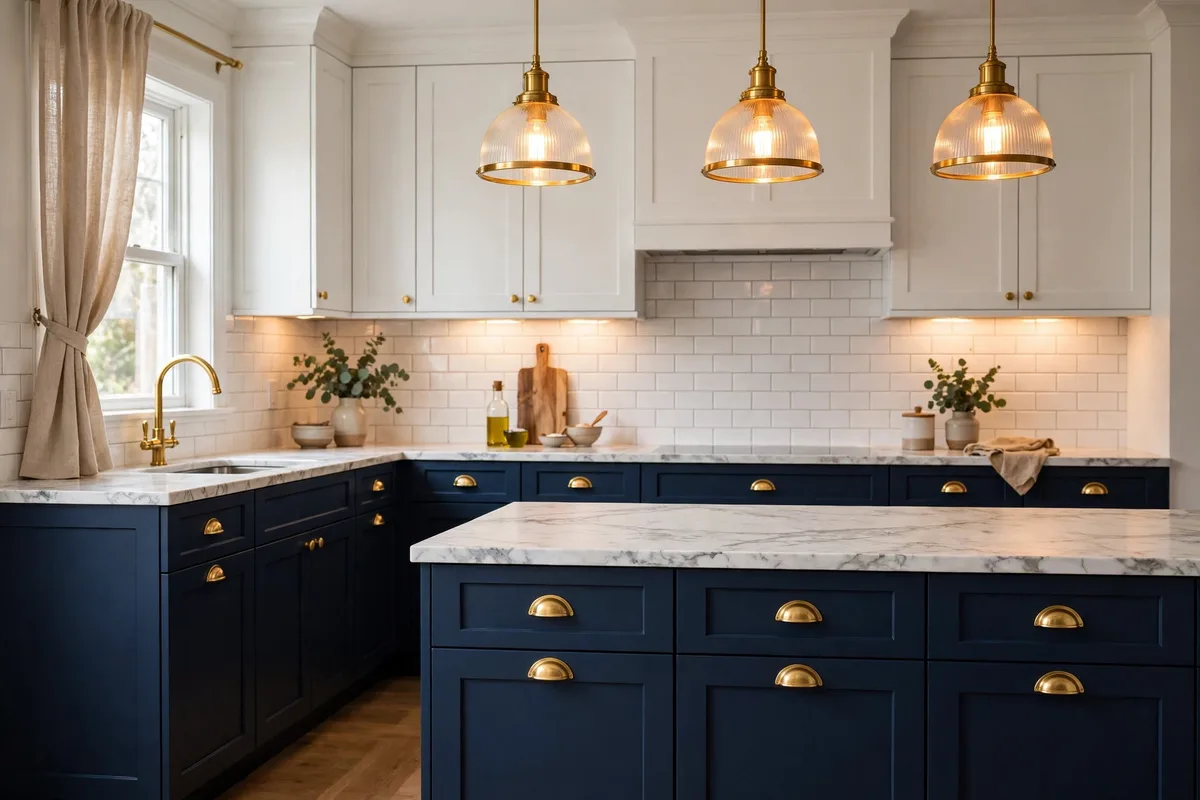
Blue Shaker Cabinets: The Style That Suits Almost Every Kitchen
Shaker is a five piece door with a flat center panel and a simple frame, and the most popular door style for blue cabinets because it sits comfortably between plain modern slabs and ornate traditional doors. A blue Shaker cabinet looks right in a farmhouse, a coastal home, and a modern renovation, which is why sellers list so many blue Shaker collections, from light blue to deep navy.
Shaker also hides wear well. The frame edge catches less visible damage than a flat slab, and repainting a Shaker door is straightforward because the panels are flat. If you want one safe decision in a blue kitchen, it is this: pick your shade first, then put it on a Shaker door. The style will not fight the color, and it will not date the room. Shaker also has a slimmer cousin worth knowing: slim Shaker uses a narrower frame, so it looks more modern while keeping the same five piece construction. Standard Shaker suits farmhouse and classic kitchens; slim Shaker suits modern kitchens that want Shaker character without the chunkier frame.
Light Blue vs Dark Blue Cabinets: Which Suits Your Kitchen?
The light versus dark choice is really a light versus space choice. Light blue cabinets reflect more light, suiting small kitchens, kitchens with one window, and kitchens with dark floors. They feel casual and fresh, pairing easily with white walls and pale wood.
Dark blue cabinets absorb light, so they suit large kitchens, kitchens with big windows, and open plan rooms where the kitchen needs visual weight. They feel formal and grounded, and they pair best with light countertops and warm metals. A simple test helps: hold a large sample against your wall at the darkest time of day. If the kitchen still feels open, the dark shade works; if it feels smaller, go lighter or use the dark shade only on the island or lower cabinets.
Blue Cabinets With White Walls and Countertops
White is the easiest partner for blue kitchen cabinets: white walls bounce light around the room, white countertops keep dark blues from feeling heavy, and white trim gives the eye a clean edge between cabinet and wall. This is why so many blue kitchens in photos use white somewhere; it is not laziness, it is balance.
The pairing works at every shade: navy with white reads classic and crisp, light blue with white reads soft and coastal. The only risk is when everything else is also white, which can feel cold, so add one warm element, such as wood floors, brass handles, or a butcher block section. If you love blue across your home, our blue bathroom guide shows how the same color behaves in a smaller room with more moisture and less light.
Two-Toned Kitchens: Blue Cabinets With White, Wood, or Gray
Two-toned kitchens use two cabinet colors, usually blue on the bottom and a lighter color on top. The idea solves the main fear about dark cabinets: the room stays bright because the upper cabinets are light, while the lower cabinets still give the kitchen its color and character. It also lets you use navy in a small kitchen without the room closing in.
The safest combinations are blue below with white above, blue below with pale wood above, and a blue island with white or gray perimeter cabinets. Keep the two colors in the same temperature family, both warm or both cool, or the kitchen can look patched together. Limit the palette to two cabinet colors; a third color on the island can work only if it already appears in the countertop or floor.
Blue Kitchen Islands: Matching, Contrasting, and Statement Islands
The island is the best place to test blue. If you are unsure about full blue cabinets, a blue island with white or wood perimeter cabinets gives you the color without committing the whole room. If you already love blue, a matching blue island anchors the kitchen and makes the layout feel planned.
A contrasting island works when the rest of the kitchen is quiet: a navy island against white cabinets, with brass or black hardware repeated on both, looks deliberate. A statement island goes further with a deeper shade, a different door style, or a furniture style base with legs. Keep the island countertop the same as the rest of the kitchen, or it can look like it belongs to another room.
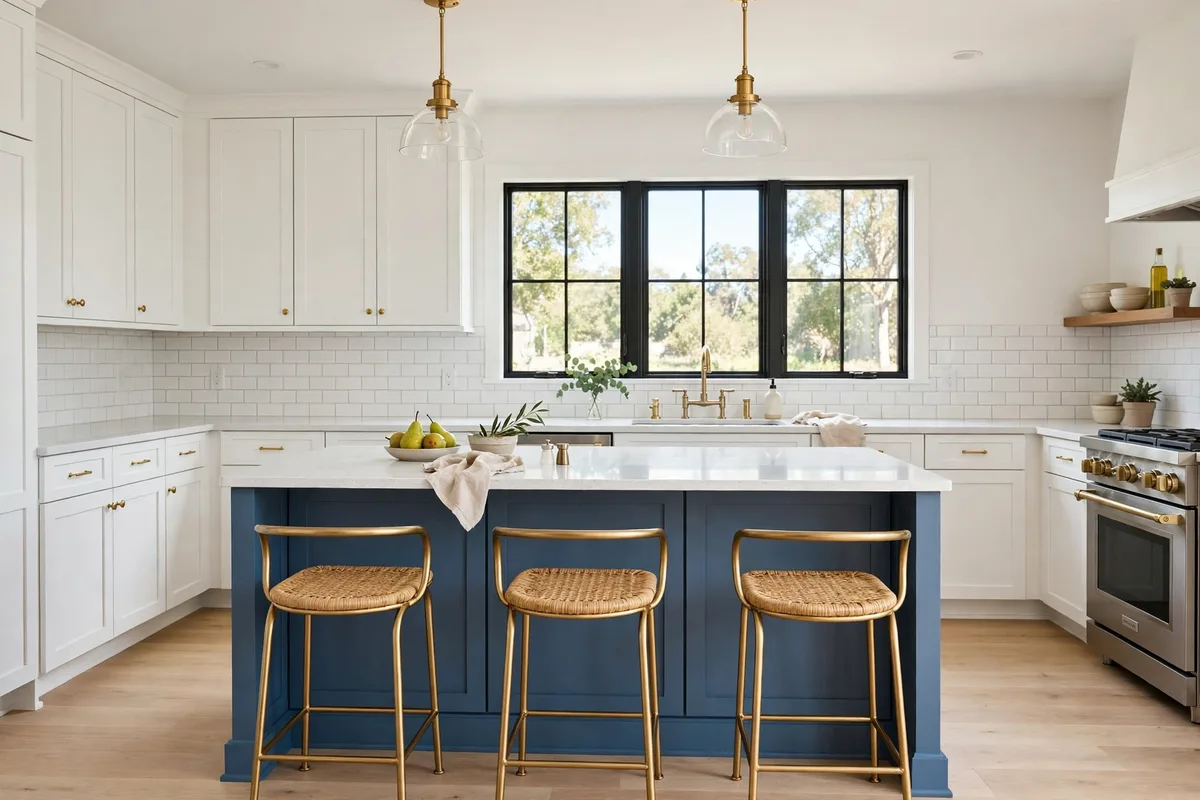
Countertops for Blue Cabinets: Quartz, Marble, Butcher Block, and More
Countertops decide whether blue kitchen cabinets look expensive or busy. White quartz is the safest choice: bright, consistent, and easy to clean, and it keeps navy cabinets from darkening the room. Marble looks beautiful with indigo and navy, but it stains and etches more easily, suiting kitchens where the owners accept maintenance.
Butcher block warms up blue cabinets and suits coastal and farmhouse styles, though it needs regular sealing near the sink. Dark countertops with dark blue cabinets can work in large, bright kitchens, but in most kitchens they remove the contrast that makes blue look good. Speckled gray countertops sit in the middle, hiding crumbs, pairing with both light and dark blues, and suiting busy family kitchens.
Backsplashes That Work With Blue Cabinets
The backsplash is a small area with a big effect, because it sits right against the cabinets. White subway tile is the default for a reason: bright, cheap, timeless, and it lets the blue be the star. Marble patterned tile adds movement and suits navy and indigo cabinets, especially with a white countertop.
If you want more personality, try a soft blue gray tile that echoes the cabinets without matching them exactly, or a handmade look tile with slight color variation for a coastal feel. Avoid a bold patterned backsplash with a bold blue cabinet, since when both fight for attention the kitchen feels noisy. Keep the grout light for a clean look, or match it to the tile for a calmer wall.
Hardware for Blue Cabinets: Brass, Gold, Black, and Silver
Hardware is jewelry for cabinets, and blue takes warm metals better than most colors. Brass and gold are the classic partners for navy: they add warmth, they catch the light, and they make dark cabinets feel intentional. Cup pulls suit farmhouse and Shaker doors, while slim bar pulls suit modern flat doors.
Black hardware gives a sharper, more modern edge and works well with light blue and gray blue cabinets. Silver and chrome suit coastal and contemporary kitchens, especially with white trim and light floors. Whatever you pick, use the same finish across the kitchen, including the faucet if you can, since mixed metals make a blue kitchen look unfinished. Test one handle on a door before ordering a full set, as brass tones vary a lot between brands.
Blue Cabinet Materials: Plywood, Solid Wood, and MDF
Cabinet material matters more than the paint color, because it decides how long the finish lasts. Plywood boxes are the durability standard: they resist moisture better than particleboard, hold screws well, and stay stable when kitchen humidity changes. Sellers who highlight plywood construction are pointing at a real quality difference, not just marketing.
Solid wood doors look and feel premium and take paint beautifully, but they can expand and contract with humidity, sometimes showing hairline cracks in painted finishes. MDF doors are smooth, stable, and cheaper, which makes them a good choice for painted Shaker doors, since MDF does not have grain that shows through paint. Whichever material you choose, ask about the warranty terms before buying, since warranty length and coverage vary a lot between stock, semi custom, and custom cabinet lines.
| Material | Strengths | Watch out for |
|---|---|---|
| Plywood boxes | Strong, moisture resistant, holds screws | Heavier, costs more than particleboard |
| Solid wood doors | Premium feel, paints well | Can shift with humidity changes |
| MDF doors | Smooth painted finish, stable, affordable | Heavy, swells if water gets into edges |
Painted Blue Cabinets: DIY Painting, Primer, and Durability
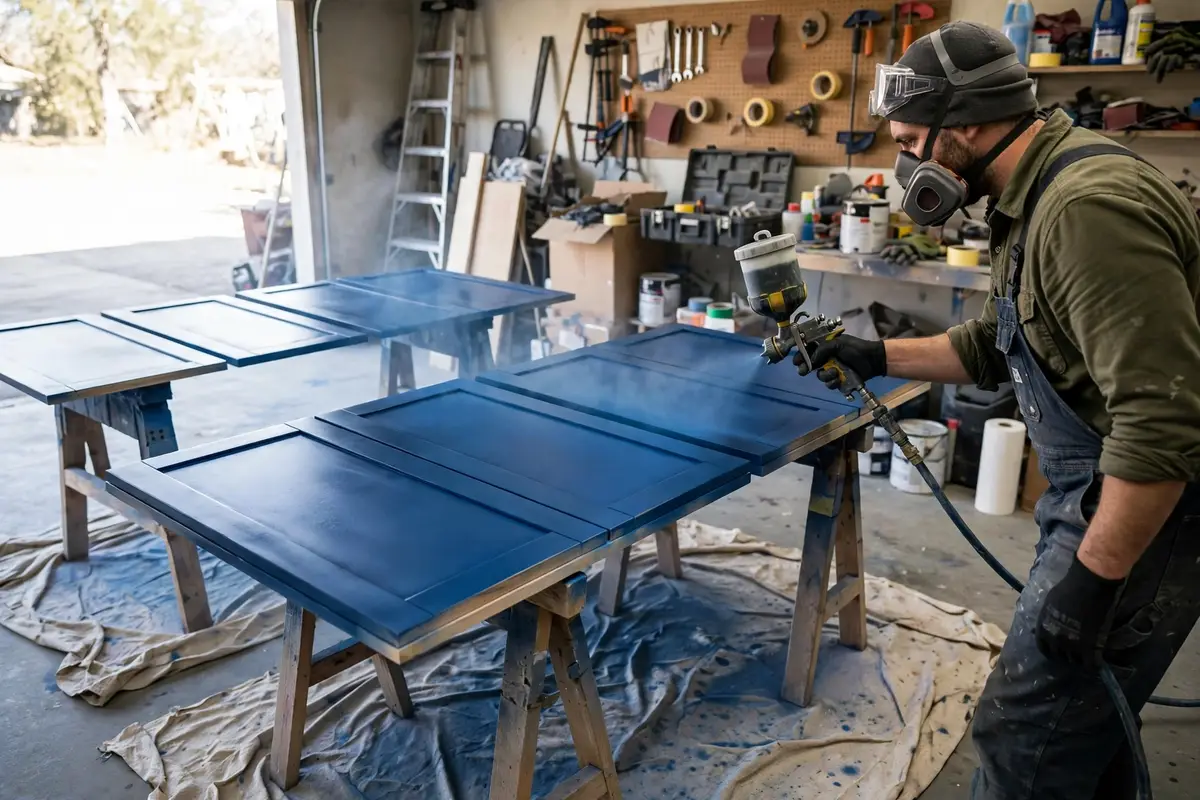
Painting existing cabinets blue is the budget route to a blue kitchen, and social media is full of DIY makeovers that prove it works. The process in outline: remove doors and label them, clean grease thoroughly, sand, prime, spray or brush two coats, and refit with new hardware. The results people praise most are the ones where preparation was not skipped.
Durability is where DIY paint jobs divide opinion: viewers of makeover videos ask again and again whether primer and sealer were used, because paint over greasy oak without primer chips fast. Use a bonding primer made for cabinets, let coats dry fully between sides, and add a clear topcoat on high touch areas like doors near the stove and sink. Spraying gives the smoothest finish, brushing is fine for Shaker doors if you use a good brush and thin coats. Budget for new hinges and handles too, since old hardware can make fresh paint look tired. Painting versus buying new is a fair question. Painting wins on cost when your boxes and doors are solid and the layout already works. Buying new wins when doors are warped, boxes are damaged, or you want a factory finish that stands up to years of cleaning better than most DIY finishes. If the cabinets are structurally sound, paint is the smarter spend; if they are falling apart, paint only hides the problem.
Who Blue Cabinets Are Perfect For
Blue kitchen cabinets suit people who want color without risk. They work for families who need a kitchen that hides everyday mess better than white, since mid and dark blues show fewer smudges than pale cabinets. They work for renovators who want a classic look that will not date before the next renovation, since navy and Shaker combinations have stayed current.
Blue also suits homes with warm wood floors or white trim already in place, since the color bridges both. It is less ideal for very dark kitchens with no natural light, where only the lightest blues should be used, and for homes where every room is already a strong color, since one more bold room can tip the house into noise. If you are selling soon, navy and light blue are safer than teal or bright blue, because buyers read them as classic rather than personal.
Blue Kitchens for Small Spaces
Small kitchens benefit from blue kitchen cabinets more than people expect, as long as the shade is right. Light blue cabinets reflect light and make walls feel further apart, especially with white countertops and a light backsplash. Gloss finishes also help in small rooms, since they bounce light, while matte finishes absorb it and can make a tight kitchen feel smaller.
Keep the layout tricks simple: blue on lower cabinets and white above, backsplash tile run up to the ceiling if you can, and no dark floors with dark cabinets in the same small room. Open shelving in place of one upper cabinet can lighten a blue kitchen further, but keep it to one section, since too much open storage looks cluttered fast. A blue island rarely works in a small kitchen unless it replaces a table, so save the statement color for the perimeter cabinets instead.
Blue Cabinet Costs: What Changes the Price
Cabinet cost depends on more factors than color, and blue itself rarely adds much to the price. The big cost drivers are construction (stock versus semi custom versus custom), material (plywood boxes and solid wood doors cost more than particleboard and MDF), door style, and finish (factory painted finishes cost more than unfinished boxes you paint yourself).
Size and layout matter too: more drawers, tall pantry units, pull out storage, and soft close hardware all raise the total. Sellers who offer cost estimator tools are useful here, letting you compare the same layout at different construction levels before you commit. Get at least two quotes for the same layout and specification, and compare what is included, such as hardware, delivery, and installation, since a cheaper quote that leaves those out is not actually cheaper.
Blue Cabinets With Wood Floors and Warm Tones
Wood floors are blue cabinets’ best friend: warm oak, walnut, and even pale pine soften blue and stop the kitchen from feeling cold, the main risk with blue and white schemes. Wood adds the warmth that blue removes, and the two have been paired in coastal and farmhouse homes for decades.
Match the wood tone to the blue shade: light blue suits pale wood and whitewashed floors, navy suits medium and dark wood. If your floors are already fixed, bring a floor sample when you pick the cabinet shade and check them together in your kitchen light. Rattan stools, wood open shelves, and a butcher block section repeat the warm tone without adding another color.
Lighting a Blue Kitchen: Warm Light for Dark Cabinets
Blue cabinets change under different lights, so lighting deserves its own plan. Warm white bulbs, the yellowish kind used in living rooms, make navy feel rich and cozy, while cool white bulbs can push blue toward gray and make the room feel clinical. Test bulbs against a door sample before you commit, since the wrong temperature undoes a good shade choice.
Layer three kinds of light: ceiling lights for general brightness, under cabinet lights so countertops stay bright even with dark uppers, and one statement piece over the island or table. Under cabinet lighting matters most with blue, since dark cabinets absorb light that white cabinets would reflect. Recessed lights with dimmers shift the kitchen from bright cooking mode to soft evening mode.
Keeping Blue Cabinets Clean: Fingerprints, Dust, and Fading
Blue kitchen cabinets show different dirt than white. Fingerprints and dust show more on dark blue and on gloss finishes, while water marks show more around the sink on any shade. The fix is routine, not special products: wipe doors weekly with a damp microfiber cloth and a drop of mild dish soap, then dry them straight away so water does not sit on edges.
Gloss versus matte is a trade worth knowing: gloss bounces light and wipes clean easily, but shows every fingerprint; matte hides fingerprints better, but can mark more easily and needs gentler cleaning. In busy family kitchens, a satin finish between the two is often the easiest to live with. Avoid harsh cleaners and abrasive pads, which dull painted finishes over time. Sunlight is the slower enemy: strong direct sun can fade blue paint near windows, so consider a blind or film on a south facing window above the sink. Touch up chips quickly with the original paint, since a small chip on a dark cabinet stands out more than the same chip on white. Keep a small labeled jar of touch up paint with your cleaning supplies.
Blue Kitchen Styles: Coastal, Farmhouse, Modern, and Classic
Blue kitchen cabinets adapt to style by changing their partners. Coastal blue kitchens use light blue or teal, white walls, pale wood, and natural textures like rattan and linen. Farmhouse blue kitchens use Shaker doors, butcher block, black or brass hardware, and open shelving with simple dishes.
Modern blue kitchens use flat slab doors, handleless or slim bar pulls, white quartz, and minimal decoration, letting the color do the work. Classic blue kitchens use navy, paneled doors, marble patterned tops, brass hardware, and traditional details like a range hood surround. Pick one style and let it guide your countertop, hardware, and backsplash choices together, since mixing style signals makes blue kitchens look confused rather than collected.
Mistakes to Avoid With Blue Kitchen Cabinets
The most common mistake is choosing the shade from a phone screen, since blue shifts badly between screens, showrooms, and home light, so always test a large sample in your kitchen. The second mistake is pairing dark blue with dark countertops and dark floors, which removes the contrast that makes blue work and leaves the room gloomy.
Other mistakes are easy to avoid once you know them: skipping primer on a DIY paint job, mixing three metal finishes, adding a bold patterned backsplash to an already bold cabinet, and using blue on every surface until the room has no resting place for the eye. If your kitchen already has a strong floor or a patterned tile, let blue be the only bold color. Restraint is what makes blue look expensive.
How to Choose Blue Kitchen Cabinets Step by Step
Start with your kitchen, not a catalog: measure the room, note the natural light at different times of day, and list what stays, such as floors, windows, appliances, and trim. Then pick a shade family, light for small or dark rooms and navy for large and bright ones, and order large samples of two or three shades in that family.
Next, pick a door style, with Shaker as the safe default, and a countertop that gives contrast: white quartz for dark blues, warmer stone or butcher block for light blues. Choose one hardware finish and repeat it everywhere. Finally, get quotes for the same layout at two construction levels, check the warranty terms, and confirm delivery and installation are included. If the sample still looks right after a week on the wall, you have your answer.
Get home ideas in your inbox
Practical home improvement ideas and DIY guides, once in a while. No spam.