

Luxury Bedroom Ideas: Hotel Comfort, Beautiful Materials, and Rooms That Feel Expensive
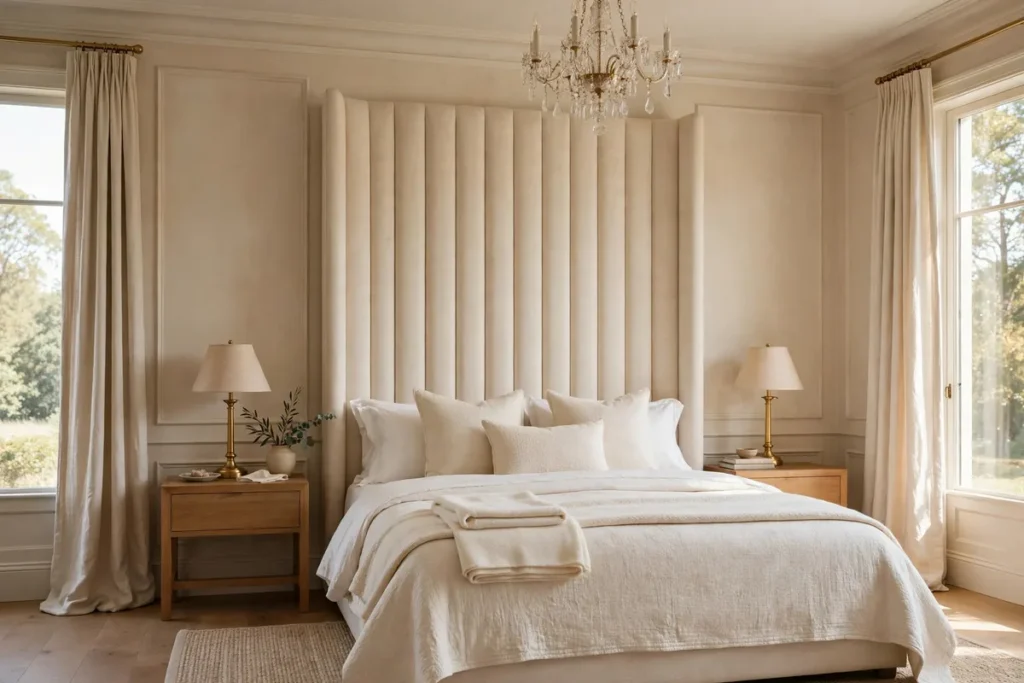
A luxury bedroom is not a price tag on a room. It is a feeling you get when you walk in: the bed looks inviting, the light is warm, the surfaces are calm, and nothing shouts for attention. Some of the most expensive looking bedrooms use simple furniture and a restrained palette. Some of the most expensive bedrooms fail because they are crowded with shiny objects that do not belong together. Luxury, in other words, is a set of decisions, not a budget.
This guide covers the whole system behind a luxury bedroom: the styles worth knowing, the size and layout questions, the bed, the furniture, the materials, the lighting, the ensuite connection, and the budget choices. Whether you want a hotel style retreat, a modern master suite, or a small room that feels considered, the same principles apply. Start with comfort, add quality where you touch it most, and edit everything else.
What Makes a Bedroom Feel Truly Luxurious?
A bedroom feels luxurious when four things work together: a comfortable bed, a calm palette, warm layered light, and uncluttered surfaces. No single item carries the room. A beautiful headboard cannot save a room with harsh overhead light. Perfect lighting cannot save a bed dressed in thin, noisy fabric. Luxury is the sum of these choices, and the strongest rooms are the ones where every choice supports the others.
It helps to separate fancy from luxurious, because people searching for a fancy bedroom often mean something slightly different. Fancy usually means decorative and showy: more sparkle, more pattern, more visible expense. Luxury usually means comfortable, restrained, and well made: fewer things, better materials, and a room that is easy to live in. A fancy bedroom can look impressive in a photograph and tiring in real life. A luxury bedroom looks calm in a photograph and feels restful every night. The best rooms borrow a little from both: one or two decorative moments, such as a chandelier or a framed mirror, inside an otherwise calm and comfortable scheme.
Hotels are a useful reference because they solve the same problem every night. A hotel bedroom must feel special to a stranger within seconds, and it must stay comfortable for sleeping. Hotels do this with layered bedding, warm lamps at several heights, a clear palette, and surfaces that are edited rather than crowded. The goal is a bedroom that greets you the way a good hotel room does, then feels like yours.
Luxury Bedroom Ideas by Style: Quiet, Hotel, Modern, and Old World
Luxury bedroom ideas come in several styles, and choosing one early makes every later decision easier. Quiet luxury is the softest version: warm neutrals, natural fabrics, matte finishes, and almost no visible branding or shine. It suits people who want calm above all else. A hotel inspired bedroom is bolder: a tall headboard, layered white bedding, warm lamps, and a bench or chair that makes the room feel like a suite. A modern luxury bedroom uses clean lines, low furniture, and a restrained palette with one warm accent, such as wood or brass. An old world bedroom uses richer detail: panelled walls, classic furniture shapes, warm wood, and layered patterns that feel collected over time.
Other styles sit between these. A moody bedroom uses deep colors on the walls with light bedding for contrast, and it suits people who love cocooning spaces. A nature inspired bedroom brings in wood, stone, linen, and plants, and it feels calm and organic. A coastal bedroom uses light blues, whites, and natural textures for an airy feeling. A Japandi bedroom mixes Japanese minimalism with Scandinavian warmth: low furniture, natural wood, soft light, and very little decoration. A mid century modern bedroom uses clean shapes, tapered legs, and warm wood with simple patterns. A rustic bedroom uses rough wood, natural stone, and simple linen for a lodge feeling that still reads as luxury when the palette stays restrained and the surfaces stay uncluttered.
| Style | Palette | Materials | Best for |
|---|---|---|---|
| Quiet luxury | Warm whites, beige, soft gray | Linen, wool, matte wood | Calm, restful rooms |
| Hotel inspired | White, cream, one deep accent | Layered cotton, velvet, brass | Suite feeling, guest rooms |
| Modern luxury | Neutrals plus one warm accent | Matte wood, black metal, stone | Clean, uncluttered rooms |
| Old world | Warm neutrals, deep tones | Carved wood, rich fabric, brass | Classic homes, larger rooms |
| Japandi | Pale wood, white, soft gray | Natural wood, linen, paper light | Small rooms, minimal living |
For a dark and dramatic version of the moody style, our black bedroom ideas guide covers black walls, black furniture, and the lighting that keeps a dark room from feeling gloomy.
Modern Luxury Bedroom Design: Clean Lines, Warm Light, Soft Texture
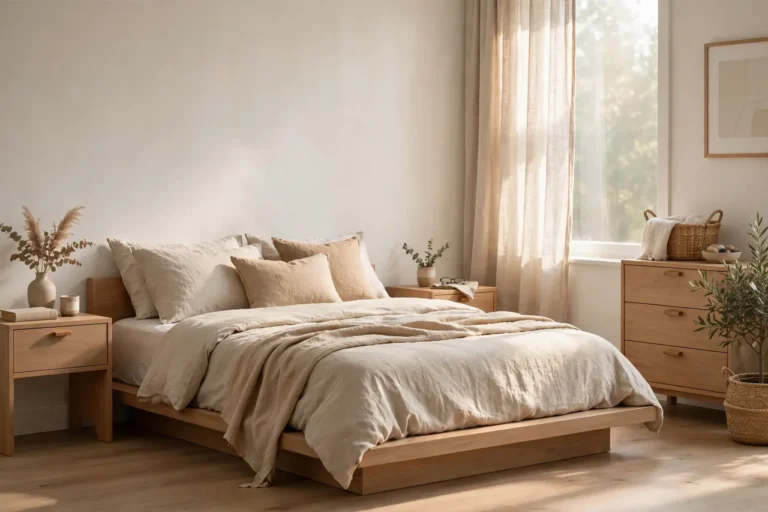
Modern luxury bedroom design starts with subtraction. Remove the extra cushions, the crowded nightstand, and the third pattern, and the room immediately feels more expensive. The furniture stays low and simple: a platform bed, plain nightstands, and one chair or bench. The palette stays restrained, usually three or four tones, with warm white walls, a wood tone, and one accent such as brass or deep green. The luxury comes from what remains: good bedding, warm light, and surfaces you enjoy touching.
Texture does the work that decoration used to do. A modern luxury bedroom might pair a smooth plaster wall with a woven throw, a matte wood nightstand with a brass lamp, and a low pile rug with crisp linen bedding. Each surface is quiet on its own, but together they give the room depth. Without texture, a modern room can feel cold or empty. With it, the room feels considered and warm, even with very little furniture.
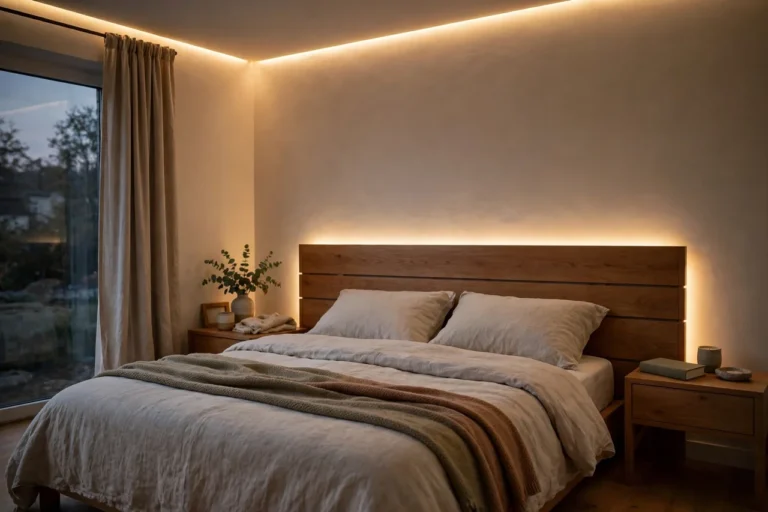
Lighting matters more in a modern room because there is less decoration to hide behind. Use warm lamps at bedside height, a soft ceiling light on a dimmer, and one accent light for art or the headboard wall. Keep metals consistent: one main metal, such as brass or matte black, and one minor metal at most. For a broader look at how modern style works across a whole bedroom, see our modern bedroom style guide. The principles are the same, but luxury raises the standard: every line shows, so every choice must be deliberate.
Master Modern Luxury Bedroom Design: Space, Layout, and Zones
A master modern luxury bedroom design is about zones more than decoration. A large primary bedroom works best when it has a sleeping zone, a dressing or vanity zone, and a sitting zone, even if the sitting zone is only a chair and a small table by the window. Where space allows, a small fireplace in the sitting zone adds the warmest luxury touch of all, because it gives the room a second focal point besides the bed. Zones make a large room feel purposeful instead of empty, and they give two people space to get ready without crowding each other. The bed stays the center, but it does not have to do all the work.
Storage is the quiet luxury in a master bedroom. Custom closets, including walk-in wardrobes where space allows, closed wardrobes, and bedside tables with drawers keep everyday items out of sight, which is what makes a room look calm. A dressing or vanity zone, even a small one with a mirror, a stool, and good light, adds a suite feeling that a larger room alone cannot provide.
This article treats the master bedroom through the luxury lens only: the finishes, the bedding, and the suite features that make it feel expensive. For a full room planning guide, including layout decisions and color planning for a primary bedroom, see our master bedroom design guide. Keep the two ideas separate in your planning: the master guide plans the room, while this guide finishes it to a luxury standard.
Luxury Bedroom Size: How Big Should a Luxury Bedroom Be?
Luxury bedroom size is a common question, and the honest answer is that luxury does not require a large room. A small bedroom with a well dressed bed, warm light, and edited surfaces feels more luxurious than a large bedroom with a bare mattress and harsh light. Size changes what you can fit, not whether the room feels luxurious. Still, planning around size prevents the most common mistake: furniture that is too big for the room or a bed that leaves no walking space.
Use these ranges as general planning guidance only, not as rules. A compact bedroom of about 10 by 12 feet suits a double or queen bed with one nightstand and slim storage, and it feels best with light walls and a mirror. A comfortable primary bedroom of about 12 by 14 feet suits a queen or king bed with two nightstands and a chair, and it can carry a bench at the foot of the bed. A generous suite of about 14 by 18 feet or larger suits a king bed, two nightstands, a sitting corner, and a dressing zone, and it can carry darker colors and larger art. In every size, leave walking space on both sides of the bed and clear access to drawers and doors.
| Room size (general guidance) | Suitable bed | Layout notes |
|---|---|---|
| Compact, about 10 by 12 feet | Double or queen | One nightstand, slim storage, mirror for light |
| Comfortable, about 12 by 14 feet | Queen or king | Two nightstands, chair or bench, layered rug |
| Generous, about 14 by 18 feet or larger | King | Sitting corner, dressing zone, larger art |
Measure before you buy, especially for a king bed and for wardrobes. A bed that looks right in a showroom can overwhelm a real room, and a wardrobe that fits on paper can block a door. Tape the outline on the floor if you are unsure. Size planning takes an hour and prevents the most expensive luxury mistake: beautiful furniture in the wrong room.
The Dressed Bed: Layers, Pillows, and Bedding That Feel Expensive
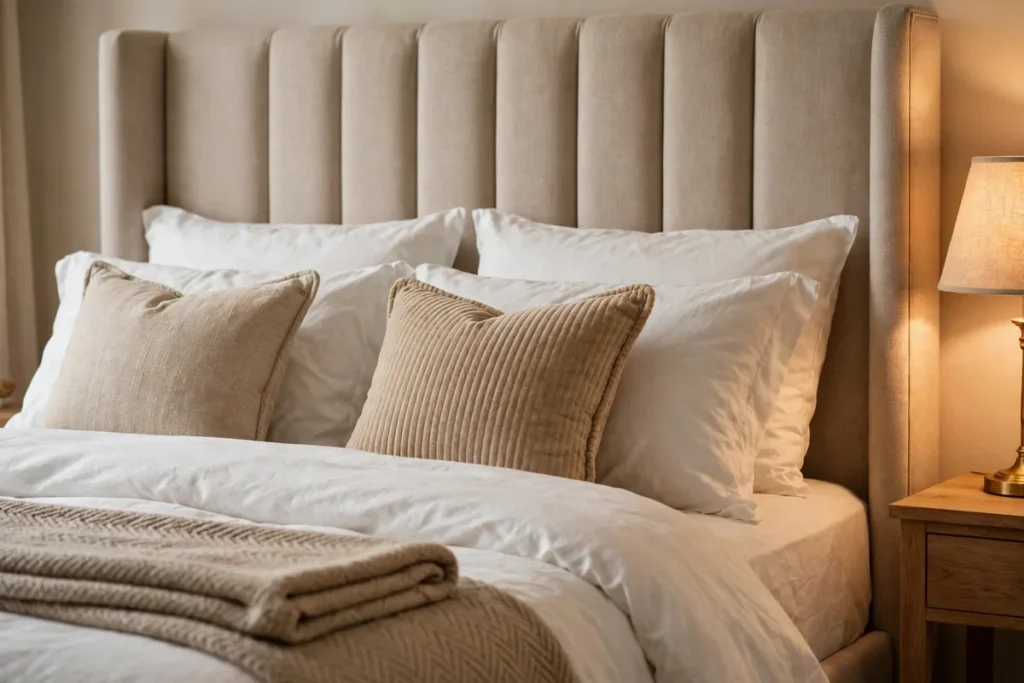
The bed is where luxury lives, because it is the largest object in the room and the one you touch every night. A dressed bed follows a simple layering order. Start with sheets in a natural fabric, such as cotton or linen, that feel good against the skin. Add a duvet in a textured cover with a relaxed drape, not a stiff, flat spread. Add a lighter layer at the foot, such as a quilt or a throw, for depth and warmth. Finish with pillows arranged in layers: larger sleeping pillows at the back, a second row in front, and one or two accent cushions to complete the look.
Pillow count is a matter of balance, not a rule. Two sleeping pillows per side plus one or two accent pieces usually looks generous without turning bedtime into a nightly clearing operation. If you spend more time removing pillows than sleeping, you have too many. If the bed looks flat, add one textured layer, such as a throw or a lumbar cushion, before buying more pillows. The goal is a bed that looks inviting and is easy to use.
Statement Headboards and Feature Walls
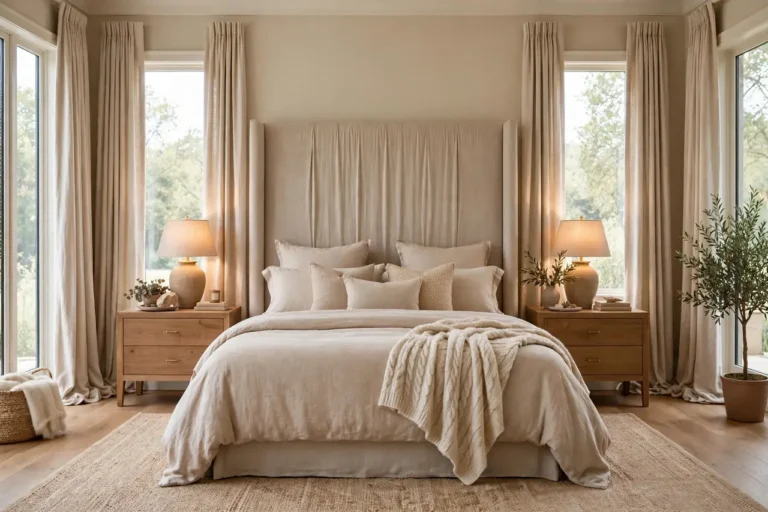
A headboard is the fastest way to give a bedroom a luxury focal point. An upholstered headboard in linen or velvet adds softness and scale, and it makes the bed feel like a designed piece rather than a frame with pillows. A tufted headboard adds classic detail and suits traditional and hotel inspired rooms. A wooden panel headboard gives a cleaner, more structured look for modern rooms. An extended headboard, wider than the bed, creates a sense of architecture and suits rooms where the bed wall needs presence.
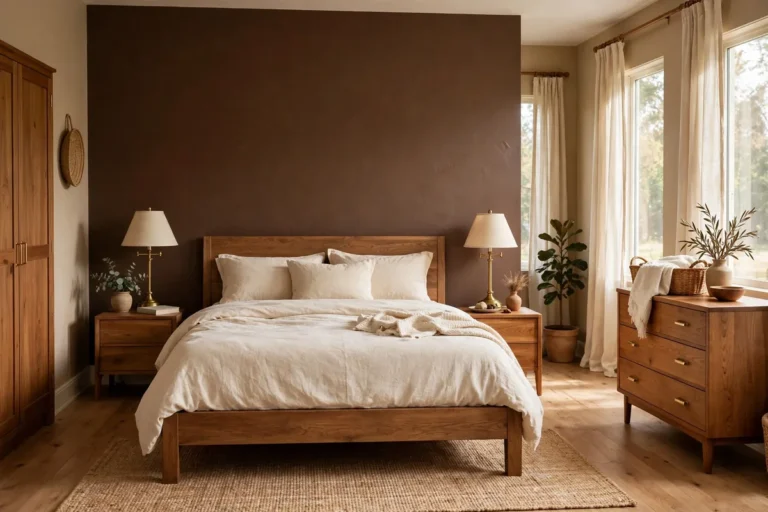
A feature wall works the same way. Instead of decorating all four walls, give one wall a job: panelled wood, textured wallpaper, a painted accent color, or an asymmetrical arrangement that frames the headboard. An asymmetrical feature wall, where panels or art sit off center, feels modern and intentional, while a symmetrical arrangement feels classic and calm. Keep the other walls quiet so the feature wall can carry the room. Two feature walls usually compete, and the room loses its focus.
Luxury Bedroom Furniture: What to Buy First
Luxury bedroom furniture buying order matters, because the first pieces set the standard for everything else. Buy the bed first, including a good mattress and a headboard you love, since you spend a third of your life there and it dominates the room. Buy nightstands second, with drawers or closed storage so daily items disappear. Buy a dresser or wardrobe third, sized to the room and matched in tone to the bed, not necessarily in an identical set. Add seating last: a bench at the foot of the bed, a chair by the window, or a small stool at a vanity.
Matching furniture is not required for luxury. A matched set looks coordinated quickly, but a room with a bed, nightstands, and a dresser in related tones and one consistent metal often looks more collected and personal. The rule is consistency of tone, not identity of product. Keep wood tones to one or two, keep metals to one main and one minor, and let bedding and art provide the variety. A room where every piece matches exactly can feel like a showroom. A room where pieces relate feels like a home.
Luxury Bedroom Sets: What Is Included, Styles, and Materials
A luxury bedroom set is a matched group of furniture, usually built around a bed. A typical set includes the bed frame and headboard, two nightstands, a dresser with a mirror, and sometimes a chest of drawers or a bench. Buying a set is the fastest way to a coordinated room, because finish, style, and proportions already match. The trade off is personality: a full set with identical pieces can look like a display, so break the match slightly with bedding, lamps, art, and one contrasting piece.
Styles range from modern to traditional. Modern sets favor clean lines, low profiles, matte finishes, and simple hardware, and they suit sleek, uncluttered rooms. Traditional sets often have taller headboards, panelled drawers, and more visible hardware, and they suit larger rooms and classic styles. Transitional sets sit between the two, with simple shapes and warm finishes that suit most homes. Choose the set style to match the room, not just the color, or a heavy traditional set can overwhelm a small modern room.
Materials define whether a set feels luxurious. Solid wood and wood veneer over a quality core feel substantial and age well. Upholstered beds in linen or velvet feel soft and hotel like. Metal accents in brass or matte black add definition. Before ordering, check bed height, drawer depth, and whether nightstands have drawers or open shelves. Measure doorways, stairwells, and walking space around the bed.
Hardware and Finishes: The Small Details That Define Luxury
Hardware is the jewelry of a bedroom, and it is where many rooms quietly succeed or fail. Door handles, drawer pulls, curtain rods, lamp bases, and mirror frames are small, but you touch and see them every day. Consistent hardware makes a room feel professionally finished, while mixed hardware in several metals and styles makes it feel accidental. Choose one main metal, such as brass, bronze, or matte black, and use it across handles, lamps, and frames. Add a minor metal only where it serves a purpose, such as chrome in an ensuite bathroom.
Artisanal hardware deserves special attention in a luxury bedroom. Hand finished bronze, forged iron, or carved wood handles carry texture and weight that mass produced plastic handles cannot match. You do not need to replace every handle in the room. Start with the pieces you touch most: wardrobe doors, dresser drawers, and the bedroom door itself. A few beautiful handles in a calm room do more than a room full of decorative objects.
Artisanal Materials: Wood, Stone, Brass, and Handcrafted Texture
Artisanal materials give a luxury bedroom its depth. Wood brings warmth and grain: light oak feels fresh, walnut feels rich, and warm pine feels relaxed. Stone brings cool permanence: a marble tray, a stone lamp base, or a marble topped nightstand adds a natural pattern that no printed surface can copy. Brass brings warmth and light: a lamp, a mirror frame, or drawer handles in brass lift a calm room without shouting. Velvet brings softness: a headboard, cushions, or curtains in velvet catch light in folds and make a room feel plush.
Handcrafted texture is the difference between a room that looks expensive and a room that feels expensive. A handwoven throw, a carved wooden bench, a ceramic vase, or a hand knotted rug carries small imperfections that prove a human made it. These pieces do not need to be many. One or two handcrafted items in a calm room stand out, while a room full of them can feel like a shop. Place them where you touch them: the throw on the bed, the tray on the dresser, the rug underfoot.
| Material | Feel | Best use | Care note |
|---|---|---|---|
| Wood | Warm, natural, grained | Beds, nightstands, benches | Dust and polish gently, avoid harsh cleaners |
| Stone and marble | Cool, permanent, patterned | Trays, lamp bases, nightstand tops | Wipe spills promptly, seal when advised |
| Brass | Warm, reflective, classic | Lamps, mirrors, handles | Polish lightly, accept a soft patina over time |
| Velvet | Soft, plush, light catching | Headboards, cushions, curtains | Brush gently, keep out of direct sun |
| Linen | Relaxed, breathable, textured | Bedding, curtains, throws | Wash gently, embrace the natural wrinkle |
Care is part of luxury. Materials that are easy to maintain stay beautiful, while materials that demand constant attention become a burden. Choose materials you enjoy living with, not only looking at, and the room will stay luxurious long after the first week.
Layered Lighting: Chandeliers, Cove Lights, and Warm Lamps
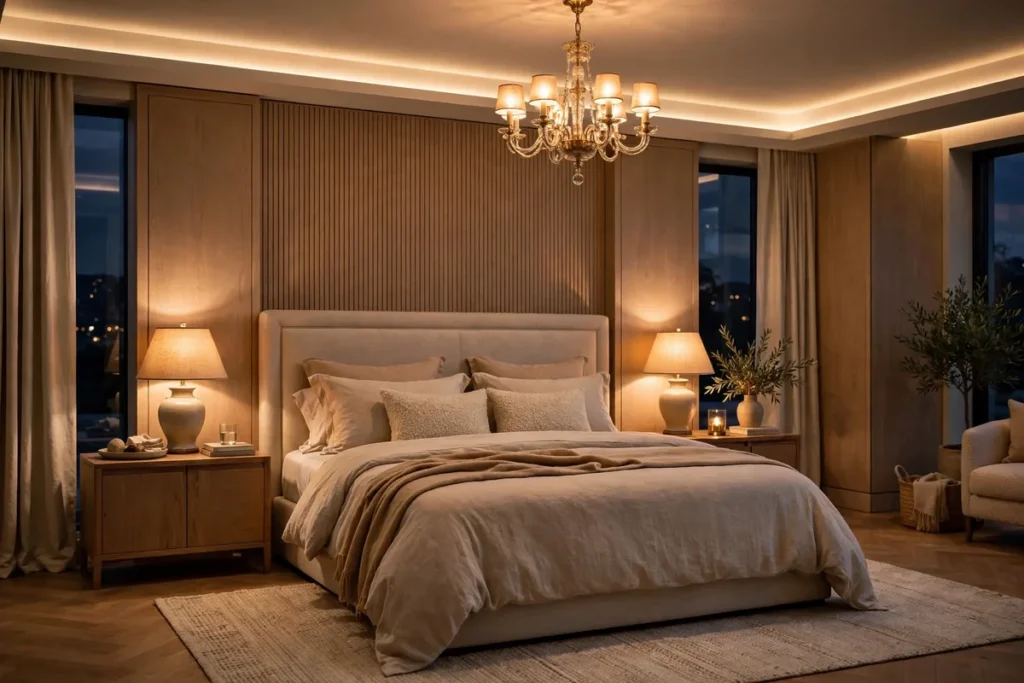
Lighting is the system that makes a luxury bedroom work after dark. A single ceiling light creates harsh shadows and makes even beautiful furniture look flat. Layered lighting, meaning light at several heights and in several places, keeps the room warm and usable. Start with three layers: general light from a ceiling fixture, task light from bedside lamps for reading, and accent light for art, the headboard wall, or a reading corner. Each layer should be warm and dimmable, so the room can shift from bright mornings to soft evenings.
A chandelier is the classic luxury statement, and it works best when it is the only sparkling piece in the room. Hang it where it can be admired without blocking the view, usually centered over the bed or in a sitting area, and keep the rest of the lighting quiet. Cove lighting, where a strip of light hides in a ceiling recess or behind a pelmet, gives a soft glow without a visible fixture, and it suits modern rooms and false ceilings. Wall sconces beside the bed save nightstand space and give reading light at exactly the right height. Choose warm bulbs throughout, because cool white light can make warm materials look gray and cold.
For more on how light layers work in a bedroom, see our LED bedroom lighting guide. The principles there apply directly, but luxury raises the standard: every lamp placement shows, so plan light before you buy furniture, not after. A room that is lit well feels expensive even with simple furniture, and a room that is lit poorly feels cheap even with beautiful pieces.
Windows, Views, and Floor-Length Curtains
Windows are a luxury feature, not just an opening. A framed view, whether of a garden, a skyline, or simply trees, gives a bedroom a sense of place that no decoration can copy. Keep the area around the window clear, use a low sill or a window seat where possible, and let daylight do the work during the day. At night, the window needs dressing: curtains that close fully, block streetlight, and give privacy without making the room feel sealed.
Floor length curtains are one of the most reliable luxury moves. Curtains that skim the floor make ceilings feel taller and walls feel finished, while short curtains can make a room feel unfinished. Mount the rod close to the ceiling and wide enough that curtains stack clear of the glass by day, so the window looks larger. Pair sheer curtains for daytime privacy with heavier curtains or blackout lining for sleep. Choose a fabric with some weight, such as linen or velvet, so the curtains hang in soft folds rather than stiff panels.
Luxury Bedroom With Bathroom: The Spa Ensuite Connection
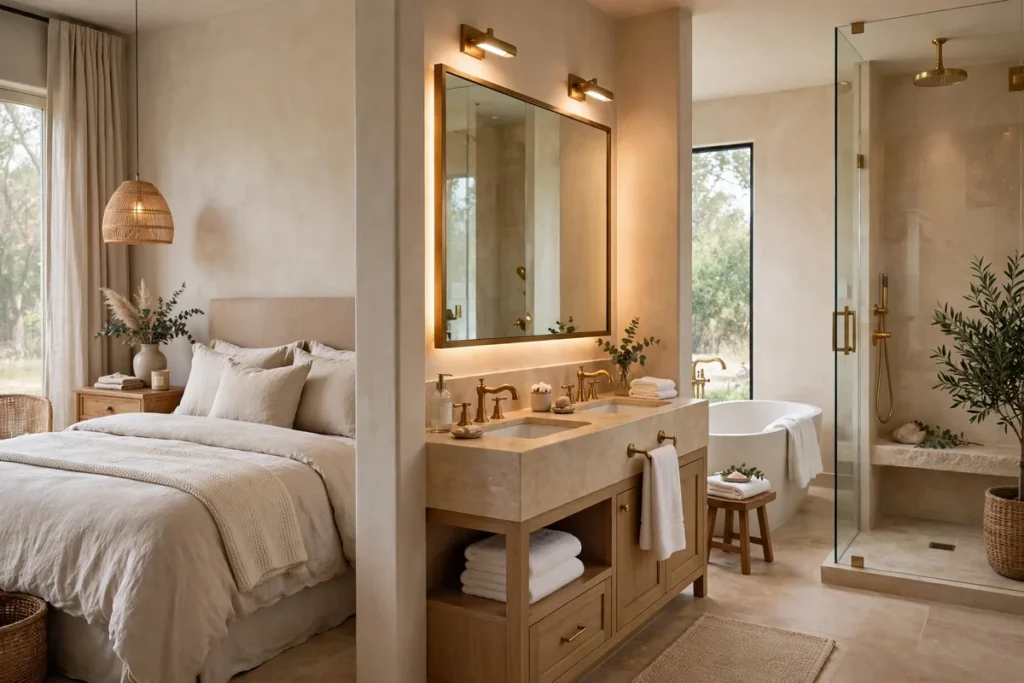
A luxury bedroom with bathroom attached, usually called an ensuite, feels like a suite rather than a room. The connection matters as much as either space alone. A clear, pleasant path from bed to bathroom, a door that closes quietly, and a bathroom that shares the bedroom palette make the pair feel designed together. When the ensuite uses the same tones, metals, and materials as the bedroom, the whole suite reads as one calm space instead of two unrelated rooms.
Spa features are what make an ensuite feel luxurious: a large mirror with warm light, a double vanity for shared mornings, a rain shower, a soaking tub, soft towels, and closed storage so toiletries disappear. You do not need all of them. One generous mirror, warm lighting, and a tidy vanity do more than a crowded bathroom full of gadgets. Keep the ensuite palette close to the bedroom palette, with one shared accent, such as brass or wood, to tie the two spaces together.
Luxury Bedroom Design for Girls: Soft, Elegant, and Personal
A luxury bedroom design for girls, in the sense of a soft and elegant personal room, centers on palette, texture, and personal touches rather than any single theme. Soft palettes work best: blush, cream, pale gray, and dusty rose, with one deeper accent such as navy, plum, or deep green for contrast. The room should feel personal, not generic, so artwork, books, photographs, and a few collected objects matter more than a matching set. A vanity area with a mirror and good light adds a dressing ritual that makes the room feel like a suite.
Texture keeps a soft room from feeling flat. Layer a soft throw over crisp bedding, add velvet cushions in two tones, and use a rug that feels good underfoot. A canopy or a draped headboard can add romance without clutter, provided the fabric is light and the room still breathes. Keep the palette to three or four tones so the room stays calm, and let one personal piece, such as a favorite artwork or a vintage mirror, be the focal point.
Personal touches are the luxury here. A reading chair with a lamp, a small writing desk, or a display shelf for collected pieces makes the room feel owned rather than decorated. The most luxurious version of this room is the one that reflects the person who sleeps in it, with softness, elegance, and space to breathe.
Luxury Bedroom Design 2026: Quiet Luxury, Nature, and Japandi Trends
Luxury bedroom design in 2026 continues directions already visible across competitor coverage, rather than inventing a new style overnight. Quiet luxury leads: warm neutrals, natural fabrics, matte finishes, and very little visible shine. Nature inspired design follows closely, with wood, stone, linen, and plants bringing an organic calm into the bedroom. Japandi continues as a strong direction, mixing minimal shapes with warm natural materials. Hotel inspired bedrooms remain popular, with tall headboards, layered bedding, and warm lamps giving a suite feeling at home.
Other directions worth noting include moody bedrooms, where one deep wall color adds drama with light bedding, and coastal bedrooms, where light blues and natural textures keep the room airy. What these directions share is restraint: fewer colors, fewer patterns, and better materials. The trend is not more decoration. It is better editing, with one or two beautiful pieces carrying a calm room.
Treat trends as inspiration, not orders. A trend that suits your light, your room size, and your daily life is worth following. The same nature first approach appears in our green bedroom color guide, where deep green walls plus light bedding plus layered light use the same calm, natural approach. Choose the direction that makes your room feel restful, and let the year take care of itself.
Small Luxury Bedrooms: Smart Planning, Not Room Size
A small bedroom can feel luxurious, because luxury is about planning, not size. The rules change slightly: every piece must earn its place, and light and storage matter even more. Start with the bed, dressed well, and keep the palette light and restrained so the room feels open. Use one mirror to bounce daylight, keep window treatments light, and choose furniture with visible legs so floor shows underneath. A small room with a beautiful bed and warm lamps feels like a boutique hotel room. A large room with a bare bed feels like a storage space.
Storage is the make or break issue in a small luxury bedroom. Built in wardrobes with sliding doors, under bed storage, and nightstands with drawers keep daily items out of sight, which is what makes a small room look calm. Open shelving suits a few display pieces, but a whole wall of open storage can look busy. Wall mounted lamps save nightstand space, and a single bench or stool can serve as both seating and storage. Multi functional furniture, such as a bed with drawers or a desk that doubles as a vanity, earns its place twice.
Keep decoration to one focal point: a headboard, a piece of art, or a beautiful lamp. Everything else stays quiet. A small luxury bedroom succeeds when it feels intentional: a considered bed, warm light, one beautiful texture, and nothing extra. That is a smaller version of the same luxury system, not a compromise.
Luxury Bedroom on a Budget: Fancy Look, Smart Spending
A fancy bedroom look on a budget is entirely possible, because the highest impact luxury moves are also the cheapest. Fresh bedding, warm lamps, a decluttered room, and a coat of paint in a restrained color change a room more than an expensive bed frame. Start with what you touch and see most: the bed, the light, and the surfaces. A well dressed bed in good natural fabric, two warm bedside lamps, and clear nightstands can transform a room in a weekend.
Spend where it shows and save where it does not. Splurge on the mattress, the bedding, and one statement piece, such as a headboard or a lamp, because these shape comfort and first impressions. Save on decoration, extra cushions, and matching accessories, because these add clutter faster than luxury. Paint is the best value upgrade of all: a warm neutral on the walls unifies old furniture and makes new pieces look intentional. A fancy bedroom built this way looks expensive because it is calm, not because it cost a fortune.
| Choice | Splurge | Save |
|---|---|---|
| Bed | Mattress and headboard you love | Bed frame styling, extra cushions |
| Bedding | Natural fabric sheets and duvet | Decorative-only throws and sets |
| Lighting | Warm dimmable lamps, one statement lamp | Extra fixtures, matching sets |
| Walls | Quality paint in a restrained color | Feature wall extras, many artworks |
| Storage | Closed storage that hides clutter | Open display units, many small boxes |
Rugs, Art, and the Finishing Layer
Rugs, art, and small finishing touches are the last layer of a luxury bedroom, and they work best when they are few and deliberate. A rug should anchor the bed: large enough to extend beyond the bed on both sides, so feet land on softness in the morning. A low pile rug suits rooms where a bench or chair slides, while a plusher rug suits a bedroom that is mostly for rest. Layering a smaller patterned rug over a large neutral one adds depth without clutter, provided the colors stay within the room palette.
Art should be chosen, not accumulated. One large piece above the bed or on the main wall gives the eye a resting place, while many small pieces can feel busy. Photography, abstract work, and landscapes all suit luxury bedrooms, provided the frame matches the room metals and the scale suits the wall. Personal art, such as a favorite print or a family photograph in a beautiful frame, adds character that a generic hotel print cannot. Mirrors count as art too: a large mirror with a brass or wood frame adds light, depth, and a focal point in one piece.
Mistakes That Make a Bedroom Look Cheap
Most bedrooms that look cheap fail for the same few reasons, and all of them are avoidable. The first mistake is too much decoration: many patterns, many colors, and many small objects competing for attention. The fix is restraint: one palette, one focal point, and surfaces with breathing space. The second mistake is harsh lighting: a single cool ceiling light with no lamps makes even beautiful furniture look flat. The fix is layered warm light at several heights.
The third mistake is thin, tired bedding: a flat duvet, mismatched pillows, and worn sheets undo an otherwise beautiful room. The fix is layered natural bedding in one palette, washed and cared for. The fourth mistake is cluttered surfaces: chargers, bottles, papers, and laundry visible everywhere. The fix is closed storage and one tray per surface. The fifth mistake is mismatched metals and wood tones: several different finishes in one room look accidental. The fix is one main metal, one minor metal, and one or two wood tones.
None of these mistakes require a large budget to fix. They require decisions: edit, light warmly, dress the bed, hide clutter, match finishes, and measure first.
How to Design a Luxury Bedroom Step by Step
Step one is choosing your style and palette. Pick one style direction, such as quiet luxury, hotel inspired, modern, or old world, and a palette of three or four tones that suits your light. Test paint on the wall in daylight and lamplight before committing, and choose bedding tones that sit happily inside the same palette. This step prevents the most common luxury failure: a room where every piece is beautiful and nothing belongs together.
Step two is dressing the bed and planning light. Choose the bed, headboard, and bedding first, because they set the room standard. Then plan three light layers: general, task, and accent, all warm and dimmable. Buy or borrow lamps and the rug before final decoration, so the room never sits half finished in a harsh state. A room that is painted but not yet lit or dressed is the version that disappoints, and it is entirely avoidable with a little ordering ahead.
Step three is adding furniture, storage, and finishing touches in order. Place the bed, nightstands, and storage first, checking walking space and drawer access. Add seating, art, and mirrors next, keeping one focal point. Finish with rugs, trays, and small comforts, editing as you go.
FAQs
What makes a bedroom feel luxurious?
A bedroom feels luxurious when the bed, palette, light, space, and texture work together. A comfortable dressed bed, a calm restrained palette, warm layered light, uncluttered surfaces, and a few quality materials do most of the work. No single expensive item can carry a room that fails on the others.
Is a fancy bedroom the same as a luxury bedroom?
Not quite. A fancy bedroom usually means decorative and showy, with more sparkle, pattern, and visible expense. A luxury bedroom usually means comfortable, restrained, and well made, with fewer things and better materials. The best rooms borrow a little from both: one or two decorative moments inside an otherwise calm and comfortable scheme.
What colors make a bedroom look luxurious?
Warm neutrals lead: warm white, cream, beige, and soft gray, with one deeper shade for shape, such as charcoal, deep green, or navy. The palette should stay to three or four tones so the room feels intentional. Bright rooms handle white well, restful rooms suit gray and beige, and modern rooms suit a warm neutral plus brass.
What bedding is best for a luxury bedroom?
Bedding in a natural fabric, such as cotton or linen, layered well: sheets, a textured duvet cover, a lighter layer at the foot, and pillows in layers. Choose bedding you enjoy sleeping in first. A high thread count alone does not prove comfort, and a good natural fiber at a moderate count can feel better than a stiff high count fabric.
How many pillows should be on a luxury bed?
Two sleeping pillows per side plus one or two accent pieces usually looks generous without turning bedtime into a clearing operation. If you spend more time removing pillows than sleeping, you have too many. If the bed looks flat, add one textured layer, such as a throw or a lumbar cushion, before buying more pillows.
Does luxury bedding need a high thread count?
No. Thread count is one measure of fabric density, not a proof of quality. Fiber, weave, and finish matter more. A well made cotton or linen bedding in a comfortable weight, washed and cared for, feels more luxurious than a high count fabric that is stiff or noisy. Judge bedding by touch and sleep, not by a number on packaging.
How do you make a small bedroom feel luxurious?
Keep the palette light and restrained, dress the bed well, and use warm lamps and one mirror for light. Choose slim furniture with visible legs, closed storage to hide clutter, and one focal point, such as a headboard or a lamp. A small room with a beautiful bed and warm light feels like a boutique hotel room.
What type of headboard looks luxurious?
An upholstered headboard in linen or velvet looks luxurious in most rooms, because it adds softness and scale. A tufted headboard suits classic and hotel inspired rooms, a wooden panel headboard suits modern rooms, and an extended headboard suits rooms where the bed wall needs presence. Choose the size to rise clearly above the pillows and relate to the bed width.
Should a luxury bedroom have a television or technology?
Technology is welcome when it stays discreet. A television mounted cleanly with hidden cables, dimmable smart lighting, and charging points tucked into nightstands all add comfort without clutter. What looks cheap is visible technology: tangled cables, glowing standby lights, and screens dominating the room. Hide the workings and keep the surfaces calm.
How can I make a bedroom look expensive on a budget?
Start with the highest impact, lowest cost moves: fresh layered bedding, warm bedside lamps, a decluttered room, and paint in a restrained color. Splurge on the mattress and bedding, save on decoration and accessories, and keep the palette steady so old and new pieces belong together. A calm, warm, well dressed room always reads as more expensive than a crowded room.
Should bedside tables match in a luxury bedroom?
Matching nightstands look calm and symmetrical, and they suit classic and hotel inspired rooms. Mismatched nightstands in related tones and one consistent metal look collected and personal, and they suit modern and eclectic rooms. Either works, provided the heights are close, the tones relate, and the surfaces stay edited. What looks cheap is two unrelated tables with clashing finishes.
What finishing touches make a bedroom feel luxurious?
A carafe and glass on the nightstand, a tray for daily items, fresh flowers or a candle, a folded throw on the bench, and one piece of art you love. Keep them to one tray and one or two objects per surface. Finishing touches work by editing, not by quantity: a clear nightstand with a lamp, a book, and a glass looks luxurious, while a crowded one does not.
How do hotels make bedrooms feel luxurious?
Hotels use layered bedding, warm lamps at several heights, a clear palette, and edited surfaces, so the room feels special within seconds and stays comfortable for sleeping. You can borrow all of that: dress the bed in layers, add warm bedside and accent light, keep the palette to three or four tones, and hide clutter in closed storage. The result feels like a hotel room that is also yours.
What is included in a typical luxury bedroom set?
A typical set includes the bed frame and headboard, two nightstands, a dresser with a mirror, and sometimes a chest of drawers or a bench. Styles range from modern to traditional, and materials from solid wood to upholstered fabric. Before ordering, measure the room, doorways, and walking space, and check bed height and drawer depth.
Get home ideas in your inbox
Practical home improvement ideas and DIY guides, once in a while. No spam.



One Comment
Comments are closed.