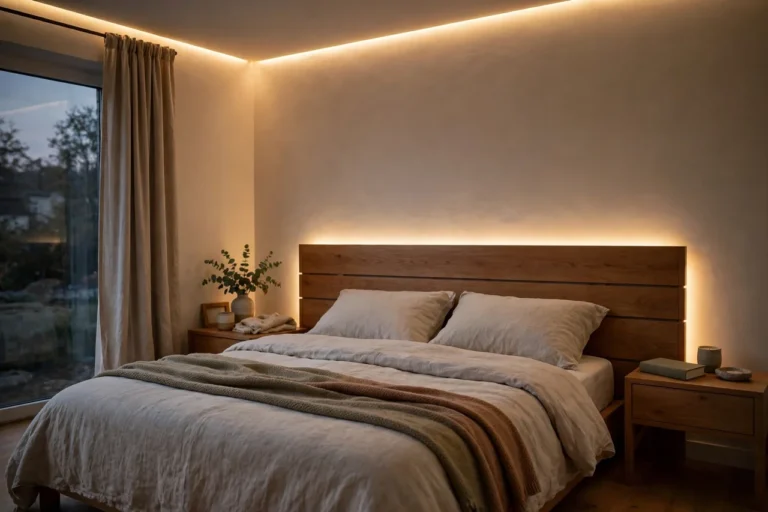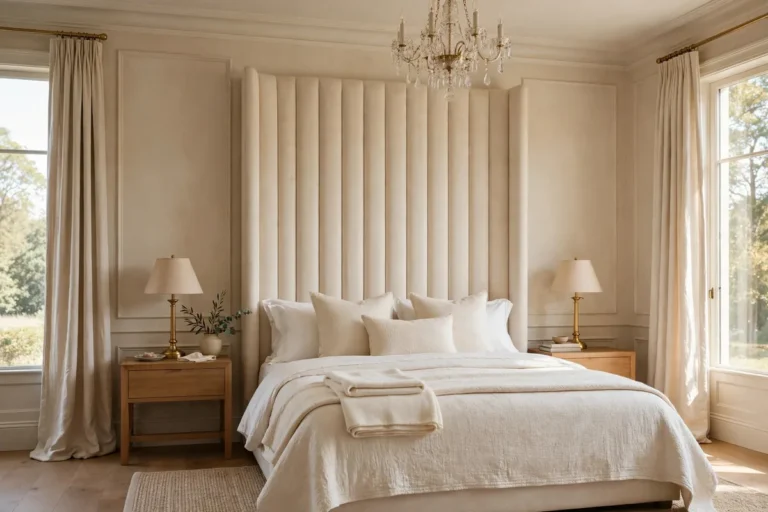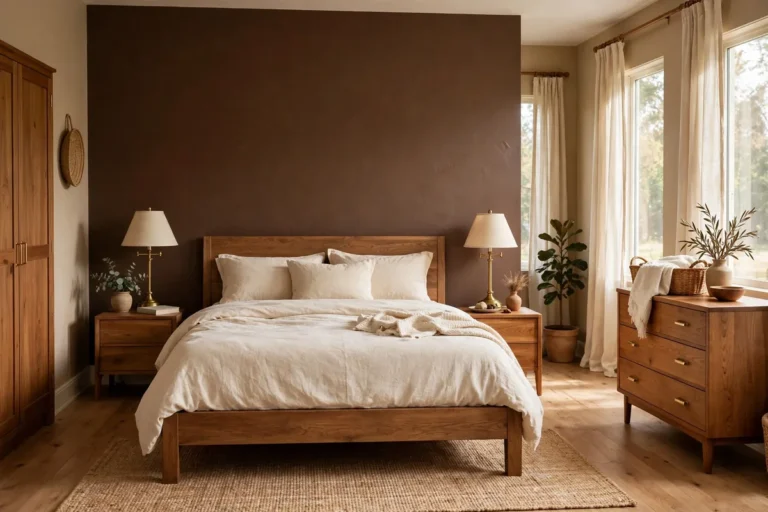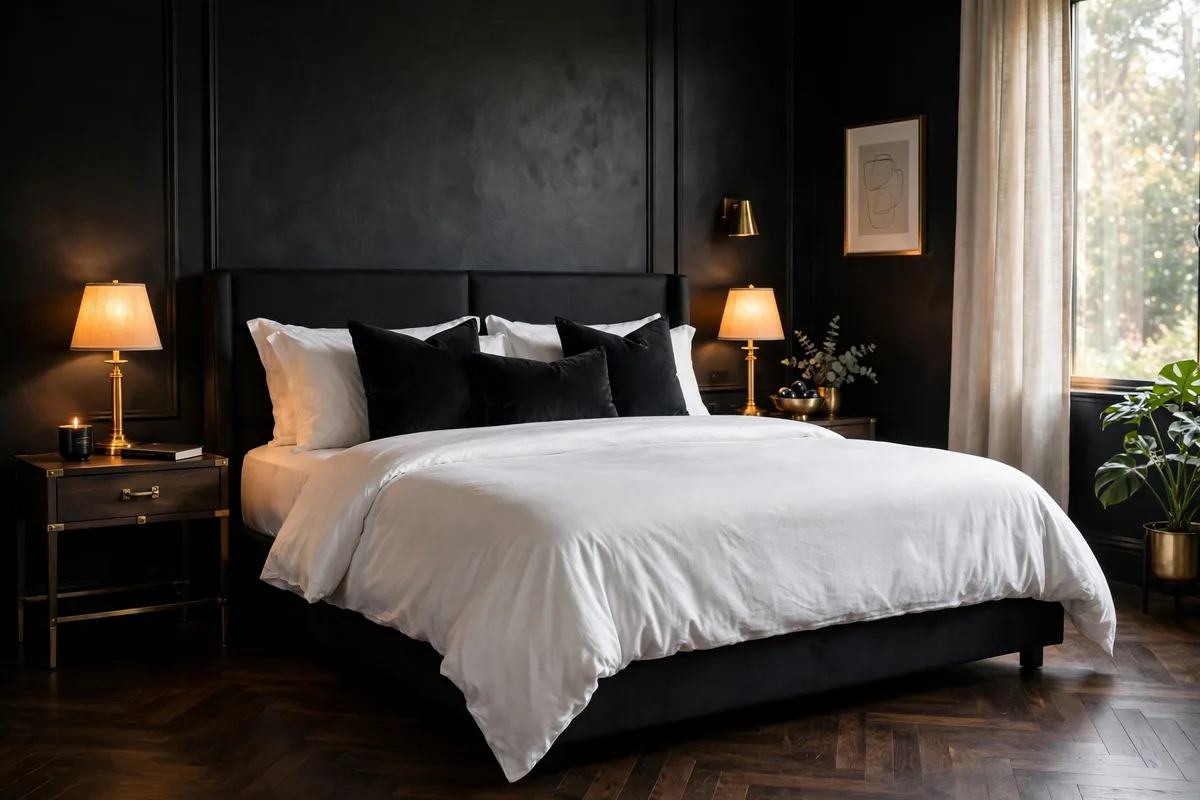
Black Bedroom Ideas: Walls, Furniture, and Sets That Look Luxe, Not Gloomy
A black bedroom divides opinion faster than almost any other room idea. Some people see instant luxury, a hotel suite look with depth and drama. Others see a cave, a room that will feel small, dark, and hard to live with. Both reactions are understandable, because black is unforgiving of half measures. Used flat and alone, it looks dull. Used with light, texture, and a clear plan, it looks deliberate and expensive.
This guide covers the whole decision, not just paint swatches: how to pick a black that suits your room, how much black to use, which colors and materials keep it warm, how furniture and sets work, and how to succeed in a small room or a rental. The black bedroom ideas below cover walls, paint, furniture, sets, and small rooms in one place. Black and white bedroom ideas get a full section of their own, because they are the easiest starting point. The goal is simple: a room that feels like a retreat, not a risk.
Is a Black Bedroom a Good Idea?
A black bedroom is a good idea when you want depth, calm, and contrast, and when you are willing to plan lighting and texture around it. It is weaker when the room has almost no natural light, no layered lamps, and everything already dark and flat. Black itself is not the problem there. The missing pieces are light and variety.
Black works as a neutral. Like white, it goes with almost everything, but it does the opposite job. White opens a room up and shows every edge. Black pulls edges back and makes the room feel wrapped and quiet. That is why boutique hotels use dark walls behind the bed: the bed becomes the bright focus and the room reads as intentional.
People often worry that a black bedroom will hurt sleep. Color alone does not decide that. Light control at night, a comfortable bed, and a room that feels calm matter more. Many people find a dark room restful because it feels enclosed, like a cocoon, while others find it heavy. If you love dark, moody spaces, this look will probably feel restful. If you need bright rooms to feel awake, keep black to one wall or to furniture and bedding.
A black bedroom also suits people who like a strong style statement without constant redecorating. Black walls, a black bed, and simple bedding can carry a room for years, because the base never goes out of fashion. You change the look with cushions, throws, art, and lamps, not with new paint.
Black Bedroom Paint: Charcoal, Jet, and Matte vs Gloss
Not all blacks are the same, and the difference matters more on a wall than on a swatch card. A charcoal black has gray in it, so it reads softer and more forgiving. A jet black is deeper and sharper, closer to true black, and it shows every flaw in the wall underneath. A soft black sits between the two, dark but not harsh, and it is the safest starting point for a first dark room.
Undertones change everything. A black with a blue undertone can feel cold in a north facing room, while a warm, brownish black feels richer with warm lamps and wood. Always test a large patch, at least the size of a pillow, in daylight, lamplight, and at night. A color that looks perfect in the shop can look different beside your floor and bedding.
Finish matters as much as shade. Matte absorbs light and gives the softest, most velvety look, which is why designers love it for bedrooms, but it marks more easily and is harder to wipe clean. Eggshell and satin reflect a little more light, so the room feels slightly brighter, and they clean better around switches and doors. Gloss reflects the most light and makes a strong statement, but it shows bumps and brush marks, so wall preparation has to be excellent.
Two well known near black paints are often used as reference points: Farrow & Ball Railings and Benjamin Moore Black Satin. Think of them as examples of the soft black family, not as orders. A tester pot is cheaper than a repaint.
| Finish | Light behavior | Best use | Cleaning | Mood |
|---|---|---|---|---|
| Matte | Absorbs light, no shine | Main walls for a soft, velvety look | Hardest to wipe, marks show | Calm, cocooning, luxurious |
| Eggshell or satin | Reflects a little light | Walls that need wiping | Easier to clean than matte | Balanced, practical |
| Gloss | Reflects a lot of light | Feature walls, doors, trim | Easiest to wipe clean | Bold, dramatic |
If you are unsure, start with a soft black in eggshell or satin.
Black Bedroom Walls: All Four, Accent Wall, or Half Wall?
How much black you paint is the biggest decision in this look. It matters more than the exact shade. Four black walls give the full cocoon effect, but they demand good lighting and light bedding, or the room can feel heavy. One black accent wall, usually behind the bed, gives most of the drama with far less risk. A half wall, where black covers the lower half and a lighter color the upper half, gives structure and contrast and suits rooms that need to stay bright.
Color drenching is the fourth option: painting walls, trim, doors, and sometimes the ceiling in the same black, so edges disappear and the room feels taller and more unified. It is the boldest choice and the most rewarding with good lamps and light bedding, because no harsh white line catches the eye. It is also the hardest to reverse, so it suits owners more than renters.
The wall behind the bed is the natural place to start. It frames the bed, it is the first wall you see from the door, and it anchors the whole room. If you paint only one wall, paint that one. If you paint two, add the wall opposite the door.
Dark wall techniques are not unique to black. The same receding wall idea, the same drenching approach, and the same need for light bedding apply to other deep colors too. The difference with black is the contrast. Black against white bedding is sharper than any other color pairing, so bedding and lighting choices matter even more.
| Coverage | Commitment | Light needed | Best room |
|---|---|---|---|
| All four walls | High, full repaint | High, layered lamps | Larger rooms, small rooms with strong lighting |
| Accent wall behind the bed | Low, one wall to repaint | Medium, one or two warm lamps | Any room, best first step |
| Half wall | Medium, needs a dividing line | Medium, keeps upper walls bright | Rooms with low ceilings or little daylight |
| Color drenching | Very high, walls plus trim | High, lamps at several heights | Rooms where you want full cocooning |
A practical rule: paint the accent wall first and live with it for a week. You will learn quickly whether your room needs more black or more light, and one wall is easy to change.
Black and White Bedroom Ideas: The Classic Contrast
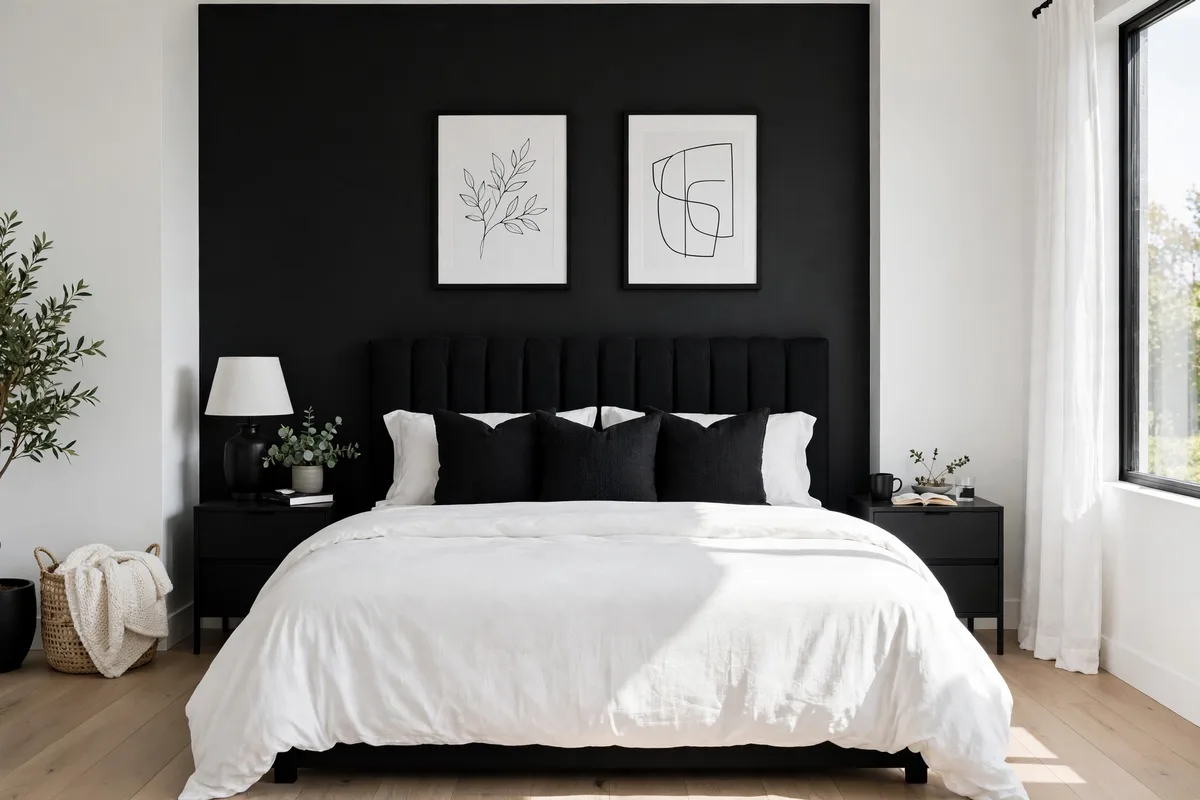
Black and white bedroom ideas are the safest entry point into this look, and they are popular for a reason. The contrast is clean, timeless, and almost impossible to get wrong. White bedding against a black wall, black frames against white walls, or a black bed with white linen all give the same crisp result. The room reads as designed even when the furniture is simple.
The trick is proportion. A room split equally between black and white can feel harsh, like a chessboard, while one dominant color with the other as an accent feels calmer. Try black walls with white bedding, white lamps, and a cream rug, or white walls with a black bed, black frames, and black cushions.
Texture stops black and white from feeling cold. White linen, a chunky knit throw, a woven rug, and a wooden bench all soften the contrast. Without texture, the room can look like a showroom. With it, the room looks lived in and warm. Add one warm element, such as brass lamps or a tan throw.
Black and white bedroom ideas suit almost any style, from modern to classic. They also suit people who change accessories often, because any new cushion color, from mustard to sage to dusty pink, sits happily on a black and white base. If you feel nervous about committing, this is the version to start with.
Black and Gray Bedroom Ideas: Softer Than Black and White
If black and white feels too sharp, black and gray is the softer answer. Gray sits between the extremes, so contrast is gentler and the room feels calmer. A charcoal wall with light gray bedding, a gray headboard with black nightstands, or a gray rug on a dark floor all give depth without the punch of pure white.
Gray also gives you more shades to play with. Light gray bedding keeps the room bright, mid gray cushions add depth, and dark gray throws bridge the gap between wall and bed. The result is a layered room where the eye moves smoothly from dark to light instead of jumping between extremes.
This pairing suits bedrooms that need to feel restful above all else. It is less dramatic than black and white, but easier to live with every day, and it photographs beautifully. Add warmth with wood, brass, or cream, or the room can drift toward cold. A wooden bench, brass lamp, or cream throw is usually enough.
This pairing also works when the room already has gray carpet or curtains: paint the wall a related charcoal, choose lighter bedding, and let black furniture provide contrast.
Black and Beige Bedroom Ideas: Warmth Without Whiteness
Black and beige is the warmest classic pairing. Beige softens black without the sharpness of white and adds a natural, earthy feeling. Think black walls with beige linen bedding, a wool throw, a rattan chair, and wooden nightstands. The room feels like a luxury lodge rather than a modern showroom.
Tan and greige belong to the same family. Tan is beige with more warmth, almost like leather, and it looks superb with black. Greige, a mix of gray and beige, is cooler and more modern, and suits people who find pure beige too yellow. All three warm the black, lighten the room, and stop it from feeling cold.
This pairing is ideal for rooms with warm light, wooden floors, or natural materials, and suits people who find white bedding too stark. Beige bedding hides wear better and looks softer in lamplight. A black bed with beige bedding and a tan leather bench rarely fails.
To keep this pairing from looking muddy, keep beige light and black deep. Pale beige against jet black gives clear contrast, while mid beige against charcoal can blur in low light. If your room is dark, go lighter on beige and add a white lamp shade or cream rug.
Modern Black Bedroom Ideas: Clean Lines, Matte Black, and Gold
Modern black bedroom ideas strip the look back to essentials: clean lines, flat surfaces, matte black, and one metallic accent, usually gold or brass. There is no fuss, no heavy pattern, and no clutter: a low platform bed, plain black nightstands, simple lamps, and one piece of art can carry the whole room.
Matte black is the signature finish of the modern version. It absorbs light and looks soft and expensive on furniture and walls. Pair it with gold or brass for warmth and luxury without extra decoration. A brass lamp, gold framed art, or brass handles on black drawers are small touches that change the whole feeling.
For a broader look at how modern style works across a whole bedroom, see our modern bedroom style guide. The principles are the same, but black raises the stakes: every line shows, so simplicity must be deliberate.
Black Bedroom Furniture: How to Design Around a Black Bed
A black bed is the easiest way into this look, because it needs no paint and no commitment to a wall color. But black furniture changes how a room works. A black bed absorbs light and draws the eye, so it becomes the center of the room whether you plan it or not. Design around it deliberately, or the rest of the room can feel like an afterthought.
Start with bedding. Light bedding is almost essential on a black bed, at least for the main duvet and pillows. White, cream, light gray, or beige bedding creates the contrast that lets the bed shape show. All black bedding can look luxurious in a photograph, but in real life it often reads as one dark block. If you love dark bedding, use it as a throw or cushions over a light base.
Nightstands matter more with a black bed than with a light one, because black nightstands beside a black bed can merge into one dark mass. Mixing materials solves this: try wooden nightstands, rattan drawers, or nightstands with brass handles.
Built in furniture is a strong option in a dark room. Black wardrobes and shelving that match the wall color can make storage disappear, which is useful in a small room. Keep handles, lighting, and a few open shelves in a lighter material, so storage does not become a black wall of doors. A strip of warm light inside a wardrobe, or wooden handles on black doors, makes the difference.
Scale is the other rule. Black furniture looks heavier than light furniture of the same size, so a bulky black wardrobe can dominate a small room. Choose slimmer pieces and raised legs that show floor underneath. A black bed with visible legs feels lighter than one that sits flat on the floor, and that detail can change how big the room feels.
Black Bedroom Sets: Modern Sets and King Sets Explained
A bedroom set is a matched group of furniture, usually a bed, nightstands, a dresser, and often a mirror or chest. Buying a set is the fastest way to a coordinated dark room, because finish, style, and proportions already match. The risk is a showroom look with no personality. Break the match slightly with bedding, lamps, art, and one contrasting piece.
Modern black bedroom sets favor clean lines, low profiles, matte finishes, and minimal decoration. Handles are often simple bars or push to open doors, and headboards are usually upholstered panels or plain wood, not carved or ornate. Modern sets suit people who want a sleek, uncluttered room and like the black and gold or black and wood pairings.
Traditional black bedroom sets are different. They often have taller headboards, panelled drawers, turned legs, and more visible hardware. They suit larger rooms and classic or farmhouse styles, and pair well with beige bedding, warm wood, and soft patterns. A traditional set in a small modern room can feel heavy, so match the set style to the room, not just to the color.
A black bedroom king set is built around a king bed, which is the widest standard bed size and needs generous floor space. A typical king set includes the bed frame and headboard, two nightstands, a dresser with mirror, and sometimes a chest of drawers. Before ordering, measure the room, doorways, and stairwell, and check that you can walk on both sides of the bed and open every drawer fully. A king set that fits on paper but blocks a door is a common and expensive mistake.
When comparing sets, look past the photograph. Check bed height, because a very low or very high black bed changes how the room feels, and check drawer depth and whether nightstands have drawers or open shelves. Check the finish in person if you can: matte black, gloss black, and black wood stain photograph similarly but feel very different in a real room.

Black Bedroom Ideas for Small Rooms That Feel Bigger
Small rooms are where black surprises people most. The fear is that black will shrink the room, but many designers report the opposite: dark walls can make boundaries less obvious, because the eye has less edge information to work with. Corners soften, walls recede, and the room can feel deeper rather than smaller. This is a qualitative effect, not a measured guarantee, and it depends on light and balance, not paint alone.
Light is the condition that makes or breaks a small black bedroom. A small room with one window and one dim ceiling light will feel closed in, whatever the wall color. A small room with a window, a bedside lamp, and a warm light at face height will feel layered and intentional, even with black walls. Add mirrors beside the window to bounce daylight around, and keep window treatments light.
Balance is the second condition. Designers often use a rough rule of thumb of about 60 parts dark surfaces to 40 parts light elements, meaning walls can be dark while bedding, rugs, trim, and art stay light. You do not need to measure this. A small black room needs visible light elements: if walls, bed, floor, and bedding are all black, the room has no contrast and feels smaller, but if bedding is white, the rug is cream, and art is light, the room has depth.
Coverage matters most in small rooms. One black accent wall behind the bed is the safest small room move, because it gives depth without darkening the whole space. A half wall is the next step, because upper walls stay light. All four walls can work, but only with strong lighting, light bedding, and a light rug. Color drenching in a tiny room is the boldest choice and should be tried only if you love cocooning spaces and have good lamps.
Storage also matters. A small dark room needs storage that does not add visual weight. Black built in wardrobes that match the wall can disappear, while open black shelves can look cluttered. Closed storage, slim furniture, and raised legs all help a small black room feel bigger than it is.
The same receding wall thinking appears in other dark color rooms too. In our green bedroom color guide, the same technique, dark walls plus light bedding plus layered light, is used for deep green walls. Light and balance do the work.
Black Bedding: What Looks Good on a Black Bed
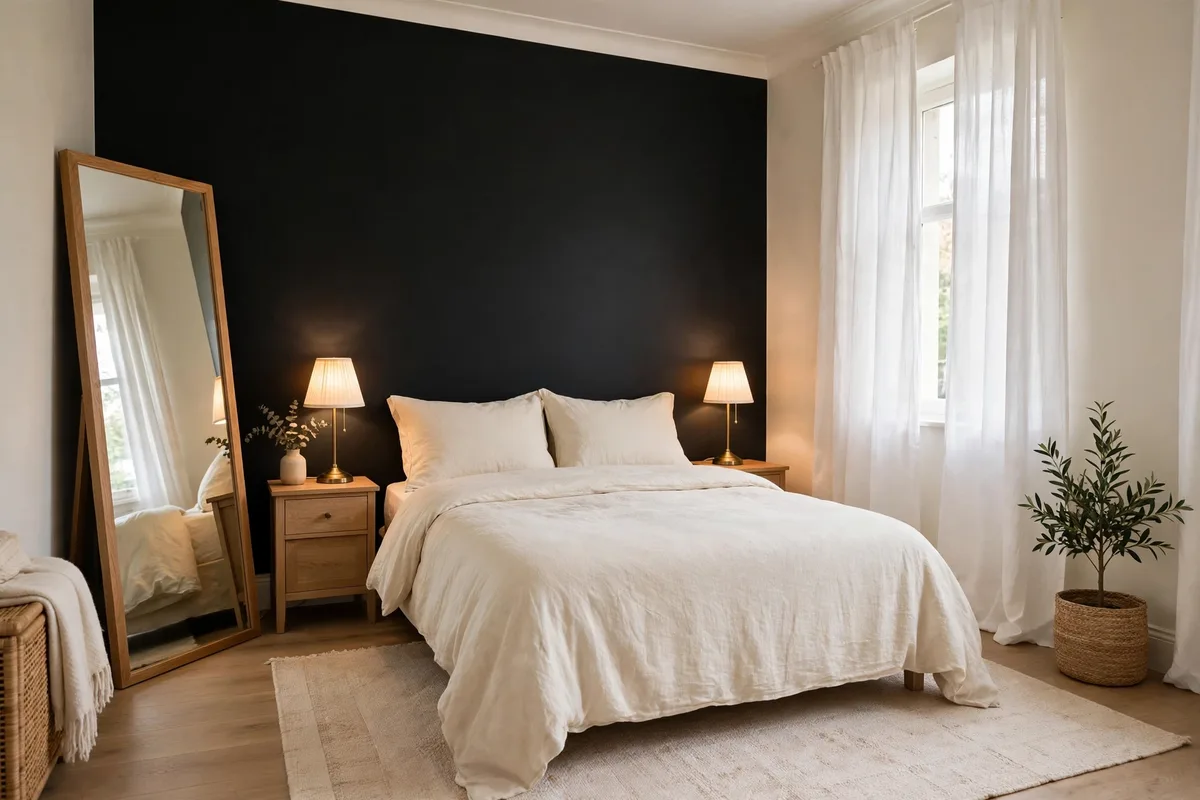
Bedding is the fastest way to change this look, and it is also where most mistakes happen. The rule is simple: bedding should contrast with the bed and the wall, or the bed disappears. On a black bed, light bedding almost always wins. White gives the sharpest contrast and the crispest hotel look. Cream and beige give a softer, warmer version. Light gray sits between the two and suits modern rooms.
Layering is what makes light bedding look designed rather than plain. Start with a light duvet and pillows. Add a throw in a deeper color, such as charcoal, olive, or tan, folded across the foot of the bed. Add two or three cushions in mixed textures, not matching sets. A velvet, linen, and knit cushion together look richer than three identical cushions, and they tie the bed to the rest of the room.
Dark bedding has its place, but use it as an accent, not the base. A black throw over white bedding looks intentional, and a charcoal cushion on cream bedding adds depth. A full set of black sheets, duvet, and pillows on a black bed usually looks like one dark block, and shows lint, dust, and pet hair more than light bedding does. If you love the all black bed look, add a light throw and pillowcases to break it up.
Practical care matters too. White and cream bedding needs washing more often in a dark room, because dust shows against both the dark wall and the light fabric. Keep a spare set, so the bed never sits bare while bedding is in the wash.
Layered Lighting for Black Bedrooms
Lighting is not a finishing touch in a black bedroom. It is the main system that makes the color work. A single ceiling light creates harsh shadows and dark corners, and the room feels gloomy even with good paint. Layered lighting, meaning light at several heights and in several places, keeps the room warm and usable.
Start with three layers. General light, usually a ceiling fixture or recessed lights, covers getting dressed and cleaning. Task light, such as bedside lamps for reading, should sit at face height when you are sitting in bed, not above your head. Accent light, such as a strip behind the headboard or a picture light over art, makes black walls glow instead of disappearing.
Warm light suits dark rooms better than cool white light. Warm bulbs make black walls look rich rather than cold and gray, while cool white bulbs can make black look harsh. Choose warm white bulbs for bedside lamps and accent lights, and use dimmers, so the room can shift from bright in the morning to soft at night.
Sculptural lighting deserves special attention. A striking pendant, an arched floor lamp, or a pair of unusual bedside lamps can become the jewelry of a black bedroom. Because the walls are dark, the lamp shape and its pool of light stand out. One sculptural piece is enough; two or three competing statement lamps make the room feel busy.
A common confusion needs clearing up here. Blackout curtains and black walls are different things. Blackout curtains block light from outside, and they are about sleep and privacy, not color. A dark color scheme can have sheer curtains, blackout curtains, or no curtains at all. You can have black walls with white blackout curtains, and a white room with black blackout curtains. If you need darkness for sleep, choose blackout curtains for function and wall color separately for style.
For more on how light layers work in a bedroom, see our LED bedroom lighting guide. The principles there apply directly, but black walls raise the stakes: every lamp placement shows, so plan light before you paint, not after.
Texture: The One Thing That Saves a Black Bedroom
If one rule separates a luxurious black bedroom from a flat one, it is texture. Black without texture looks like a painted box. Black with texture looks like a designed room. Black hides shape, so the eye needs surface differences to understand what it is looking at. Velvet, wood, leather, linen, and stone all read differently against black, and together they give the room depth.
Velvet is the classic dark room texture: a velvet headboard, cushions, or curtains catch light in soft folds and make black feel plush rather than hard. Leather adds a smoother, tougher note as a bench, chair, or headboard panel. Rattan and wicker add lightness that stops a black room from feeling heavy. Stone and ceramic, such as a tray, vase, or marble nightstand top, add cool, hard surfaces that contrast with soft fabrics.
Rugs do more work in a dark room than in a light one. A layered rug, for example a large neutral rug with a smaller patterned rug on top, defines the bed area and breaks up a dark floor. A light rug against a dark floor gives the room a bright base that balances dark walls. If the floor is already light wood, a darker rug can anchor the bed instead. The rug should extend beyond the bed on both sides, or it will look like a mat rather than a foundation.
Wood Accents in a Black Bedroom
Wood is the warmest partner black has. It stops black from feeling cold, adds natural grain that black walls lack, and gives the room a more organic feeling. Almost any wood works, but the effect depends on tone. Light oak feels fresh and Scandinavian, walnut feels rich and traditional, and warm pine feels rustic and relaxed.
The easiest wood accents are the ones already in the room: wooden nightstands beside a black bed, a bench at the foot of the bed, wooden picture frames, or a tray on the dresser. If the bed itself is black wood, choose nightstands in a different tone, or the furniture can merge into one dark block.
Wooden floors deserve attention in a dark room. A light or mid tone wood floor is a gift, because it gives the room a bright base that balances dark walls. A very dark wood floor with black walls needs more light elements elsewhere, such as light bedding and a cream rug, or the room can feel bottom heavy. If the floor is dark, add lighter wood, rattan, or upholstered pieces instead.
Keep wood tones to one or two in a room, or several different woods can look accidental. Pick a main wood, such as oak or walnut, and use it in two or three places.
Metals in a Black Bedroom: Matte Black, Brass, and Gold
Metal finishes are the jewelry of a dark room, and the choice changes the whole mood. Matte black metal, such as black lamp bases, frames, and handles, blends into black walls and keeps the room calm and modern. It is the quiet choice for people who want sleek rather than shiny.
Brass and gold do the opposite job. They catch light, add warmth, and stand out against black. A brass lamp, gold framed mirror, brass drawer handles, or a gold picture frame can lift a black room instantly. The effect is luxurious without being loud, because black keeps metal from looking gaudy. A little brass goes a long way: one or two pieces per room is usually enough, while a room full of gold feels like a hotel lobby rather than a bedroom.
Mixing metals is allowed, but keep it deliberate. Matte black plus brass is a classic combination that works in almost any dark room. Matte black plus chrome is cooler and more modern, but can feel cold without wood or warm bedding. Avoid mixing three or four metals in one room.
Practical metal choices matter too. Lamp bases, curtain rods, mirror frames, and drawer handles are where metal shows most. Choose one main metal for large pieces, such as lamps and mirrors, and use it for small hardware. Consistent metal is one of the cheapest ways to make a dark room look professionally designed.
Black Bedroom Ceiling Ideas: The Fifth Wall
The ceiling is often called the fifth wall, and in a dark room it matters more than usual. A white ceiling with black walls creates a clear line at the top that can make the ceiling feel lower and the room feel like a box. A black ceiling removes that line, so the room can feel taller and more unified, especially when the walls are also black.
Color drenching the ceiling, meaning painting it the same black as the walls, is the boldest ceiling choice. It works best with good lamps and light bedding, because the room needs bright elements to balance the dark envelope. It also works well with low ceilings, because removing the white line stops the eye from noticing exactly where the wall ends. If you are unsure, paint the walls first and live with a white ceiling for a while. You can always paint the ceiling later, but repainting a black ceiling white is harder.
A middle option is a charcoal ceiling, or a white ceiling with black trim, crown molding, and beams, so the edge becomes a feature rather than a harsh line.
Ceiling lights need thought in a black ceiling room. A flush mount can disappear against black, which is fine if hidden, but a pendant or chandelier in brass or wood will stand out and become a feature. Recessed lights work well because light pools on the bed and floor without a visible fixture. Keep lamps at lower heights too, or the ceiling light alone creates shadows.
Black Headboard Against Light Walls: The Low Commitment Black Bedroom
If painting walls black feels like too much, a black headboard against light walls gives you the look with almost no risk. The headboard becomes the dark anchor, the walls stay bright, and the room keeps its daylight. It is the best version of this look for people who rent, who share the decision with someone unsure, or who prefer bright rooms with dark accents.
A tall upholstered headboard in black velvet is the most effective version. It frames the bed, adds texture, and creates a dark backdrop for light pillows. A black wooden headboard gives a cleaner, more structured look for modern and traditional rooms alike. A black metal headboard is slimmer and lighter, and works well in small rooms where a bulky headboard would dominate.
The wall behind the headboard still matters. A pale wall makes the black headboard pop, a white wall gives the sharpest contrast, and a light gray or beige wall gives a softer version. Add one piece of art above the headboard, or a pair of sconces, and the headboard becomes a deliberate feature, not a lone dark object.
A dark headboard wall is a related idea between this section and full black walls. One dark wall behind the bed, with the other walls light, is a classic move that appears in many bedroom guides, including our master bedroom design guide. The difference is scope: a headboard alone is furniture, a dark wall is paint. If the headboard version feels right after a few months, painting the wall behind it is the next step.
Bedding for a black headboard room follows the same rule: light bedding for contrast, darker throws and cushions for depth. Because walls are light, dusty pink, sage, mustard, and navy all sit happily here, so this version suits people who change bedroom colors often.
Gallery Walls, Mirrors, and Black-Framed Windows
Black walls make art, mirrors, and windows stand out. A gallery wall that looks busy on a white wall can look curated on a black wall, because the dark background unifies different frames and images. Keep frames consistent, either all black, all wood, or all brass, and leave breathing space between pieces. A crowded gallery wall on black can still feel chaotic, so plan the layout on the floor before hanging anything.
Photography suits black walls especially well. Black and white photographs in black frames almost disappear into the wall in the best way, with only the image showing. Color photographs pop harder against black than against white, because the dark background increases perceived contrast. Large scale art works better than many small pieces in a black bedroom, because one strong image gives the eye a resting place.
Mirrors are essential in a dark room, not just decorative. A large mirror opposite or beside a window bounces daylight into the room and makes the space feel larger. A brass or gold frame adds warmth, while a black frame blends into the wall and suits modern rooms. Avoid placing a mirror where it reflects a dark corner, or it doubles the darkness instead of the light.
Black framed windows and mirrors are a related design move. Painting window frames black, or choosing black framed mirrors and art, creates a graphic outline that ties the room together. This works best when window frames are already a feature, such as large windows or French doors. If windows are small or plain, keep frames white and let art and mirrors carry the black accent.
Black Bedroom Without Painting: Renters and Peel-and-Stick
Renters and commitment shy decorators can build a black bedroom without touching a paintbrush. The tools are furniture, bedding, removable wallpaper, and accessories. A black bed, black nightstands, black bedding accents, black frames, and black lamps can create the feel in a white rented room, and everything moves with you when you leave.
Peel and stick wallpaper is the most powerful renter tool. A single wall behind the bed gives the accent wall effect without paint, and it removes cleanly from a smooth, primed wall. Test a small piece first, especially on textured walls or fresh paint, because adhesion varies. A half wall of peel and stick paper, or a geometric black pattern, can be even more forgiving than a flat black wall, because pattern hides small imperfections.
Removable options go beyond wallpaper. Black peel and stick panels can update wardrobe doors, black contact paper can refresh a plain dresser, and black curtains, cushions, and a throw can shift a light room toward black in an afternoon. The key is to concentrate black in one area, usually the bed wall, rather than scattering small black objects everywhere. Concentrated black reads as a scheme. Scattered black reads as clutter.
When the lease ends, removal order matters. Take down wallpaper slowly, clean residue with warm water, and check the wall in daylight before the final inspection. Most peel and stick products remove cleanly from smooth walls, but old paint or texture can lose small patches. A test patch behind furniture is the safest check before covering a whole wall.
Mistakes That Make Black Bedrooms Look Gloomy
Most gloomy dark rooms fail for the same few reasons, and all of them are avoidable. The first mistake is painting all four walls matte black with no texture and no light layers. The result is flat, because the eye has nothing to catch. The fix is texture and lamps, or stepping back to an accent wall.
The second mistake is all black everything: black walls, bed, bedding, floor, and curtains. Without light elements, the room has no contrast and no depth. The fix is simple: make bedding, rugs, or art light, and keep at least 40 parts light for every 60 parts dark, as a rough balance rather than a rule to measure.
The third mistake is ignoring the ceiling and trim. White trim against black walls can look crisp, but it can also chop the room into lines, and unpainted trim that matches nothing looks accidental. Decide trim deliberately: paint it black for drenching, keep it white for contrast, or use wood for warmth.
The fourth mistake is the wrong black for the light. A cold blue black in a north facing room can feel icy, and a jet black on a bumpy wall shows every flaw. Test large patches, check undertones in your actual light, and prepare walls properly.
The fifth mistake is too much black furniture in a small room. Bulky wardrobes, bed, nightstands, and dresser in black can dominate a small space. Mix materials, choose slimmer pieces, and let some furniture be wood or upholstered. Black should anchor the room, not fill it.
How to Plan Your Black Bedroom in 3 Steps
Step one is choosing your black and your coverage. Pick a shade family, charcoal for softness, soft black for safety, or jet for drama, and test it on the wall. Then choose coverage: accent wall for a first try, half wall for balance, all four walls for full drama, or drenching for total commitment. Paint one wall first and live with it for a week.
Step two is choosing your pairing. This is the color and material scheme that will keep the black warm and balanced. Use the summary below to pick a main pairing, then add one supporting material, such as wood or brass, to complete it. For example, black and white bedroom ideas pair naturally with brass lamps and a wooden bench. Do not try to use every pairing at once. One main pairing plus one accent material is enough.
| Pairing | Feel | Best for | Watch out |
|---|---|---|---|
| Black and white | Crisp, timeless | First black bedrooms, modern rooms | Can feel cold without texture |
| Black and gray | Soft, calm, layered | Restful bedrooms, gray carpets | Can feel cold without wood or brass |
| Black and beige | Warm, natural | Warm light rooms, wooden floors | Mid beige can blur against charcoal |
| Black and wood | Organic, warm | Rooms with wood floors or furniture | Too many wood tones look accidental |
| Black and brass or gold | Luxe, warm | Modern rooms, statement lighting | Too much gold feels like a lobby |
Step three is planning light and texture before you paint. List your lamps: one ceiling light, two bedside lamps, and one accent light is a good minimum. List your textures: velvet, linen, wood, and one hard surface such as stone or ceramic. Buy or borrow the lamps and rug before painting, so the room never sits half finished in a dark state. A room that is painted but not yet lit or dressed is the version that scares people, and it is entirely avoidable with a little ordering ahead.
FAQs
Is a black bedroom a good idea?
Yes, when you plan light and texture around it. Black walls give depth and calm, and they make bedding and art stand out. This look works best with layered lamps, light bedding, and a few textured surfaces. It works less well in a room with almost no light and everything dark and flat.
How do blackout windows differ from black walls?
Blackout is about blocking light, black walls are about color. Blackout curtains stop daylight from entering, which helps sleep and privacy. Black walls are a paint choice that can exist with any curtains, including white blackout curtains. Choose curtains for function and wall color for style.
How do you design a bedroom with black furniture?
Start with the bed as the anchor, then add contrast. Use light bedding so the bed shape shows, mix nightstand materials so black pieces do not merge, and add lamps and art in lighter materials. Choose slimmer furniture with visible legs in small rooms, because black furniture looks heavier than light furniture.
Are black bedrooms popular?
Dark bedrooms have become a mainstream design choice, especially in modern and boutique hotel styles. They appear across paint company galleries, home magazines, and social media home tours, with matte black, black and white, and black and gold among the most shared versions. Popularity does not make a color right for every room, but ideas and paint options are easy to find.
What color goes best with black in a bedroom?
White gives the sharpest contrast, gray the softest, beige warmth, wood a natural feeling, and brass or gold luxury. The best choice depends on your room: bright rooms handle white well, restful rooms suit gray, warm rooms suit beige and wood, modern rooms suit brass. Pick one main pairing and one accent material.
What bedding looks good on a black bed?
Light bedding looks best, because it contrasts with the bed and shows its shape. White gives a crisp hotel look, cream and beige give warmth, and light gray suits modern rooms. Layer a deeper throw and mixed texture cushions over the light base. All black bedding on a black bed usually reads as one dark block, so use dark bedding as an accent.
Is black or white better for a bedroom?
Neither is better in general. White feels brighter, more open, and easier to live with in small or dark rooms. Black feels deeper, calmer, and more dramatic, and makes bedding and art stand out. The right choice depends on your light, room size, and what feels restful to you. A black headboard or accent wall is a good middle ground if you cannot decide.
Does black work in a small room?
Yes, with conditions. Dark walls can make boundaries less obvious, so a small room can feel deeper rather than smaller, but only with good lighting and light elements such as bedding, rugs, and art. Start with one accent wall behind the bed, add mirrors and lamps, and keep storage slim and closed. All four walls can work, but only with strong light layers.
What comes in a black bedroom king set?
A king set is built around a king bed and usually includes the bed frame and headboard, two nightstands, a dresser with mirror, and sometimes a chest of drawers. Before ordering, measure the room, doorways, and stairwell, and check that you can walk on both sides of the bed and open every drawer fully. King sets need generous floor space and suit larger rooms.
What is the difference between modern and traditional black sets?
Modern black sets favor clean lines, low profiles, matte finishes, and simple hardware, and suit sleek, uncluttered rooms. Traditional sets often have taller headboards, panelled drawers, turned legs, and more visible hardware, and suit larger rooms and classic styles. Match the set style to the room, not just to the color, or a heavy traditional set can overwhelm a small modern room.
Should I choose matte or gloss black paint?
Matte gives the softest, most velvety bedroom look and hides wall flaws best, but it marks more easily. Eggshell or satin is a good middle ground, with a little light reflection and easier cleaning. Gloss is bold and easy to wipe, but it shows every bump and brush mark, so wall preparation must be excellent. For a first dark room, a soft black in eggshell or satin is the safest choice.
What are my options as a renter?
You can build a black bedroom without paint. Use a black bed and black furniture, light bedding with dark accents, black frames and lamps, and peel and stick wallpaper on one wall behind the bed. Test a small piece first, especially on textured walls, and remove it slowly at the end of the lease. Everything except the wallpaper moves with you, so the look is low risk.
Get home ideas in your inbox
Practical home improvement ideas and DIY guides, once in a while. No spam.