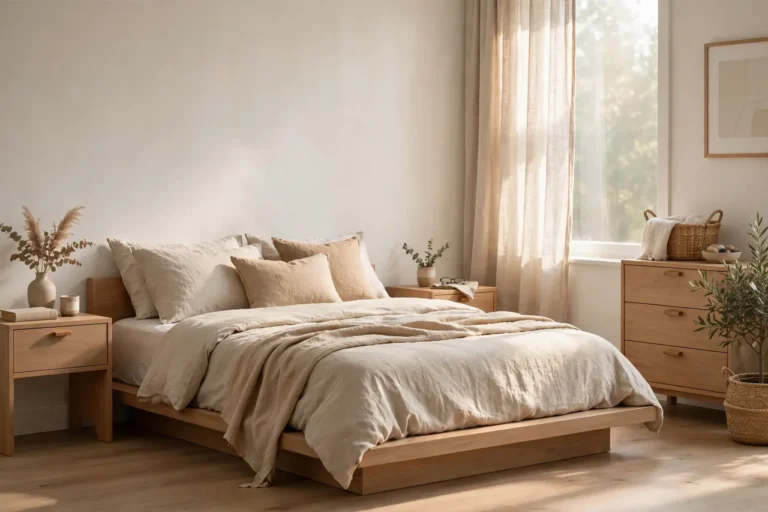
Green Bedroom Ideas: Sage, Dark, and Forest Greens That Actually Feel Calm
A green bedroom works for a simple reason. Green sits between the calm of blue and the warmth of yellow, so it reads as natural even before you add a plant. The mistake most people make is picking a shade without checking the light, the wood, and the size of the room.
Which Green Is Right for Your Bedroom?
Start with three questions, not a paint chart. How much daylight does the room get? What wood tones are already in it? And do you want the room to feel open or cocooned? The answers point to a shade family before you open a sample pot.
Light rooms with big windows can carry almost any green, including deep forest and emerald. Small rooms and north facing rooms need more care, but they do not need pale walls by default. A dark green works in a small room on one wall, or when trim and ceiling stay light. The rule social creators repeat most is simple: one dominant dark green per space, and everything else stays neutral. That single decision prevents the muddy look that comes from mixing three strong greens.
Undertone matters more than the color name. Two paints both called sage can lean gray in one brand and yellow in another. Hold the sample against your bedding, floor, and wood furniture, and check it in daylight and again under your lamps at night. A shade that looks soft in the store can read much darker or cooler at home, and that shift is the most common reason people repaint. A useful shortcut is the three shade rule: one pale, one medium, and one deep green, with the deep one covering only about a tenth of the room.
Sage Green Bedroom: The Safest Shade
If you want one answer to the most asked question, which green is best for a bedroom, sage is it. Sage is a muted green with gray in it, so it calms a room without shouting about color. It works with white, cream, warm gray, blush pink, and natural wood, and it adapts to changing light better than brighter greens.

A sage green bedroom suits almost every style. In a modern room, pair sage walls with white bedding and pale oak. In a farmhouse room, add linen curtains and a woven rug. In a softer room, bring in blush pink cushions, because sage and blush are one of the most shared pairings online. Sage also forgives small rooms: pale, gray based greens keep a small bedroom feeling open, especially with white ceilings and light bedding. Paint the wall behind the bed sage and keep the other three warm white, and you get color where your eye lands while the room keeps its air. The same sage logic works in a different room too, as our sage green bathroom guide shows.
Dark Green Bedroom: Drama Without the Cave Feeling
A dark green bedroom is the look people save most, and the one they fear most. The fear is that dark walls will shrink the room. The reality is more interesting: dark colors make corners recede into shadow instead of defining them, so walls can feel farther away, not closer. The cave feeling comes from the wrong finish and the wrong lighting, not from the color alone.

Finish matters more than most people expect. Dark greens look velvety in a matte or flat finish, which absorbs light. The same shade in semi gloss bounces light unpredictably and can look restless. For dark bedroom walls, matte or eggshell is the consistent professional choice. Lighting matters just as much: overhead light alone on a deep green wall looks flat, so layer it with bedside lamps with warm bulbs and a floor lamp in a corner. Bedding is the third lever: white or cream bedding creates the strongest, most restful contrast against deep green, and one warm throw in terracotta or oatmeal stops the room feeling heavy. Keep ceiling and trim in warm white, and the room keeps a visual exit.
Forest and Emerald Greens: Deep, Luxurious, Not Black
Forest and emerald are the two deep greens people confuse most, and the difference changes the room. Forest green is dark and natural, like dense trees. Emerald green is richer and more saturated, with a jewel tone quality that catches light. Both are dramatic, but emerald leans luxurious while forest leans organic.
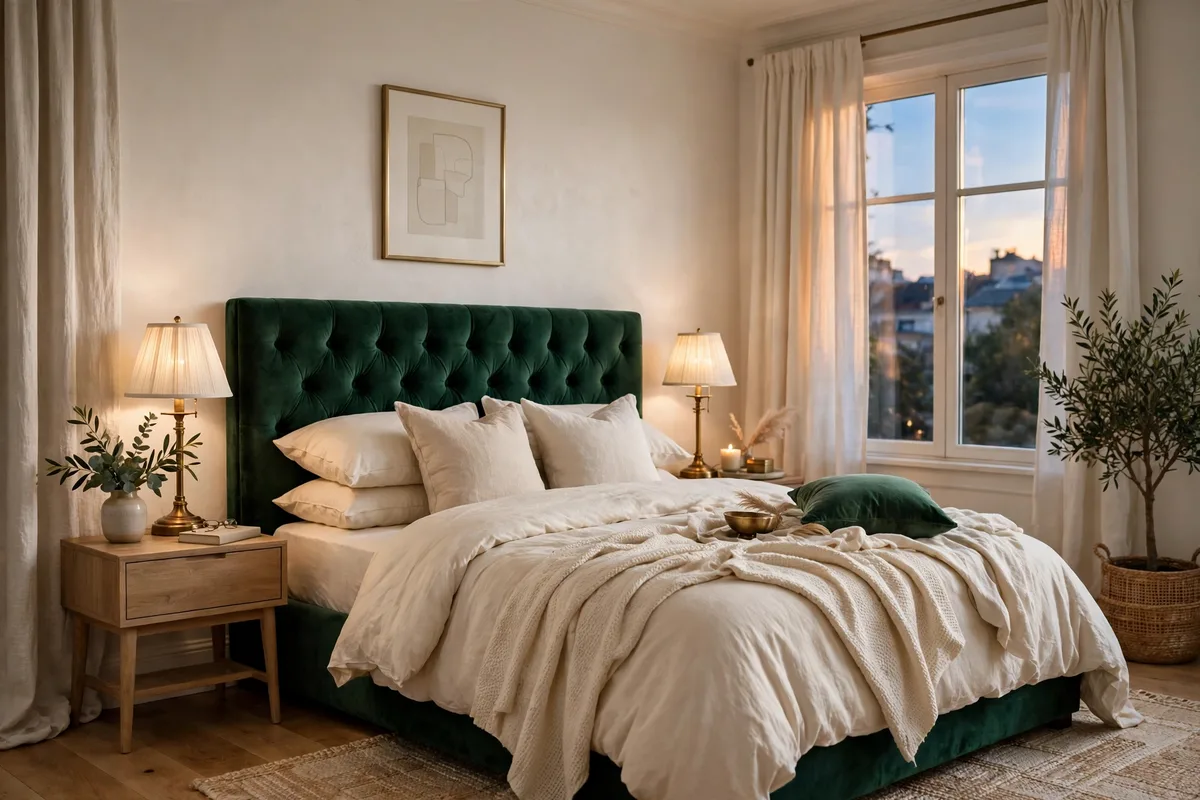
Forest green is at its best on an accent wall behind the bed, with warm white on the other walls, lighter bedding, and bedside lamps for contrast. It pairs beautifully with walnut furniture and black framed artwork, as long as bedding stays light. Emerald green earns its reputation through velvet: an emerald velvet headboard, accent wall, or cushions against warm white walls give a bedroom a refined, almost hotel like finish. Repeat the brass finish through bedside lamps, drawer handles, or a mirror frame, but keep the count small, because brass everywhere looks forced.
Olive and Mint Greens: Earthy and Fresh Alternatives
Olive and mint sit at opposite ends of the green family, and they solve opposite problems. Olive is warm, earthy, and yellow leaning. Mint is light, cool, and fresh.
Olive green walls with oak or walnut furniture, beige bedding, and a woven rug create a warm, grounded bedroom that feels timeless rather than decorated. It is the green for rooms that already have warm wood floors, because olive and wood share the same earthy temperature. Check olive samples against your floor before buying. Mint green is the easier starting point for a small bedroom that needs to feel airy: mint walls with white bedding, slim bedside tables, and light colored curtains keep the room light and fresh, and it pairs with white furniture, a few black details, and almost any neutral bedding. Between the two, olive suits a bedroom you want to feel collected and warm, while mint suits one you want to feel clean and bright.
Green Bedroom Ideas by Style
Green adapts to style by changing its partners, not its shade. A modern green bedroom stays minimal: pale green walls, a streamlined bed frame, plain bedding, and a few accessories, with black details for definition. For a full style-first room plan beyond one color, our modern bedroom ideas guide covers the same minimal logic across the whole room. A farmhouse green bedroom leans on texture: sage or olive walls, linen bedding, a woven rug, and wooden bedside tables. A Japandi bedroom pairs sage with beige and pink textiles, natural materials, and plants, with nothing loud competing. A traditional bedroom goes deeper: forest or emerald walls, or a dark accent wall, with walnut furniture, brass lamps, and layered bedding. If your furniture already sets the style, match the green to it.
What Colors Go With a Green Bedroom?
A green bedroom is really a pairing decision.
| Pairing | Best with | Mood | Watch out for |
|---|---|---|---|
| White and cream | Every green, especially dark | Clean, open, restful | Cool whites with blue undertones clash with earthy greens |
| Beige and greige | Sage, olive | Warm, soft, timeless | Too much beige without texture looks flat |
| Light oak wood | Sage, olive, forest | Organic, grounded, calm | Cherry wood clashes with yellow leaning greens |
| Dark walnut | Forest, emerald | Rich, library like | Needs light bedding to avoid heaviness |
| Brass and gold | Emerald, forest, dark green | Luxurious, warm | Small doses only |
| Black | Sage, forest, emerald | Modern, tailored | Keep to details in small rooms |
| Blush pink | Sage, light green | Romantic, soft | Keep both colors muted |
| Terracotta and rust | Olive, sage | Earthy, warm | Use as accent, not a second wall color |
| Warm gray | Sage, mint | Cool, spa like | Can feel cold in dark rooms |
Two rules sit behind the table. Pair by undertone, not by color name: warm olive wants cream, beige, and walnut, while cool sage wants white and warm gray. And let green be the only strong color, or the room stops feeling calm. The same white pairing logic also anchors our white bathroom guide, where white does the same opening job against a stronger color.
Green Bedroom Paint Colors Worth Sampling
Named colors remove guesswork: these are real Benjamin Moore and Sherwin-Williams colors consultants recommend most. Always sample first, because light changes everything.
| Paint color | Brand and code | Shade family | Best for |
|---|---|---|---|
| Fernwood Green | Benjamin Moore 2145-40 | Deep muted green | Rich accent wall that stays soft |
| Liveable Green | Sherwin-Williams SW 6176 | Soft mid green | Whole room in a medium light room |
| Cascade Green | Sherwin-Williams 0066 | Light blue leaning green | Airy rooms needing freshness |
| Evergreen Fog | Sherwin-Williams SW 9130 | Gray green | Modern rooms, pairs with warm white |
| October Mist | Benjamin Moore 1495 | Soft sage | Classic sage bedroom, very forgiving |
| Spanish Olive | Benjamin Moore 1509 | Warm olive | Rooms with warm wood floors |
| Soft Fern | Benjamin Moore 2144-40 | Gentle fern green | Calm rooms needing more color than sage |
| Night Owl | Sherwin-Williams 7061 | Dark green gray | Moody accent walls with black details |
| Rosemary | Sherwin-Williams 6187 | Deep herbal green | Traditional rooms with walnut and brass |
| Hunter Green | Benjamin Moore 2041-10 | Very dark green, LRV about 5 | Headboard wall in a bright room |
| Shade-Grown | Sherwin-Williams SW 6188, LRV about 8 | Deep forest green | Matte accent walls, cocooning effect |
| Tarrytown Green | Benjamin Moore HC-134 | Classic deep green | Full room in bright, south facing rooms |
Kylie’s honorable mentions add 4 more shades: Sherwin-Williams Austere Gray (leans gray), Benjamin Moore Paris Rain (gentle warmth), Sherwin-Williams Sedate Gray (greige-green blend), and Benjamin Moore Vale Mist (a cleaner, greener sage than Paris Rain).
LRV, or light reflectance value, runs from 0 for black to 100 for white, and tells you how much light a color reflects. Colors with an LRV under 15, such as Hunter Green and Shade-Grown, create a cocooning effect because the wall visually recedes. That suits a bedroom, but it is also why a deep green in a dim room can read almost black. Choose matte or eggshell finish for dark shades, and sample in a large swatch, at least two feet square, on the wall you will paint, checking it in daylight, under your lamps, and again the next morning.
Paint, Wallpaper, or Paneling?
Paint is not the only way to get a green bedroom. Botanical wallpaper is the strongest alternative: leafy prints and green patterned paper bring the outdoors inside and add pattern flat paint cannot. Use it on one wall, usually behind the bed, with the other walls in a plain color pulled from the paper, so the pattern does not overwhelm the room.
A mural wall is the bolder version. A painted landscape mural behind the bed turns the whole wall into art, and deep green walls with built in shelving set the mood around it. Murals cost more than paint and are harder to change, so they suit a room you plan to keep for years, not a rental. Paneling is the middle path, and it is everywhere in DIY makeovers: board and batten trim painted dark green on the headboard wall gives an accent wall structure and a custom look, and it hides imperfect walls, a practical bonus in older rooms. A useful compromise is the half wall: dark green wainscoting or beadboard on the bottom third, with botanical wallpaper above. It keeps the heavy color low, where it feels grounding, and it is the safest way to try a dark green. Choose by commitment: paint is cheapest and easiest to change, wallpaper adds pattern but is harder to reverse, paneling costs more time but adds architecture.
Dark Green in a Small Bedroom: Accent Wall, Half Wall, or Color Drench?
Small bedrooms cause the most arguments about dark green. All three approaches can work. They differ in risk, cost, and light needs.
| Approach | How it works | Best for | Risk |
|---|---|---|---|
| Accent wall | One wall, usually the headboard wall, in dark green; others warm white or cream | First time dark green, rooms with one focal wall | A random wall with no purpose looks like an afterthought |
| Half wall | Dark green wainscoting on the bottom third, lighter color or wallpaper above | People nervous about full dark walls | Needs decent trim work, or the line looks unfinished |
| Color drench | Walls, trim, baseboards, and ceiling in the same dark green | Confident decorators, bright rooms or night use rooms | In a dim room it can read almost black, hardest to repaint |
The accent wall is the lowest risk starting point, and the most shared format online, because the transformation photographs so clearly. The half wall is the compromise most people wish they had known sooner: depth at eye level, where furniture and bedding soften it, while the upper wall stays light. Color drenching sounds extreme, but it works for a specific reason: removing visual breaks, such as white crown molding, stops your eye registering where wall ends and ceiling begins, so the room feels like one cohesive envelope. It works best in rooms with good light, or bedrooms used mainly at night. Two details decide success in a small room: keep ceiling and trim warm white unless you are deliberately drenching, because that preserves ceiling height in rooms under 150 square feet, and keep furniture proportional. Two bonus uses: in a studio apartment, a dark green feature wall behind the bed separates the sleeping area, and storage frees floor space so the green reads as a choice rather than clutter.
The Green Ceiling: Color Drenching the Fifth Wall
The ceiling is the most underused surface in a green bedroom, and the trend competitors have barely covered. Designers call it the fifth wall, and social makeovers use it in three ways. A green ceiling with lighter walls needs height, because a dark ceiling in a low room presses down visually, but with good height it adds a canopy feeling paint on walls alone cannot. The full drench, where the ceiling joins walls, trim, and baseboards in the same deep green, wraps the room like a velvet box, and layered lamps plus light bedding stop it feeling flat. The soft version is the most practical: paint the ceiling a paler version of the wall green, or a warm white with a green undertone, so it relates to the walls without matching them, which keeps the room feeling tall and suits standard eight foot ceilings. Use a flat finish overhead: it hides imperfections and stops patchy reflections.
Green Bedrooms and Light: North Facing Rooms, Warm Bulbs, and Layered Lighting
Light decides how green looks more than the paint brand does. North facing rooms get cooler, bluer light most of the day. In that light, cool greens can look gray or cold, and deep greens darker than expected. The fix is warmer greens, such as sage with a warm undertone or olive, plus warmer lighting. Warm white bulbs, around 2700K, keep a green bedroom warm after sunset, while cool daylight bulbs can push the same green toward a clinical cast. South facing rooms are the opposite: they get warm, strong light, and can carry deep greens on all four walls without going dark. If you are unsure about your light, the accent wall is the safer play.
Layered lighting is the technique that makes dark green bedrooms work. Overhead light alone flattens a deep green wall. Add bedside lamps with warm bulbs for reading, a floor lamp in a corner for ambient glow, and a small sconce to wash the wall if you have art or paneling. Our LED bedroom lighting guide covers the same layering idea in more depth, and it pairs naturally with a dark green room, where good lighting is not optional but the whole trick.
Bedding, Curtains, and Textiles for Green Walls
If walls are the decision, textiles are the rescue. Bedding, curtains, and throws let you adjust a green bedroom in an afternoon, and they are where most makeovers actually happen, because paint is a weekend and textiles are a shopping trip.
Start with bedding, because the bed is the largest surface in the room. Cream, white, oatmeal, and soft linen tones are foolproof against green walls: they create contrast, keep the room restful, and work with every shade family. Layer in green pillows or a coverlet close to the wall shade to tie the bed back to the room, but keep the main duvet light, because a dark duvet on dark walls removes the contrast that makes the room breathe. Velvet deserves a special mention: an emerald velvet headboard or throw against sage or forest walls adds a luxury texture flat cotton cannot. Curtains should usually stay light and simple: ivory or cream keeps the window as a bright frame, which matters most in dark green rooms. Rugs finish the floor story: a jute or light sisal rug bridges a dark green wall and a wood floor without a third color, while a soft beige rug keeps a sage room quiet.
Wood, Brass, and Black: Finishes That Make Green Look Expensive
Finishes separate a green bedroom that looks intentional from one that looks accidental. Wood is green’s natural partner, but the tone changes the room. Light oak and pale ash keep a dark green bedroom open, because pale wood contrasts with the wall instead of competing. Walnut and other dark woods make a forest or emerald room richer, but they need light bedding to balance them. Medium cherry wood is the one to be careful with, because its red tones often clash with the yellow tones in popular green paints.
Brass and gold add the jewelry effect: brushed brass, antique bronze, and warm gold lift deep olive and forest greens. The rule is repetition in small doses, a brass lamp, a brass mirror frame, and brass drawer handles read as a deliberate thread, while brass on every surface reads as a theme. Black is the grounding finish: a black statement piece, such as a canopy bed frame, black lamps, or black framed artwork, gives a green bedroom structure and stops the soft palette drifting. Black works best as an accent, not as furniture at scale, especially in small rooms. The pattern across all three finishes is restraint: pick one wood tone, one metal, and one dark accent, and repeat each one two or three times in different places.
Plants and Natural Materials in a Green Bedroom
A green bedroom and plants belong together, but the pairing works best when deliberate rather than decorative. Plants extend the green from the walls into the living parts of the room, and natural materials keep the palette feeling organic instead of painted on. Low light plants are the practical choice for bedrooms, which rarely get the direct sun plant guides assume. Snake plants, ZZ plants, and pothos tolerate low light and occasional neglect, and they suit a bedroom corner or shelf. Place them near indirect light, rotate monthly, and avoid overwatering.
Natural materials do the same job without watering. Rattan lampshades, jute rugs, linen bedding, ceramic planters, and woven baskets add warmth and texture flat painted surfaces cannot. Keep materials in the same family, wood, linen, rattan, and ceramic, because a sudden plastic or chrome piece can break the spell.
Green Bedroom Without Painting: Renters and Commitment Free Ideas
Not everyone can paint, and not everyone wants to. Bedding is the fastest change: a green duvet cover, cushions, or throw against cream or white walls gives you a green bedroom in one delivery, and it reverses just as fast. The same logic works for curtains, which frame the window and tint the whole room’s feeling without touching a wall.
Furniture and headboards are the next level. An upholstered headboard in sage or emerald velvet, an accent chair in olive, or a painted dresser in deep green all add a strong green presence you can take with you when you move. Peel and stick options close the gap for people who want a wall effect without paint: removable botanical wallpaper on the headboard wall, peel and stick paneling, or a large piece of green art can create the focal wall a painted accent wall provides. These are especially useful in rentals, where the deposit depends on returning walls to their original state, and they let you test a dark green for a month before deciding whether to paint it for real. Accessories finish the job: green lamps, planters, artwork, and rugs each add a small dose, and together they can shift a neutral room firmly into green territory, with the bonus that you can change shade with the seasons.
How Much Paint Does a Green Bedroom Need?
Start by measuring wall area: multiply each wall’s length by its height, add the walls together, and subtract a rough allowance for doors and windows. Most bedrooms need one to two gallons per coat, depending on room size and coverage. Dark greens over a light existing color usually need two coats for full, even coverage, and a tinted primer helps the deep color reach its true shade without a third coat.
Add ten to fifteen percent extra for touch ups and for the second coat’s absorption, because the first coat always drinks more paint than the second. A gallon covers roughly 350 to 400 square feet per coat in manufacturer figures, but real rooms with trim, corners, and texture come in lower, so round up rather than down. Sampling is part of the quantity plan, not an extra: buy sample pots of your top two or three shades, paint large swatches on the wall you will paint, and live with them for at least a day, checking them in daylight and under your lamps.
Green Bedrooms for Sleep: Does Green Really Help You Rest?
Green has a reputation as a sleep friendly color, and the reputation has some basis. Green is easy on the eyes, connected to nature, and softer shades such as sage and mint are consistently described as calming, which makes them good for winding down. Darker greens add a cocooning feeling many people find restful, because the room feels enclosed and private rather than bright and alert. The shade matters more than the family: muted greens, such as sage, olive, and forest, feel more restful than bright, saturated greens, which can feel energetic. If sleep is your main goal, avoid neon or lime leaning greens. One cultural note: in feng shui, green represents the wood element, tied to growth, health, and new beginnings, and the advice favors softer, deeper greens balanced with earthy neutrals, which matches the practical advice in this guide anyway.
Mistakes That Make Green Bedrooms Look Wrong
Most green bedroom failures follow a short list. Too many greens: a sage wall, olive duvet, forest rug, and emerald cushions do not layer, they compete, so pick one dominant green. Wrong undertone: a yellow leaning green against cherry wood, or a cool sage in a cold north facing room with daylight bulbs, will fight the room, so test samples against your floor and under your bulbs. Purposeless accent wall: an accent wall works on the headboard wall, the natural focal point, while a random side wall looks like an afterthought. Ignored trim and ceiling: crisp white trim frames a green wall neatly, and a light ceiling keeps the room tall, so either match them in a drench or paint trim a clean warm white. Flat lighting: one overhead fixture on a dark green wall makes a rich color look dull, so layer the light and warm the bulbs.
Green Bedroom Ideas on a Budget
Paint is the cheapest transformation in home decorating. One accent wall in a deep green, painted yourself over a weekend, changes the whole room for the price of a gallon or two of paint plus supplies. The three shade rule is also a budget rule: one pale, one medium, and one deep green, used across paint, bedding, and accessories you already own, look more intentional than a cart full of new items in random greens. Save on surfaces nobody studies: keep your existing bed frame, use peel and stick paneling instead of real wood paneling, and choose a jute rug over a wool one. Spend the saved money on the two things people notice: good bedding in cream or oatmeal, and warm bedside lamps. A master bedroom makeover follows the same budget logic, just at a larger scale.
How to Pick Your Green in 3 Steps
Step one: pick the family. Sage if you want safe and calm, dark green if you want drama, olive if your room has warm wood, mint if your room is small and needs air. Step two: sample two shades from that family, one warm leaning and one cool leaning, in large swatches on the wall you will paint, checking them in daylight, under your lamps at night, and again the next morning. Step three: decide the coverage. All four walls for a bright room or a confident decorator, one headboard wall for a first dark green or a small room, a half wall for the nervous middle ground, and a drenched ceiling only if you have the height and light. Then paint trim deliberately, matching green for a drench or clean warm white for contrast. Family, sample, coverage.
FAQs
What is the best shade of green for a bedroom?
Sage green is the most universally flattering shade: it balances warm and cool tones, adapts to changing light, and promotes relaxation. The best shade still depends on room size, light, and mood: forest for drama, mint for freshness, olive for earthiness, emerald for luxury.
Can I use dark green in a small bedroom?
Yes. Use it on one accent wall, ideally the headboard wall, with white ceilings and trim, cream bedding, and mirrors or brass lighting to keep the space from feeling cramped. A half wall of dark wainscoting is a lower risk alternative.
What colors go best with green in a bedroom?
White, cream, beige, and natural wood tones for a calming effect. Gold, brass, or charcoal for more drama. Pink or coral for playful contrast, and brown and tan for earthy harmony. Match by undertone, and let green be the only strong color.
How can I add green to my bedroom without painting?
Use green bedding, curtains, pillows, rugs, lamps, artwork, planters, or an upholstered headboard or accent chair. Removable botanical wallpaper and peel and stick paneling on the headboard wall give a wall effect without paint, which makes them perfect for renters.
Is green a good color for sleep?
Yes. Green reduces eye strain, promotes relaxation, and connects to nature. Softer shades such as sage and mint are particularly calming, while darker greens create a cocooning effect many people find restful. Avoid bright, saturated greens in a sleep focused room.
Should the trim match the green walls or stay white?
Both work. Crisp warm white trim frames a green wall neatly and preserves ceiling height, the traditional and safest choice. Matching green trim creates a seamless, color drenched look for modern rooms and accent walls. Avoid cool whites with blue undertones beside earthy greens.
What color bedding goes with green walls?
Cream, white, oatmeal, and soft linen tones are foolproof: they create contrast, keep the room restful, and work with every shade family. Layer in green pillows or a coverlet close to the wall shade, plus one warm throw in terracotta or oatmeal.
Can I use green in a north facing bedroom?
Yes, but choose warmer greens, such as warm sage or olive, and add warmer lighting to counterbalance the cooler daylight. Avoid cool, gray leaning greens unless you also warm the bulbs. If light is very limited, use deep green on one wall rather than all four.
How much paint do I need for a green bedroom?
Most bedrooms need one to two gallons per coat, plus ten to fifteen percent extra for touch ups. Dark greens over a light existing color usually need two coats, and a tinted primer helps reach the true shade. Measure first, and round up.
Can I paint my bedroom ceiling green?
Yes, if you have the height and light for it. A green ceiling with lighter walls creates a canopy feeling, and a fully drenched ceiling wraps the room in one envelope. With standard eight foot ceilings, the safer version is a paler wall green, or a warm white with a green undertone.
Should I choose paint or wallpaper for a green bedroom?
Paint is cheaper, easier to change, and best for testing a shade. Wallpaper adds pattern paint cannot, with botanical prints the most popular green bedroom papers, usually on the headboard wall. Paneling sits between the two, adding architecture and hiding imperfect walls.
What is color drenching, and should I try it in a green bedroom?
Color drenching means painting walls, trim, baseboards, and ceiling in the same shade of green, removing the visual breaks that frame a room. It suits bedrooms used mainly at night and rooms with good light. If nervous, drench one wall first, including its trim, and live with it for a week.
What does feng shui say about a green bedroom?
In feng shui, green represents the wood element, tied to growth, health, and new beginnings, and it is considered especially supportive in the east and southeast areas of a home. For a bedroom, the advice favors softer, deeper greens balanced with earthy neutrals. Treat it as a helpful tradition and let your own sleep be the test.
Get home ideas in your inbox
Practical home improvement ideas and DIY guides, once in a while. No spam.